Punjab Police raids 593 gangster-linked locations on day 142
Synopsis
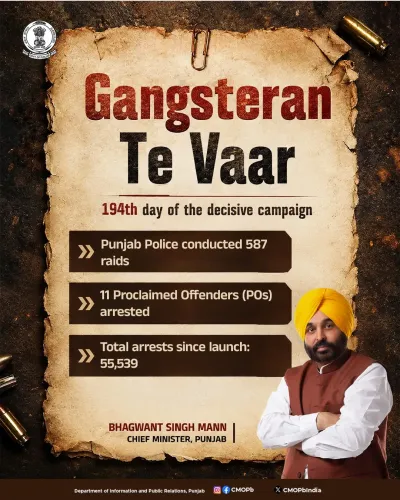
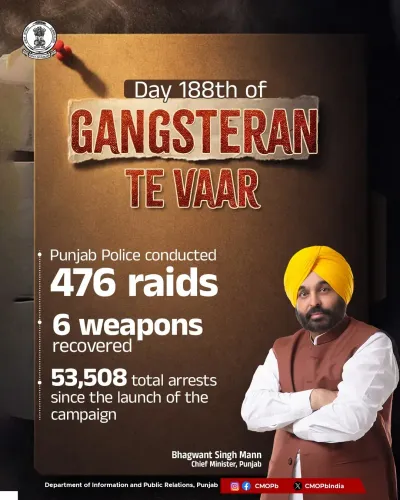
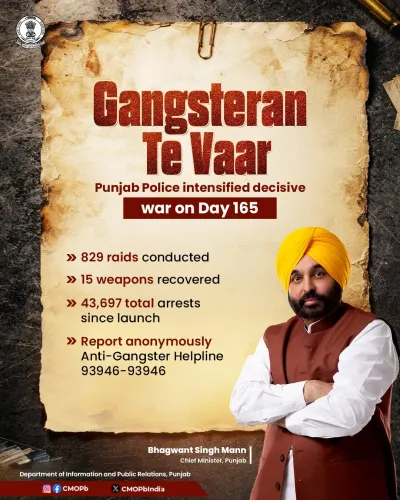
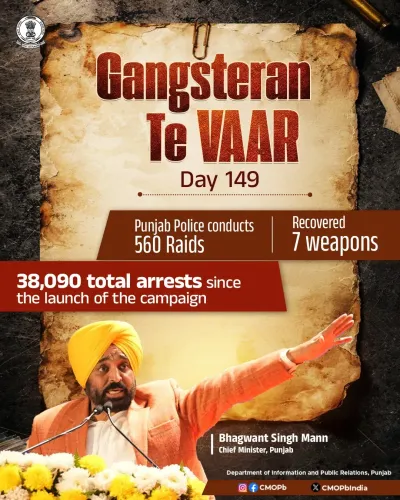
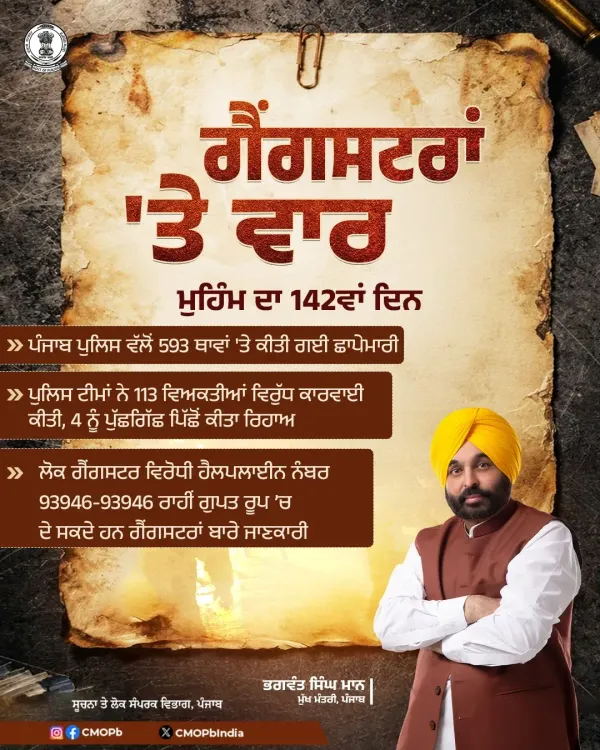
On the 142nd day of Punjab's Gangsteran Te Vaar campaign, police raided 593 mapped locations linked to gangster associates across the state, recovering four weapons and pushing cumulative arrests to 36,023, the Chief Minister's Office announced on 11 June 2026.
Key Takeaways
593 locations identified as linked to gangster associates were raided simultaneously across Punjab on 11 June 2026 .
The operation is part of the ongoing Gangsteran Te Vaar ('War on Gangsters') campaign, now in its 142nd day .
Four weapons were recovered during the day's raids.
Cumulative arrests since the campaign's launch have reached 36,023 .
The campaign is a flagship security initiative of Chief Minister Bhagwant Mann 's AAP government, launched after the March 2022 elections.
Raids target the associate networks of gangsters, aiming to disrupt support infrastructure for criminals operating inside and outside India.
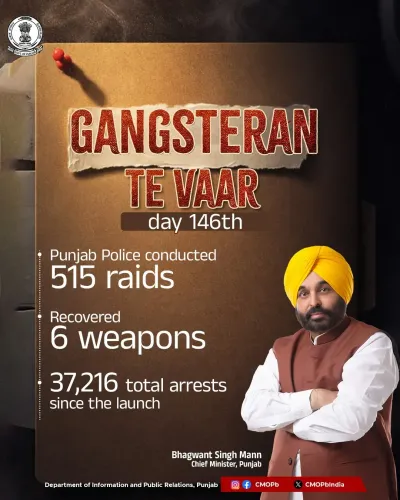
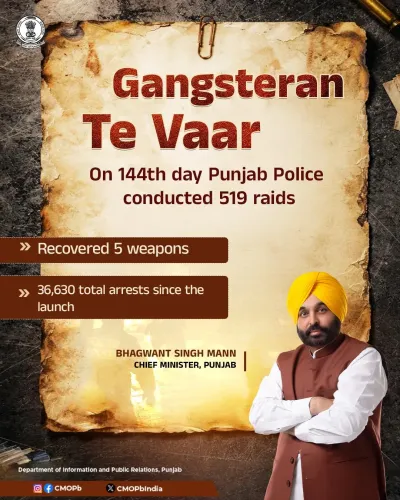
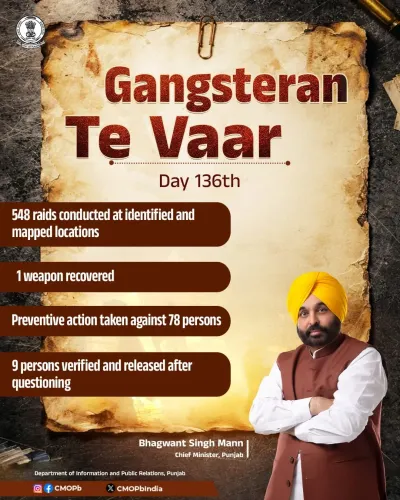
The Chief Minister's Office of Punjab announced on Thursday, 11 June 2026 that Punjab Police conducted 593 coordinated raids across the state on the 142nd day of the ongoing anti-gangster drive Gangsteran Te Vaar ('War on Gangsters'), arresting individuals and seizing four weapons in a single-day operation.
What happened
Police teams fanned out to 593 identified and mapped locations linked to associates of gangsters across Punjab. The day's arrests pushed the campaign's cumulative total to 36,023 arrests since the drive was launched. Four firearms were recovered during the raids, adding to the weapons seized over the course of the operation.
The CMO shared the update in both Punjabi and English, stating: 'As the decisive Gangsteran Te Vaar campaign enters its 142nd day, Punjab Police conducted 593 raids at identified and mapped locations linked to associates of gangsters across the state.'
Context
Punjab has long grappled with organised crime networks that intersect with drug trafficking and cross-border criminal links. The Gangsteran Te Vaar campaign is the AAP-led government of Chief Minister Bhagwant Mann's flagship internal-security initiative, launched after the March 2022 assembly elections as a core governance commitment.
The campaign operates through a systematic approach: law-enforcement units identify and map the residences and hideouts of gangster associates before conducting simultaneous multi-location raids. Daily operational updates are shared through official government channels, making the drive one of the most publicly reported policing campaigns in the state's recent history.
Policy backdrop
Successive Punjab governments have periodically announced high-visibility anti-crime drives, but the current campaign is notable for its sustained cadence of daily reporting and the scale of cumulative arrests. The AAP government has positioned anti-gangster action alongside its anti-drug agenda as twin pillars of its law-and-order mandate.
The practice of mapping associate networks before executing simultaneous raids is intended to disrupt communication and support structures that allow active gangsters — many of whom operate from outside India — to continue directing criminal activity inside the state.
Stakeholders and impact
The primary stakeholders are Punjab Police, which bears operational responsibility, and communities in districts where gang-related extortion, violence, and drug supply have historically been concentrated. Each wave of raids targets associates rather than only principal accused, a strategy aimed at shrinking the logistical network around wanted individuals.
With 36,023 cumulative arrests, the scale of the campaign has drawn attention to questions of judicial capacity and undertrial management in Punjab's courts and jails — dimensions that state authorities will need to address as the drive continues.
What's next
The CMO's daily update cadence suggests the campaign will continue beyond the 142-day mark with no announced end date. Observers will watch for references to the drive's outcomes in upcoming Punjab Legislative Assembly sessions, where the government is likely to cite arrest and seizure figures as evidence of law-and-order performance. Asset-seizure data and court-conviction rates will be the longer-term metrics by which the campaign's effectiveness is ultimately judged.
Point of View
023 cumulative arrests in roughly five months is a striking headline figure, but the campaign's credibility will ultimately rest on conviction rates and sustained crime reduction rather than raid counts alone. Punjab's history of cyclical anti-crime drives that fade without structural reform means scrutiny of this campaign's durability is warranted. The mapping-and-raid methodology, if maintained with judicial follow-through, could represent a more systematic approach than previous drives — but that remains to be demonstrated.
NationPress
21 Sept 2026
Frequently Asked Questions
What is Gangsteran Te Vaar in Punjab?
Gangsteran Te Vaar, meaning 'War on Gangsters,' is an ongoing anti-crime campaign launched by the Punjab Police under the AAP government of Chief Minister Bhagwant Mann after the March 2022 elections. It involves systematic mapping of locations linked to gangster associates followed by coordinated multi-location raids.
How many arrests have been made in the Gangsteran Te Vaar campaign?
As of 11 June 2026 — the 142nd day of the campaign — total arrests stand at 36,023 since the drive was launched.
How many raids did Punjab Police conduct on 11 June 2026?
Punjab Police conducted 593 raids on identified and mapped locations linked to gangster associates across the state on 11 June 2026.
Who is overseeing the Gangsteran Te Vaar campaign?
The campaign is executed by Punjab Police under the direction of the state government led by Chief Minister Bhagwant Mann . Daily updates are shared by the Chief Minister's Office of Punjab.
What weapons were seized during the 11 June 2026 Punjab raids?
Punjab Police recovered four weapons during the raids conducted on the 142nd day of the Gangsteran Te Vaar campaign on 11 June 2026.