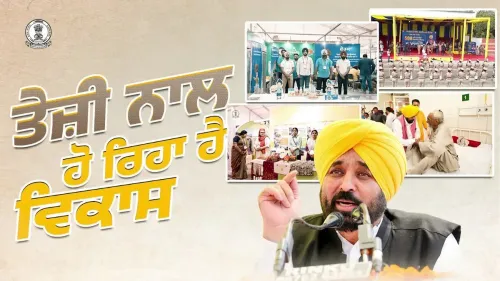
CM Bhagwant Mann: Punjab Upgrading Govt Hospitals at All Levels
Synopsis
Punjab CM Bhagwant Mann has announced a comprehensive upgrade of the state's public hospital network — covering CHCs, SDHs, tehsil and district hospitals — with modern equipment, aiming to deliver quality healthcare to residents within their own localities.
Key Takeaways
The Chief Minister's Office of Punjab announced on June 17, 2026 that government hospitals across all tiers are being modernised.
CM Bhagwant Mann stated that Community Health Centres (CHCs) and Sub-Divisional Hospitals (SDHs) are being upgraded alongside tehsil and district hospitals.
Modern machinery is being provided to ensure residents can access better healthcare within their own localities .
The drive aligns with the National Health Mission framework and Punjab's post-2022 health infrastructure review.
No specific timelines or equipment lists have been officially released with this announcement.
Primary beneficiaries include rural and semi-urban populations currently reliant on distant or private facilities.
The Chief Minister's Office of Punjab announced on Wednesday, June 17, 2026, that the state government is equipping public hospitals at every tier — from community health centres to district hospitals — with modern facilities and machinery, so that residents can access quality healthcare within their own localities.
Context
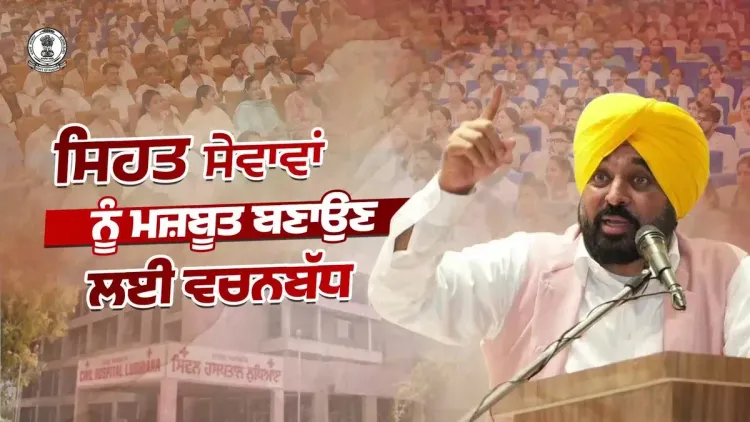
Chief Minister Bhagwant Mann stated that government hospitals are being outfitted with modern amenities. In his words (translated from Punjabi): 'Sarkari haspataalan nu aadhunik sahoolataan naal lais kita ja riha hai' ('Government hospitals are being equipped with modern facilities'). The announcement covers Community Health Centres (CHCs), Sub-Divisional Hospitals (SDHs), tehsil-level hospitals, and district-level hospitals — effectively the entire secondary and primary public health network of the state.
The stated objective is to ensure that people receive better health services within their own areas, reducing the need to travel to larger urban or private facilities for routine and intermediate care.
Policy Backdrop
Since assuming office in March 2022, the Aam Aadmi Party government in Punjab has undertaken reviews of district and sub-district health facilities to identify infrastructure and equipment gaps. This upgrade drive is consistent with the broader mandate of the National Health Mission (NHM), under which states receive central funding to strengthen rural and semi-urban healthcare delivery.
Multiple Indian states have pursued comparable modernisation programmes since the early 2020s, aiming to shift patient load away from overburdened tertiary centres and expensive private providers. Punjab's current push specifically targets the intermediate tiers — CHCs and SDHs — which serve large rural and semi-urban populations but have historically suffered from equipment shortfalls.
Stakeholders and Impact
The primary beneficiaries are rural and semi-urban residents of Punjab who currently depend on district hospitals or private clinics for services unavailable at local facilities. Upgraded CHCs and SDHs with modern diagnostic and treatment machinery can meaningfully reduce out-of-pocket expenditure and travel burden for these populations.
District hospital users in smaller towns also stand to benefit as facility-level upgrades extend to the district tier. Health workers and medical staff at these institutions may see improved working conditions and diagnostic support, which can affect both service quality and staff retention in rural postings.
What's Next
The government's announcement does not specify timelines or a list of equipment being procured. Observers and policymakers will watch for detailed procurement orders, budget allocations, and independent assessments of service quality at upgraded facilities in subsequent health department disclosures.
The credibility of the upgrade programme will ultimately rest on verifiable improvements in patient outcomes and facility readiness at the ground level — metrics that departmental audits and community feedback will need to confirm in the months ahead.
Point of View
The government is addressing the most acute gap in geographic healthcare access for rural voters. The framing of 'local access' is significant: it positions the state as reducing dependence on both costly private providers and distant public referral centres, a message with direct resonance in Punjab's predominantly rural constituencies. The announcement's impact will depend heavily on the pace and transparency of actual procurement and commissioning, which remain unspecified.
NationPress
16 Sept 2026
Frequently Asked Questions
Which hospitals in Punjab are being upgraded by the Bhagwant Mann government?
The Punjab government is upgrading Community Health Centres (CHCs), Sub-Divisional Hospitals (SDHs), tehsil-level hospitals, and district-level hospitals across the state with modern facilities and machinery.
What is the aim of Punjab's hospital modernisation drive?
The aim is to ensure that residents can access quality healthcare services within their own localities, reducing the need to travel to larger urban centres or private hospitals.
When did Bhagwant Mann make this announcement about Punjab hospitals?
The announcement was made on Wednesday, June 17, 2026, through the official Chief Minister's Office of Punjab account on X.
What are Community Health Centres (CHCs) in Punjab?
CHCs are rural primary-to-secondary care facilities that serve as the first referral unit above primary health centres; they are being upgraded with modern equipment as part of Punjab's public health infrastructure push.
Is Punjab receiving central government funds for hospital upgrades?
Punjab's hospital upgrade drive is consistent with the National Health Mission framework under which states receive central funding for strengthening rural and semi-urban healthcare, though the specific funding mix for this initiative has not been detailed in the announcement.