Puri Hails PM Modi's IIT Delhi Convocation Address
Synopsis
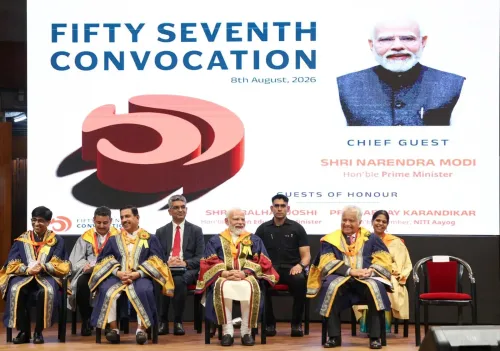
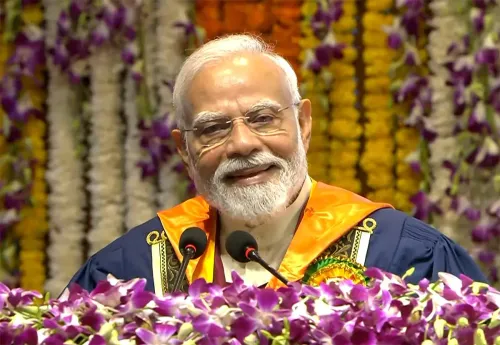
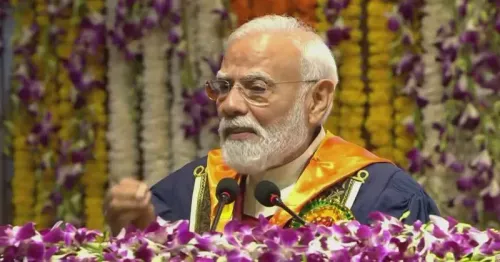
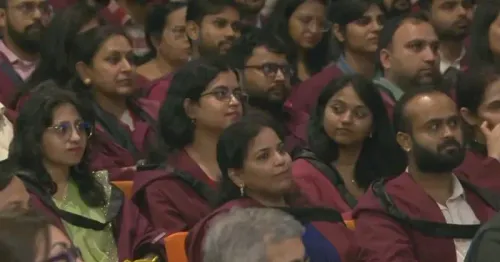
PM Modi addressed IIT Delhi's 57th Convocation on August 8, 2026, inaugurating the AI supercomputer 'Param Pragya' and urging graduates to serve the nation. He also called for greater female representation among medal winners, signalling a push for women-led development under the Viksit Bharat vision.
Key Takeaways
PM Modi addressed the 57th Convocation of IIT Delhi on August 8, 2026 , urging graduates to use knowledge and innovation in service of the nation. 'Param Pragya' , an AI-powered supercomputing facility, was inaugurated at IIT Delhi during the ceremony, advancing India's National Supercomputing Mission launched in 2015 .
PM Modi noted that more girls should have been among the medal winners, reflecting a policy shift from women-centric to women-led development.
The event was framed within the Aatmanirbhar Bharat and Viksit Bharat 2047 policy vision, positioning IITs as critical engines of India's technology ambitions.
Union Petroleum Minister Hardeep Singh Puri amplified the address on social media, calling IIT graduates central to shaping India's journey as a global technology powerhouse.
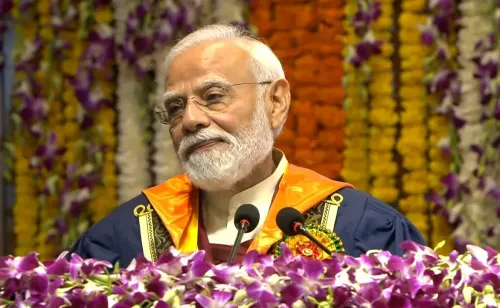
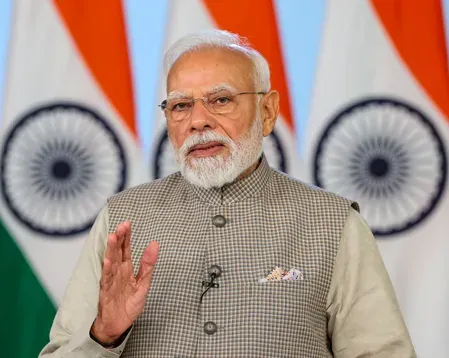
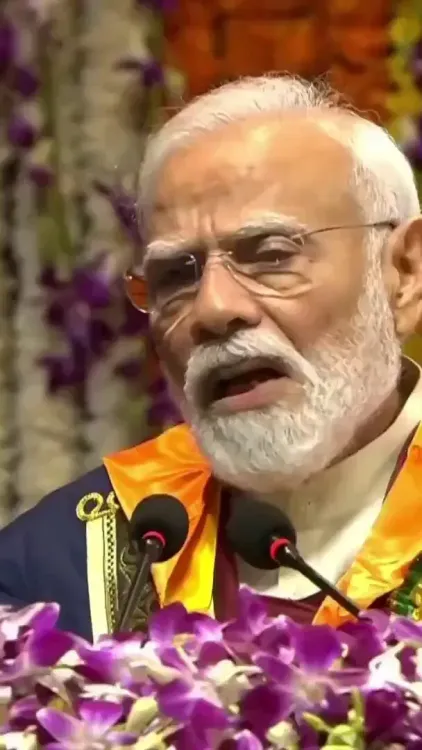
Knowledge in the service of the nation — that was the call Prime Minister Narendra Modi brought to the 57th Convocation of IIT Delhi, and Union Petroleum Minister Hardeep Singh Puri amplified it on Saturday, August 8, 2026, underscoring what he called a powerful reminder to India's youth that a degree is only the beginning.
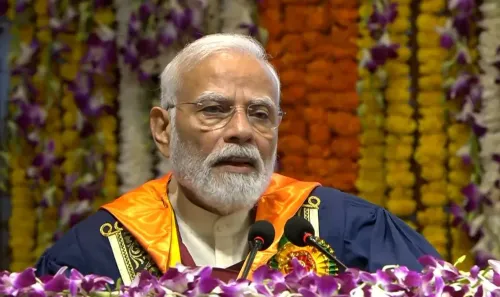
Quoting the Prime Minister directly, Puri shared Modi's charge to graduates: 'Dream big, think beyond the conventional, and use your talent in the service of the nation and humanity.' It is the kind of line that could read as ceremonial — except the government backed it with hardware.
Param Pragya: India's AI Muscle Gets a New Node
PM Modi inaugurated 'Param Pragya' during the ceremony — an AI-powered supercomputing facility designed to advance artificial intelligence, high-performance computing, and cutting-edge research at IIT Delhi. The facility is the latest addition to India's Param-series supercomputing network, which traces its lineage to the National Supercomputing Mission launched in 2015 to build indigenous high-performance computing infrastructure and reduce dependence on foreign systems. Each new node in that chain is a deliberate step toward the kind of technological sovereignty the Aatmanirbhar Bharat framework — announced in May 2020 — was designed to accelerate.Women Must Lead, Not Just Participate
The moment that cut through the ceremony was not the supercomputer. It was the Prime Minister's pointed observation that there should have been many more girls among the medal winners. Puri framed it as a reflection of a deliberate policy shift — from women-centric development to women-led development. The distinction matters. One counts women as beneficiaries; the other demands they be architects. India's technology story, as Puri put it, 'cannot be complete without women not just participating, but leading the journey towards Viksit Bharat from the front.' Gender composition at IIT convocations will now be watched as a metric, not just a footnote.IITs as Engines of Viksit Bharat 2047
The broader frame Puri drew around the event connects to the government's long-horizon ambition: a developed India by 2047. The National Education Policy 2020 had already set the architecture — multidisciplinary research, innovation integration, applied technology — and events like this convocation are positioned as proof points that the architecture is producing results. Successive expansions of the Param-series, the growth of IIT-linked start-up ecosystems, and the push for indigenous AI infrastructure all point in the same direction. A new generation and new ideas, as Puri closed his post — leading a new India. If the medal tallies at future IIT convocations do not show more women's names, that closing line will be asked to answer for itself.Point of View
If tracked against actual IIT gender data in coming years, could become a measurable accountability benchmark rather than a rhetorical flourish. Minister Puri's amplification underlines that this messaging is coordinated across the cabinet, not incidental.
NationPress
22 Sept 2026
Frequently Asked Questions
What is Param Pragya inaugurated at IIT Delhi?
'Param Pragya' is an AI-powered supercomputing facility inaugurated by PM Modi at IIT Delhi during the 57th Convocation. It is designed to advance artificial intelligence, high-performance computing, and cutting-edge research, and forms part of India's broader National Supercomputing Mission.
What did PM Modi say at IIT Delhi convocation 2026?
PM Modi urged graduates to 'dream big, think beyond the conventional, and use your talent in the service of the nation and humanity.' He also highlighted that more girls should have been among the medal winners, calling for women to lead India's technology journey.
What is Viksit Bharat and how does it relate to IITs?
Viksit Bharat is the government's vision to make India a developed nation by 2047. IITs are positioned as key engines of this vision, with their graduates expected to drive innovation, applied research, and technology-led self-reliance under the Aatmanirbhar Bharat framework.
What is the National Supercomputing Mission India?
The National Supercomputing Mission was launched in 2015 to build indigenous high-performance computing infrastructure across India, reducing dependence on foreign systems. The Param-series supercomputers, including the newly inaugurated Param Pragya at IIT Delhi, are its flagship outputs.
Why did Hardeep Singh Puri post about IIT Delhi convocation?
Union Petroleum Minister Hardeep Singh Puri shared PM Modi's address to amplify the government's message on education, innovation, and self-reliance, connecting the convocation to the broader Aatmanirbhar Bharat and Viksit Bharat policy agenda.