Puri Marks National Flag Adoption Day, Invokes Viksit Bharat
Synopsis
Union Petroleum Minister Hardeep Singh Puri on 22 July 2026 greeted Indians on National Flag Adoption Day, the 79th anniversary of the tricolour's adoption, and called for renewed commitment to building a developed, self-reliant India.
Key Takeaways
Union Petroleum Minister Hardeep Singh Puri posted greetings on National Flag Adoption Day on 22 July 2026 .
The Indian tricolour was formally adopted by the Constituent Assembly on 22 July 1947 , designed by Pingali Venkayya .
Puri linked the constitutional milestone to Viksit Bharat (developed India by 2047) and Atmanirbhar Bharat (self-reliance initiative, 2020).
The Flag Code of India was liberalised in 2002 ; the Har Ghar Tiranga campaign was launched in 2022 under Azadi Ka Amrit Mahotsav.
With Independence Day 2026 on 15 August weeks away, flag-related public programmes are expected to intensify.
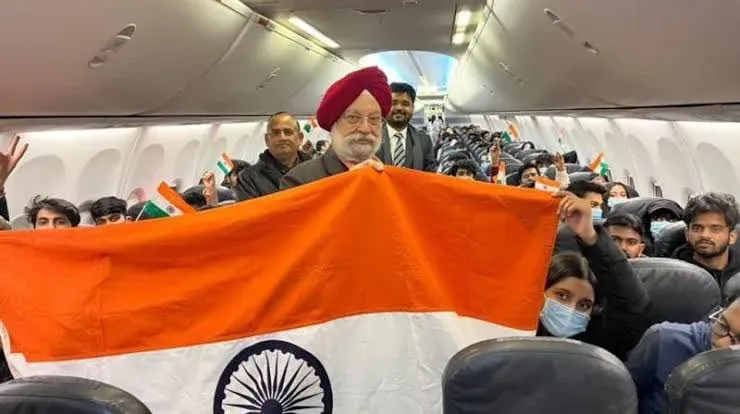
Union Petroleum Minister Hardeep Singh Puri on Wednesday, 22 July 2026 extended greetings on National Flag Adoption Day, marking the 79th anniversary of the Constituent Assembly's adoption of the Indian tricolour, and called on citizens to rededicate themselves to building a self-reliant and developed India.
Posting in Hindi on X, Puri wrote: 'तिरंगा सिर्फ़ एक ध्वज नहीं, भारत की एकता, संप्रभुता, अखंडता, गौरव और आत्मसम्मान का प्रतीक है' — 'The tricolour is not merely a flag; it is the symbol of India's unity, sovereignty, integrity, pride, and self-respect.' He added that the flag, adopted on 22 July 1947, continues to kindle the same flame of pride, faith, and patriotism in every Indian's heart.
Context
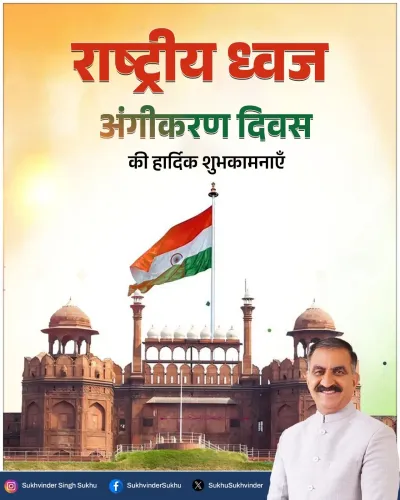
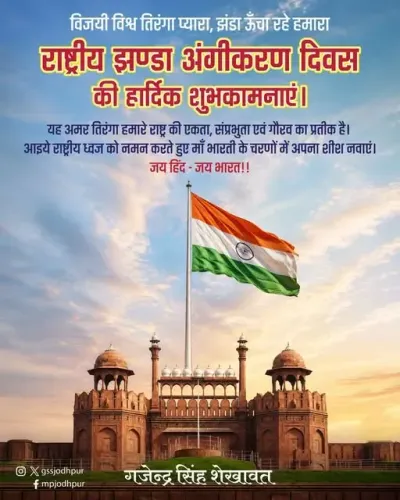
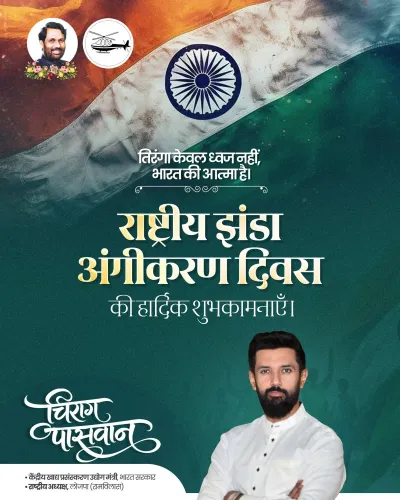
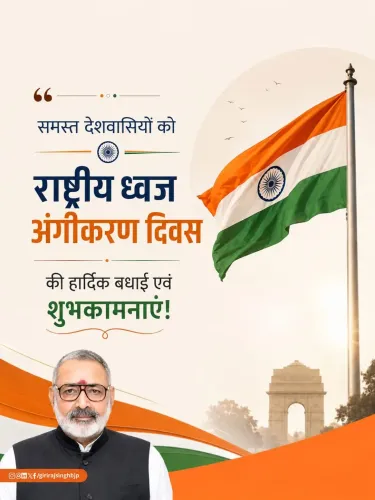
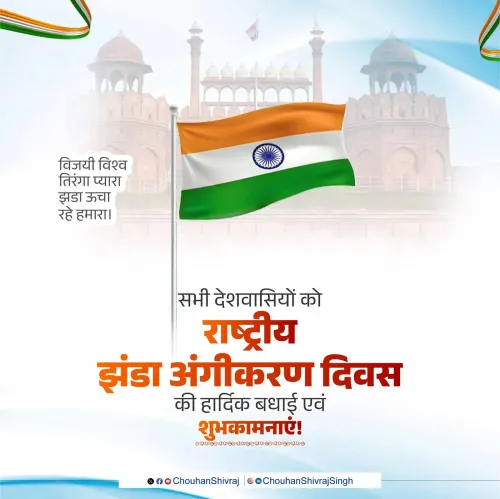
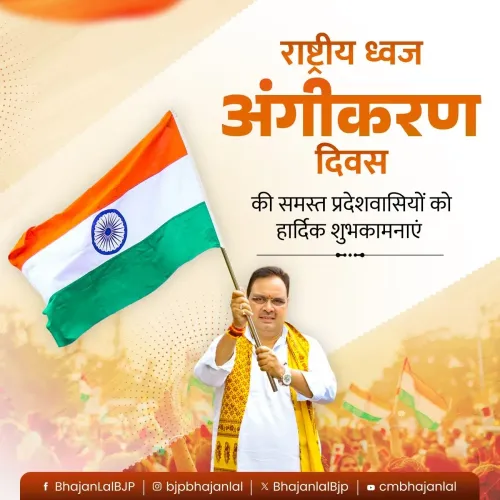
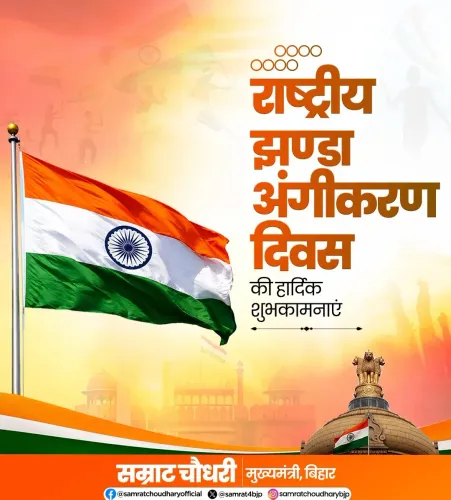
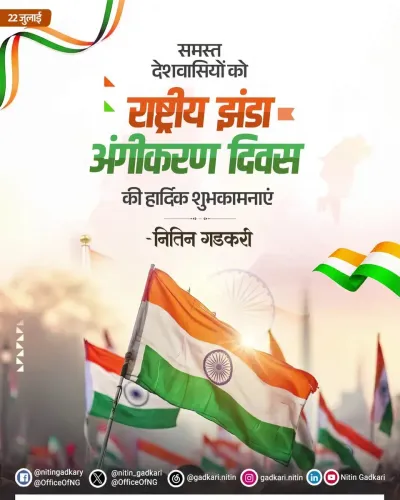
The Indian national flag was formally adopted by the Constituent Assembly on 22 July 1947 — just weeks before Independence — making the date one of constitutional significance. The tricolour, designed by freedom fighter Pingali Venkayya, features the saffron, white, and green horizontal bands with the Ashoka Chakra at its centre. The date is observed annually as Rashtriya Jhanda Angikaran Diwas (National Flag Adoption Day) across government and civic circles.
Puri's post concluded with a call to action: 'राष्ट्रहित सर्वोपरि रखते हुए विकसित व आत्मनिर्भर भारत के निर्माण में अपना सर्वोत्तम योगदान देने का संकल्प लें' — 'Let us resolve, keeping national interest paramount, to contribute our best towards building a developed and self-reliant India.' He signed off with 'Jai Hind.'
Policy Backdrop
The Flag Code of India was liberalised in 2002 to permit broader public display of the tricolour, removing earlier restrictions that had largely confined flag hoisting to official functions. Two decades later, the government launched the Har Ghar Tiranga campaign in 2022 under the Azadi Ka Amrit Mahotsav umbrella, encouraging every household to hoist the national flag around Independence Day.
Puri's invocation of Viksit Bharat — the government's vision for a fully developed India by 2047 — and Atmanirbhar Bharat, the self-reliance initiative launched in 2020, follows a pattern of linking constitutional milestones with contemporary development goals. This framing has been a consistent feature of official ministerial messaging since 2014.
Stakeholders and Impact
The commemoration resonates with educational institutions, civic bodies, and Indian citizens broadly, for whom the tricolour carries deep cultural and emotional weight. Flag Adoption Day observances are typically marked by school assemblies, cultural programmes, and social media campaigns amplified by public figures and government ministries alike.
As a senior BJP leader and former career diplomat who represented India at the United Nations, Puri's messaging carries both political and diplomatic weight. His reference to the flag as a symbol of India's standing on the world stage — 'जब-जब तिरंगा विश्व पटल पर लहराता है' ('whenever the tricolour flies on the world stage') — reflects the government's broader emphasis on India's rising global profile.
What's Next
With Independence Day 2026 approaching on 15 August, flag-hoisting events and official programmes are expected to intensify over the coming weeks. The Ministry of Culture and state governments are likely to organise public commemorations building on the Har Ghar Tiranga campaign's momentum from previous years.
Any move to formalise 22 July as a statutory national observance through parliamentary or executive action would mark a significant step in institutionalising the day beyond its current commemorative status — something that remains a possibility worth watching as 2047, the centenary of Indian independence, draws closer on the government's policy horizon.
Point of View
The messaging creates a seamless ideological arc that frames the current government as the custodian of both India's foundational identity and its future ambitions. The invocation of the tricolour's global visibility also subtly reinforces the administration's foreign-policy narrative of a resurgent India commanding respect on the world stage. As Independence Day approaches, such posts from senior ministers function as coordinated ambient messaging that primes public sentiment ahead of larger official celebrations.
NationPress
21 Oct 2026
Frequently Asked Questions
When was the Indian national flag adopted?
The Indian national flag, the tricolour, was formally adopted by the Constituent Assembly on 22 July 1947 , weeks before Independence on 15 August 1947.
Who designed the Indian national flag?
The Indian national flag was designed by freedom fighter Pingali Venkayya , featuring saffron, white, and green bands with the Ashoka Chakra at the centre.
What is Rashtriya Jhanda Angikaran Diwas?
Rashtriya Jhanda Angikaran Diwas , or National Flag Adoption Day, is observed on 22 July each year to mark the date the Constituent Assembly adopted the tricolour in 1947.
What is the Har Ghar Tiranga campaign?
Har Ghar Tiranga is a government campaign launched in 2022 under Azadi Ka Amrit Mahotsav, encouraging every Indian household to hoist the national flag around Independence Day.
What is Viksit Bharat?
Viksit Bharat is the government's vision to transform India into a fully developed nation by 2047 , the centenary of independence, frequently cited in official policy messaging since 2023.