Puri hails Lok Sabha passage of exam anti-cheating Amendment Bill 2026

Synopsis
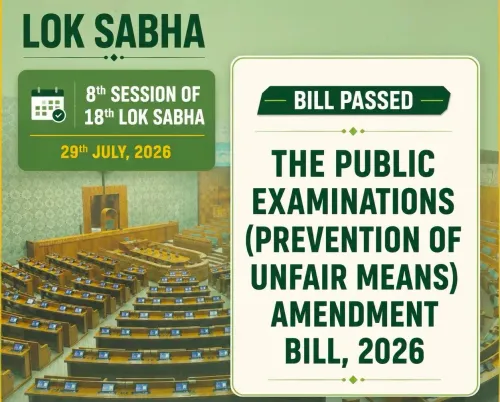
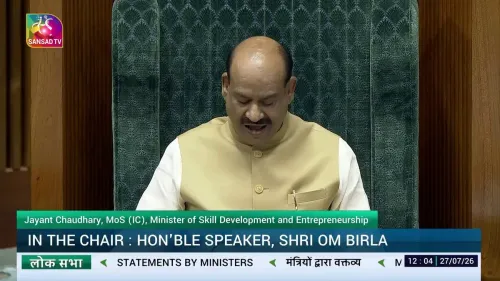
The Lok Sabha passed the Public Examination (Prevention of Unfair Means) Amendment Bill, 2026 on 29 July, tightening India's anti-cheating law first enacted in 2024. Union Minister Hardeep Singh Puri hailed the vote as a milestone in protecting student merit and exam integrity under PM Modi's leadership.
Key Takeaways
The Lok Sabha passed the Public Examination (Prevention of Unfair Means) Amendment Bill, 2026 on 29 July 2026 .
Union Petroleum Minister Hardeep Singh Puri described it as a 'major milestone' in reinforcing the credibility of India's public examination system.
The bill amends the parent Public Examinations (Prevention of Unfair Means) Act, 2024 , which first criminalised malpractices such as paper leaks in public exams.
The legislative push follows repeated paper-leak controversies in high-stakes exams including NEET and UGC-NET since 2020 .
The bill must now clear the Rajya Sabha before it becomes law; implementation rules will then be notified for bodies such as UPSC and NTA .
A bill that could reshape the stakes for millions of exam aspirants cleared the Lok Sabha on Wednesday, 29 July 2026 — and Union Petroleum Minister Hardeep Singh Puri was among the first to mark the moment, calling it a major milestone in reinforcing the credibility of India's public examination system.
Puri posted that the successful passage of the Public Examination (Prevention of Unfair Means) Amendment Bill, 2026 would 'further strengthen safeguards against unfair practices,' uphold merit, promote transparency, and 'preserve the sanctity of examinations.' He credited the achievement to the resolve of the NDA government under Prime Minister Narendra Modi to protect the 'interests, aspirations and future of students.'
Building on the 2024 law that criminalised paper leaks
The 2026 amendment does not emerge in a vacuum. Its parent legislation — the Public Examinations (Prevention of Unfair Means) Act, 2024 — was passed by Parliament in February 2024, marking the first time India codified criminal liability for malpractices in high-stakes public exams. That law was itself a direct legislative response to a wave of paper-leak controversies that rocked examinations including NEET and UGC-NET from 2020 onwards, eroding public confidence in the integrity of national recruitment and entrance tests. The 2026 amendment tightens that framework further — extending safeguards and reinforcing accountability for the bodies that conduct these exams, including agencies such as UPSC and the National Testing Agency (NTA).What the Lok Sabha vote means for crore of aspirants
For the tens of millions of students who sit competitive examinations each year — from civil services to medical entrance tests — the legislative trajectory signals a firmer institutional commitment to a level playing field. Paper leaks do not merely disadvantage honest candidates; they corrode the foundational promise that merit, not money or access to stolen question papers, determines outcomes. The bill now moves to the Rajya Sabha, where its passage will complete the legislative journey. Implementation rules notified thereafter by conducting bodies will determine how meaningfully the tighter safeguards translate into practice on the ground. If the upper house clears it swiftly, India's exam-integrity architecture will have been strengthened twice in under three years — a pace that reflects just how urgent the problem became.Point of View
Signalling that the 2024 Act was treated as a floor, not a ceiling. The political calculus is clear: paper-leak scandals carry enormous electoral and reputational costs, particularly among the vast aspirant class that forms a key demographic for the ruling coalition. By tightening the framework before the next cycle of major examinations, the government is attempting to pre-empt the kind of public fury that followed the NEET and UGC-NET controversies. Whether the amendment's real-world impact matches its legislative ambition will depend almost entirely on how rigorously the NTA and UPSC implement the new rules.
NationPress
30 Jul 2026
Frequently Asked Questions
What is the Public Examination (Prevention of Unfair Means) Amendment Bill, 2026?
It is a bill passed by the Lok Sabha on 29 July 2026 that amends the 2024 law criminalising malpractices in public exams, further tightening safeguards against paper leaks and other unfair means in high-stakes examinations.
What was the original Public Examinations (Prevention of Unfair Means) Act, 2024?
The 2024 Act, passed by Parliament in February 2024, was India's first law to codify criminal liability for unfair practices — including paper leaks — in public examinations conducted by bodies such as UPSC and NTA.
Why did India need a law against exam malpractice?
India saw a wave of paper-leak controversies in major examinations including NEET and UGC-NET from 2020 onwards, which severely damaged public confidence in the fairness of national recruitment and entrance tests.
What happens after the Lok Sabha passes the bill?
The bill must next be passed by the Rajya Sabha, the upper house of Parliament. Once cleared, the government will notify implementation rules for the conducting bodies such as UPSC and NTA.
Why did Hardeep Singh Puri comment on an education bill if he is the Petroleum Minister?
Senior cabinet ministers routinely welcome significant legislative milestones across portfolios as part of the broader NDA government's communication of its governance record; Puri's post reflects collective cabinet ownership of the bill's passage.