Puri Credits Modi's Vision for Sonbhadra's Rise as Top Aspirational District
Synopsis
Union Petroleum Minister Hardeep Singh Puri marked eight years of his association with Sonbhadra, crediting PM Modi's Aspirational Districts Programme and MPLAD investments for transforming the once-backward Uttar Pradesh district into a NITI Aayog top performer, and announced a forthcoming visit.
Key Takeaways
Hardeep Singh Puri adopted Sonbhadra under the Aspirational Districts Programme approximately eight years ago as a Rajya Sabha Member from Uttar Pradesh .
Sonbhadra, once among India's most backward districts, now consistently ranks among the top-performing Aspirational Districts in NITI Aayog assessments.
The Aspirational Districts Programme was launched by PM Narendra Modi in January 2018 to reduce developmental disparities through competitive, data-driven governance.
MPLAD funds were cited as a key resource channelled into healthcare, education, sports, roads, rail connectivity, and community infrastructure in Sonbhadra.
UNDP India has described the Aspirational Districts model as worthy of replication in other countries.
Puri announced he would be travelling to Sonbhadra the day after the post, signalling continued personal engagement with the district.
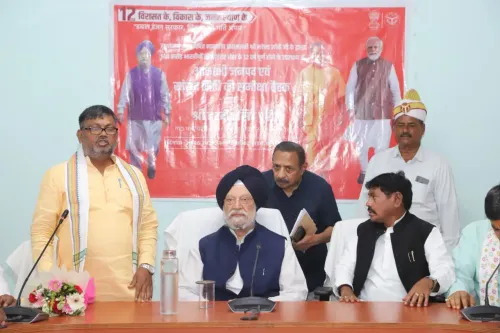
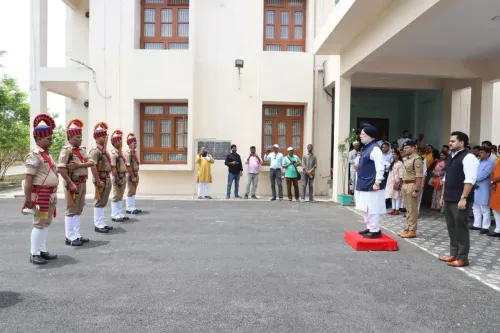
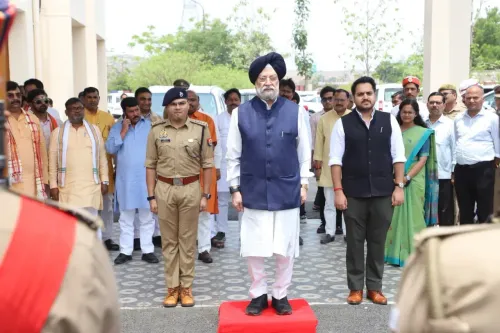
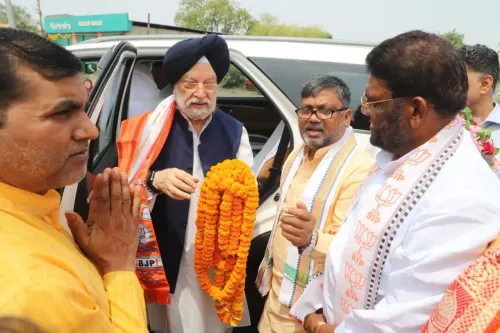
Union Petroleum Minister Hardeep Singh Puri on Thursday, June 18, 2026, reflected on his eight-year bond with Sonbhadra, a district in eastern Uttar Pradesh he adopted under the Aspirational Districts Programme during his tenure as a Rajya Sabha Member, and announced he would be visiting the district the following day.
Context
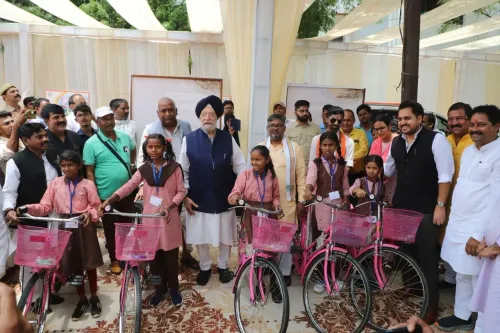
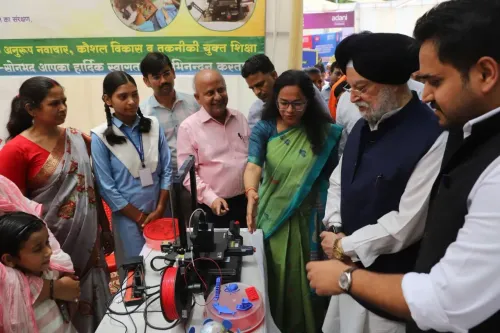
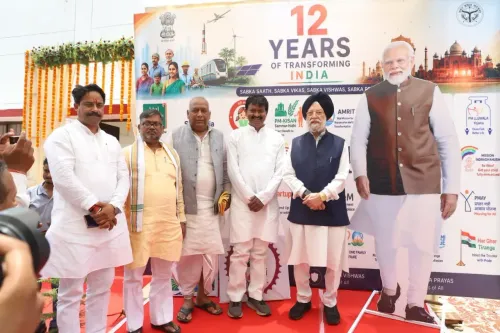
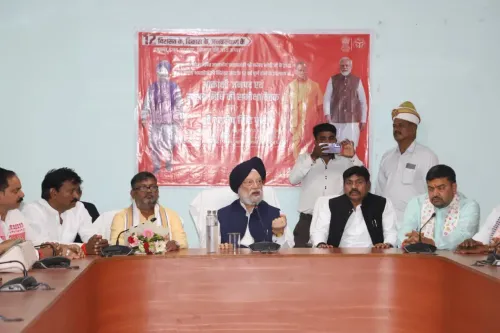
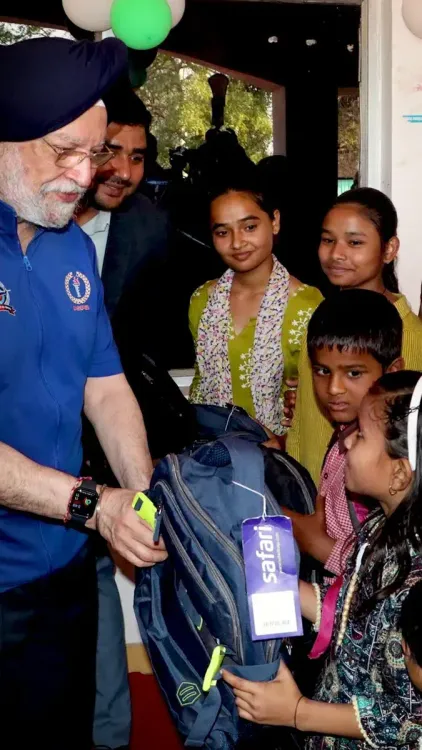
Puri's post, shared as a #ThrowbackThursday reflection, traces his association with Sonbhadra back roughly eight years to when he represented Uttar Pradesh in the Rajya Sabha and formally adopted the district. 'Every visit to Sonbhadra has felt less like an official engagement and more like a homecoming,' he wrote, describing the warmth of residents as making him feel 'like a member of their own family.'
The minister noted that Sonbhadra, once counted among the most backward districts in the country, has 'consistently featured among India's top-performing Aspirational Districts in assessments conducted by NITI Aayog.' He attributed this transformation to 'focused investments in healthcare, education, sports, roads, rail connectivity, and community infrastructure,' supported through MPLAD funds.
Policy Backdrop
The Aspirational Districts Programme was launched by Prime Minister Narendra Modi in January 2018 to reduce developmental disparities across lagging regions through real-time monitoring, convergence of central schemes, and competitive ranking of districts on measurable indicators. NITI Aayog serves as the nodal body for designing, ranking, and publicly reporting district-level progress.
Complementing the programme, the Members of Parliament Local Area Development Scheme (MPLAD), operational since 1993, allows MPs to direct funds toward small-scale infrastructure and community projects. Puri credited the effective utilisation of these funds as a key driver of Sonbhadra's development journey. International validation has followed: UNDP India has described the Aspirational Districts model as 'worthy of replication in other countries.'
Stakeholders and Impact
Sonbhadra's trajectory holds direct significance for the district's residents and for district administrations across Uttar Pradesh and beyond, as the programme's competitive ranking framework incentivises peer districts to accelerate progress. The minister's post underscores the layered approach — combining NITI Aayog oversight, MPLAD allocations, and community participation — that has driven measurable gains across health, education, and connectivity indicators.
Puri framed the broader lesson in terms applicable to any lagging district: 'Districts with immense potential often require only focused attention, sustained support, and access to additional resources to achieve transformative outcomes.' The recognition by UNDP India positions Sonbhadra's story as part of a globally noted governance experiment.
What's Next
Puri's announced visit to Sonbhadra is expected to include ground-level engagement with residents and an assessment of ongoing development work. Observers will watch for the next round of NITI Aayog Aspirational Districts rankings, which will indicate whether Sonbhadra sustains its top-performer status. Discussions around possible geographic expansion of the programme or cross-country replication — particularly given UNDP's endorsement — remain a live policy conversation at the national level.
Point of View
PM Modi-era programmes have delivered tangible change in historically neglected regions. By highlighting international validation from UNDP, the minister elevates a domestic policy success into a soft-power credential. The timing, ahead of a personal visit, also serves to maintain a visible constituency connection despite Puri now holding a central cabinet portfolio rather than a direct UP electoral mandate. Sonbhadra's story, if sustained in the next NITI Aayog rankings cycle, could become a template argument for the Aspirational Districts model's possible expansion.
NationPress
18 Sept 2026
Frequently Asked Questions
What is the Aspirational Districts Programme and when was it launched?
The Aspirational Districts Programme is a central government initiative launched by PM Narendra Modi in January 2018 to accelerate development in India's most lagging districts through real-time monitoring, competitive ranking by NITI Aayog , and convergence of central schemes across health, education, and infrastructure.
Why did Hardeep Singh Puri adopt Sonbhadra district?
Hardeep Singh Puri adopted Sonbhadra under the Aspirational Districts Programme approximately eight years ago when he was a Rajya Sabha Member representing Uttar Pradesh , channelling focused attention and MPLAD funds into the district's development.
Has Sonbhadra improved under the Aspirational Districts Programme?
Yes. Sonbhadra, once classified among India's most backward districts, now consistently features among the top-performing Aspirational Districts in assessments conducted by NITI Aayog , with gains recorded across healthcare, education, sports, and connectivity.
What is MPLAD and how does it support district development?
The Members of Parliament Local Area Development Scheme (MPLAD) , in operation since 1993 , allows MPs to recommend and fund small-scale infrastructure and community projects in their areas. Puri credited the effective use of MPLAD funds as a significant contributor to Sonbhadra's progress.
What has UNDP said about India's Aspirational Districts Programme?
UNDP India has publicly described the Aspirational Districts Programme as a model worthy of replication in other countries, recognising its outcome-oriented, data-driven approach to reducing developmental disparities.