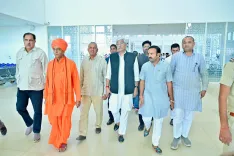
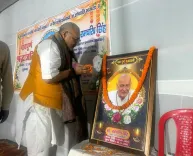
Puri pays tribute to Malaviya on death anniversary
Synopsis
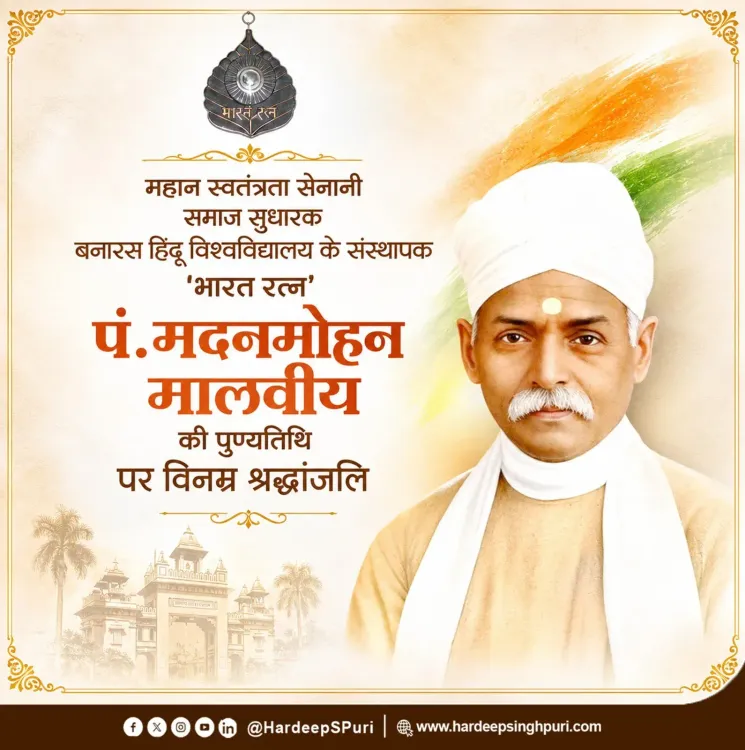
Union Petroleum Minister Hardeep Singh Puri honoured Pandit Madan Mohan Malaviya on his death anniversary, saluting the Bharat Ratna recipient who founded Banaras Hindu University in 1916 and devoted his life to India's cultural and educational uplift.
Key Takeaways
Hardeep Singh Puri posted a Hindi tribute on X on 12 November 2026 marking Pandit Madan Mohan Malaviya's death anniversary.
Malaviya founded Banaras Hindu University (BHU) in 1916 in Varanasi, combining modern education with Indian classical studies.
He was posthumously awarded the Bharat Ratna in 2015 , India's highest civilian honour.
Puri credited Malaviya with championing 'cultural consciousness, social awakening and national unity.' BHU remains one of India's largest residential central universities and stands as Malaviya's enduring institutional legacy.
A century after Pandit Madan Mohan Malaviya lit a lamp that became a university, Union Petroleum Minister Hardeep Singh Puri paused on Thursday, 12 November 2026 to honour the man who believed education was the bedrock of a nation's progress — marking Malaviya's death anniversary with a tribute on X.
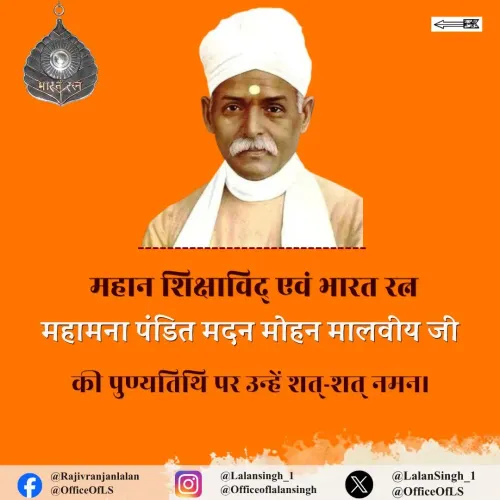
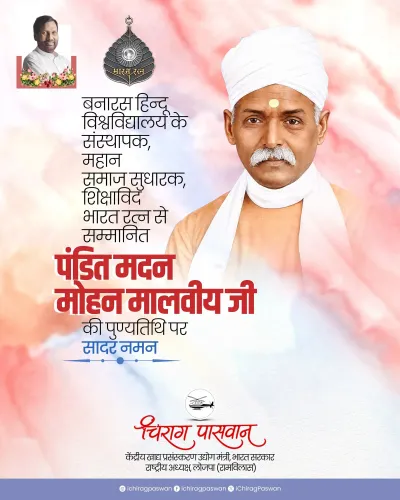
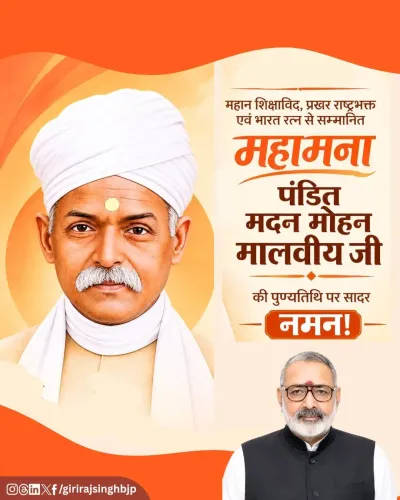
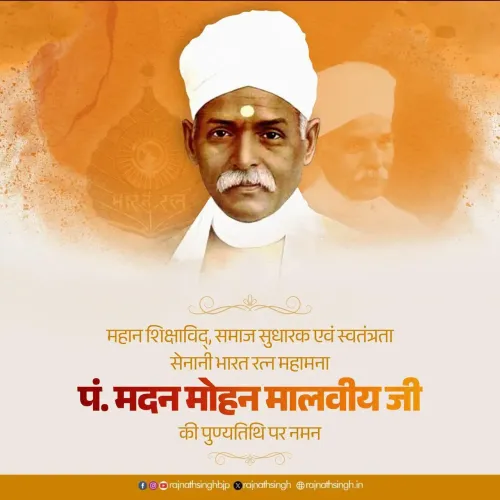
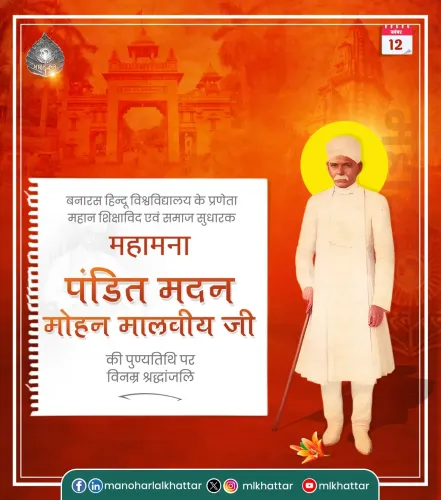
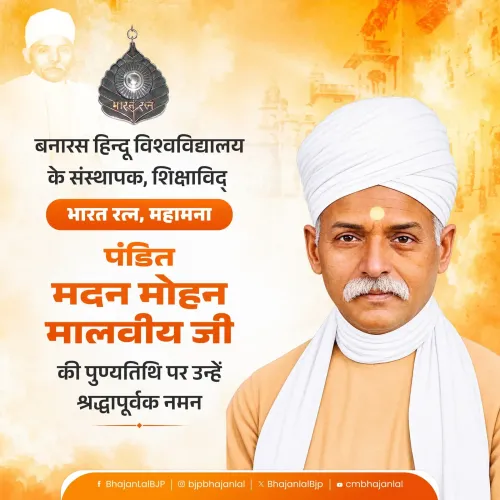
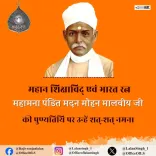
Puri wrote in Hindi: 'महान शिक्षाविद् भारत रत्न महामना पंडित मदन मोहन मालवीय जी की पुण्यतिथि पर उन्हें कोटि-कोटि नमन' — 'On the death anniversary of the great educationist, Bharat Ratna, Mahamana Pandit Madan Mohan Malaviya ji, countless salutations to him.' He added that Malaviya 'dedicated his entire life to the nation's cultural consciousness, social awakening and national unity,' and that his ideals would 'forever inspire generations to come.'
The man who built BHU with a begging bowl
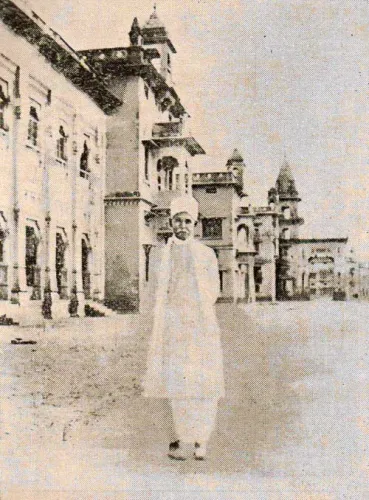
Malaviya's story is one of the more remarkable in modern Indian history. A lawyer, journalist, independence activist, and educationist, he founded Banaras Hindu University (BHU) in 1916 in Varanasi — a city chosen deliberately for its status as a seat of ancient Indian learning. His vision was to marry the rigour of modern Western-style university education with the depth of Indian cultural and classical studies. He reportedly toured the country soliciting donations, accepting contributions from maharajas and common people alike, to raise the funds that brought BHU into existence.
Today, BHU stands as one of India's largest residential central universities, spread across a sprawling campus on the banks of the Ganga, and counts among the country's most significant institutions of higher learning. It is, in a very literal sense, Malaviya's living legacy.
Bharat Ratna — posthumously, in 2015
India formally acknowledged that legacy when the Government of India posthumously awarded Malaviya the Bharat Ratna — the country's highest civilian honour — in 2015. The honour came over six decades after his death, recognising his contributions to education, national consciousness and the freedom movement. The award placed him in the company of figures who shaped independent India's moral and institutional foundations.
BJP leaders have consistently invoked Malaviya's legacy on his birth and death anniversaries, emphasising themes of education, cultural pride and national integration — values the party frames as central to its governing philosophy. Puri's tribute follows that established pattern, though the reverence for Malaviya cuts across party lines in Indian public life.
What Malaviya built in Varanasi more than a hundred years ago still teaches, still researches, still debates. That, perhaps, is the most eloquent answer to anyone who wonders whether one person's conviction about education can truly outlast them.
Point of View
His stature transcends party politics: BHU's founding is a matter of national historical record, and the Bharat Ratna was awarded under a BJP government that chose to formalise what many across the spectrum already acknowledged. Puri's tribute is ceremonial in form but ideologically purposeful in its framing of education, culture and national unity as a unified mission.
NationPress
12 Nov 2026
Frequently Asked Questions
Who was Pandit Madan Mohan Malaviya?
Pandit Madan Mohan Malaviya was a prominent Indian educationist, freedom activist, lawyer and journalist, best known for founding Banaras Hindu University in Varanasi in 1916. He was posthumously awarded the Bharat Ratna in 2015.
When was Banaras Hindu University founded and by whom?
Banaras Hindu University was founded in 1916 by Pandit Madan Mohan Malaviya in Varanasi. He envisioned it as an institution that would blend modern academic disciplines with Indian cultural and classical learning.
When did Madan Mohan Malaviya receive the Bharat Ratna?
Madan Mohan Malaviya was posthumously awarded the Bharat Ratna — India's highest civilian honour — in 2015 by the Government of India.
Why did Hardeep Singh Puri pay tribute to Madan Mohan Malaviya?
Union Petroleum Minister Hardeep Singh Puri posted a tribute on X on 12 November 2026 to mark Malaviya's death anniversary, honouring his contributions to education, cultural consciousness and national unity.
What is BHU known for today?
Banaras Hindu University is one of India's largest residential central universities, located in Varanasi on the banks of the Ganga. It is a leading institution for higher education, research and classical Indian studies.