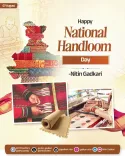
Puri Salutes India's Handloom Weavers on National Handloom Day
Synopsis
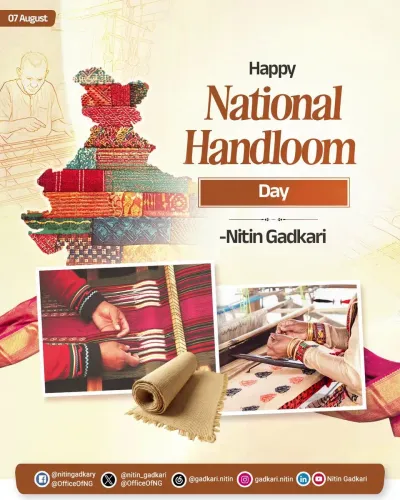
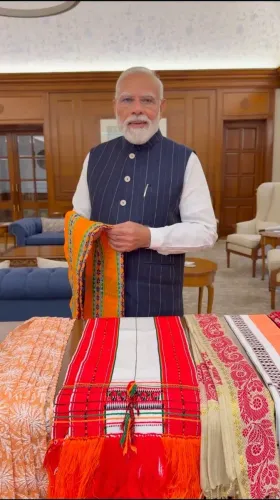
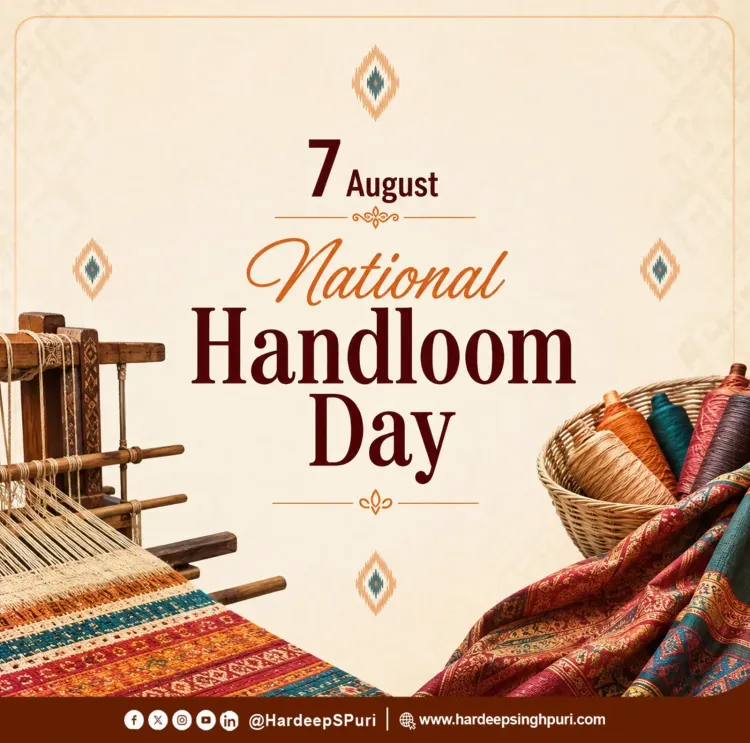
On National Handloom Day, 7 August, Union Petroleum Minister Hardeep Singh Puri honoured India's handloom craftspersons, calling the sector a living tapestry of culture rooted in tradition, regional identity, and the Swadeshi spirit of 1905.
Key Takeaways
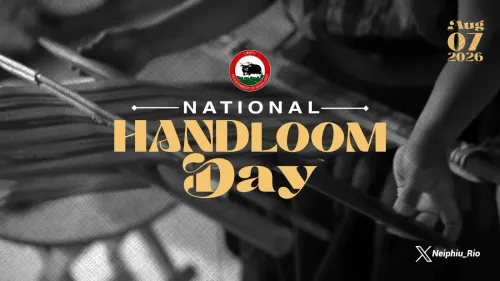
National Handloom Day falls on 7 August every year, instituted by the Government of India in 2015 .
The date commemorates the launch of the Swadeshi Movement at Calcutta Town Hall on 7 August 1905 .
Union Petroleum Minister Hardeep Singh Puri described handloom as 'a living tapestry of our culture' reflecting 'unity in our diversity.' India's handloom sector is concentrated in clusters across Uttar Pradesh , Tamil Nadu , and West Bengal , among other states.
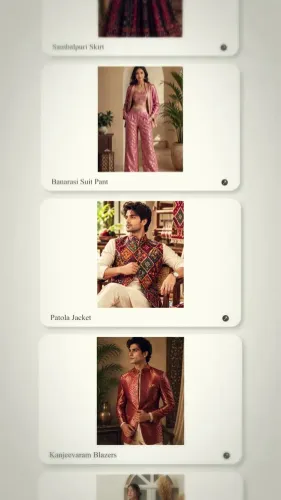
The sector sustains rural employment and preserves region-specific textile traditions such as Banarasi silk, Kanjivaram, and Jamdani.
Every thread tells a story. On National Handloom Day, 7 August, Union Petroleum Minister Hardeep Singh Puri paid tribute to India's handloom craftspersons, calling the sector 'a living tapestry of our culture' where 'every weave is a story of tradition, identity, and pride.'
A day rooted in the Swadeshi spirit of 1905
National Handloom Day is observed every year on 7 August — a date chosen deliberately. It marks the centenary of the Swadeshi Movement, launched at Calcutta Town Hall on 7 August 1905 in response to the partition of Bengal. When the Government of India notified the observance in 2015, it anchored a celebration of indigenous craft to one of the most consequential acts of economic self-assertion in the country's modern history. The symbolism was pointed: cloth as resistance, then; cloth as pride, now.Weaves that carry a region's soul
Puri's message highlighted the geographic specificity of Indian handloom — that 'each fabric carries the distinct soul of the region of its origin.' That is not sentiment alone. The handloom sector spans concentrated clusters across states including Uttar Pradesh, Tamil Nadu, and West Bengal, each producing textiles — Banarasi silk, Kanjivaram, Jamdani — whose identity is inseparable from place. The craft sustains rural employment across countless communities, binding economic livelihood to cultural continuity in a way few industries can claim. Puri described the sector as reflecting 'unity in our diversity, binding together countless communities through threads of skill, creativity, and ageless heritage' — language that frames handloom not merely as cottage industry but as a soft-power argument for India's plural identity.Ministers across portfolios join the chorus
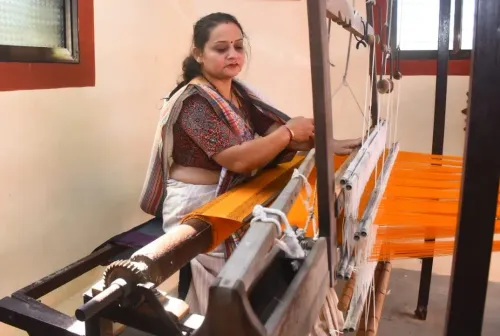
Puri's post is part of a broader pattern in which Union ministers from across portfolios mark designated cultural days with public messages amplifying traditional skills and regional diversity. The Ministry of Textiles, which instituted the observance, typically anchors the day with formal programming — buyer-seller meets, marketing scheme announcements, and weaver-recognition events. Messaging from senior leaders in other ministries extends the reach of that effort into wider public discourse. The craftsperson, so often invisible in the supply chain between loom and consumer, gets a moment at the centre of the national conversation. Once a year, at least, the weave is the headline.Point of View
Not just an economic sector. For the BJP, handloom messaging dovetails neatly with the Swadeshi and 'vocal for local' narrative that has been a consistent thread in its economic communication. Puri's framing of handloom as evidence of 'unity in diversity' is also notable — it deploys a phrase historically associated with pluralist politics in service of a cultural-pride register. The real policy test, as always, lies in what the Ministry of Textiles announces in the days around the observance in terms of scheme funding and market access for weavers.
NationPress
7 Aug 2026
Frequently Asked Questions
Why is National Handloom Day celebrated on 7 August?
National Handloom Day is observed on 7 August to commemorate the launch of the Swadeshi Movement at Calcutta Town Hall on 7 August 1905 . The Government of India instituted the annual observance in 2015 to honour handloom weavers and promote indigenous textiles.
What did Hardeep Singh Puri say on National Handloom Day 2026?
Hardeep Singh Puri called India's handloom heritage 'a living tapestry of our culture' and said 'every weave is a story of tradition, identity, and pride.' He paid tribute to craftspersons whose artistry keeps India's cultural fabric 'vibrant and truly extraordinary.'
Which states are major handloom clusters in India?
Major handloom clusters are concentrated in states including Uttar Pradesh (known for Banarasi silk), Tamil Nadu (Kanjivaram), and West Bengal (Jamdani), among others. Each region produces textiles with a distinct identity tied to local tradition.
When was National Handloom Day started in India?
The Government of India notified 7 August as National Handloom Day in 2015 , marking the centenary of the Swadeshi Movement launch in 1905.
What is the significance of handloom for rural employment in India?
India's handloom sector sustains rural livelihoods across countless communities, linking economic employment to the preservation of region-specific craft traditions. It is considered one of the country's most important indigenous industries.