Will Public Access to Rashtrapati Bhavan Be Restricted from January 21-29?
Click to start listening
Synopsis
Attention all visitors! Access to the iconic Rashtrapati Bhavan will be temporarily restricted from January 21 to 29 due to major national celebrations. These events promise to showcase India's military strength and cultural richness. Don't miss out on the fascinating details about these ceremonies and the historic significance of this architectural marvel.
Key Takeaways
- Rashtrapati Bhavan will be closed to the public from January 21 to 29.
- The Republic Day Parade will showcase India's military and cultural heritage.
- Access to the Amrit Udyan garden will be available from February.
- The Change of Guard Ceremony occurs every Saturday, barring holidays.
- Rashtrapati Bhavan symbolizes India's unity and democratic values.
New Delhi, Jan 17 (NationPress) Access to Rashtrapati Bhavan (Circuit-1) will not be available for the public from January 21 to 29 in light of the forthcoming Republic Day Parade and Beating Retreat Ceremony, as confirmed by a representative of the President's Secretariat on Saturday.
Typically, the Rashtrapati Bhavan Main Building welcomes visitors from Tuesday to Sunday (excluding Gazetted holidays) during seven designated slots from 9:30 a.m. to 4:30 p.m.
The Rashtrapati Bhavan Museum Complex is also accessible to the public from Tuesday to Sunday (except on Gazetted holidays), with online booking options available.
Additionally, the Change of Guard Ceremony at the Forecourt of Rashtrapati Bhavan occurs every Saturday from 8 a.m. to 9 a.m., unless it coincides with a Gazetted holiday or is otherwise announced.
Besides the Main Building, the expansive 15-acre Amrit Udyan is another prominent attraction. This special garden is typically open to visitors in February.
The Amrit Udyan provides a peaceful retreat from the bustling city, allowing guests to stroll through its exquisite collection of flowers, trees, and fountains.
This year’s Republic Day Parade promises to seamlessly weave together 150 years of 'Vande Mataram', showcasing India’s military prowess and rich cultural diversity, as stated by the Ministry of Defence.
The Parade will include state-of-the-art defense platforms, 30 colorful tableaux, an impressive flypast featuring 29 aircraft, and a vibrant cultural display by 2,500 performers, all celebrating 'Vande Mataram' and 'Atmanirbhar Bharat'.
The Chief Guests for this year’s Republic Day Parade will be António Costa, President of the European Council, and Ursula von der Leyen, President of the European Commission.
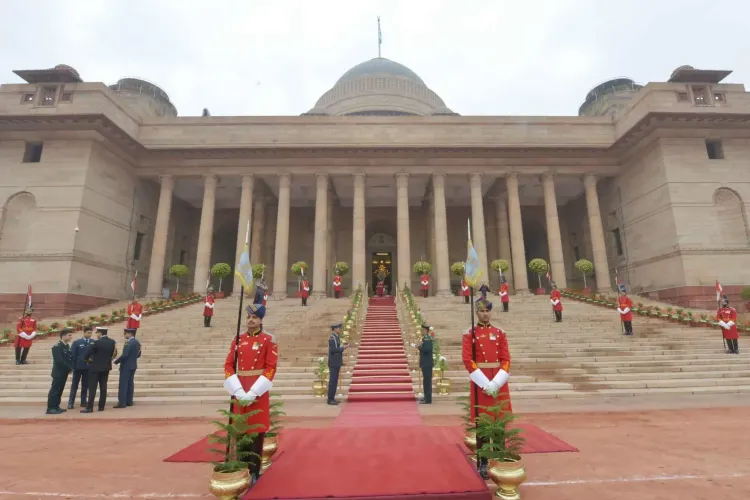
Rashtrapati Bhavan, the official home of the President of India, was designed in 1911 following the decision to move the capital of British India from Kolkata to Delhi.
This distinguished H-shaped mansion, covering 5 acres within a vast 330-acre estate, comprises 340 rooms across four levels and includes nearly 2.5 km of corridors, as detailed on Rashtrapati Bhavan's official website.
Construction commenced in 1912 and took 17 years to complete, finishing in 1929.
Architect Edwin Lutyens designed the building, which features many distinctive architectural elements such as a dome inspired by the Sanchi Stupa, chhatris, and intricate jali work that emphasize traditional Indian design.
Initially constructed as the Viceroy's House for the British Viceroy of India, it was renamed Government House following India’s independence on August 15, 1947.
Later, during Dr. Rajendra Prasad’s presidency, it was renamed Rashtrapati Bhavan, marking its new role as the residence of the President of India.
Today, Rashtrapati Bhavan symbolizes India’s rich cultural heritage and democratic principles.
Since becoming the seat of the Indian Presidency, Rashtrapati Bhavan has hosted numerous significant national events including defense investiture ceremonies, where gallantry awards are given to national heroes, as well as swearing-in ceremonies for leaders such as the President, Prime Minister, and Cabinet Ministers.
The building also plays a crucial role in international diplomacy, welcoming global leaders and serving as a venue for important treaties and agreements.
According to the official website, it remains a central point for celebrating India’s Independence Day and Republic Day, along with other major national events and festivals.
Point of View
I emphasize the importance of Rashtrapati Bhavan not just as a residence of the President of India, but as a symbol of our nation's unity and heritage. With the upcoming Republic Day celebrations, we are reminded of the rich tapestry of our democracy and the cultural diversity that defines us. It is crucial for citizens to engage with these national events and understand their significance in shaping our identity.
NationPress
17/01/2026
Frequently Asked Questions
Why is public access to Rashtrapati Bhavan restricted?
Public access is restricted from January 21 to 29 due to the upcoming Republic Day Parade and Beating Retreat Ceremony.
When is the Change of Guard Ceremony held?
The Change of Guard Ceremony takes place every Saturday from 8 a.m. to 9 a.m., unless it coincides with a Gazetted holiday.
What are the visiting hours for Rashtrapati Bhavan?
Rashtrapati Bhavan is open for public viewing from Tuesday to Sunday, except on Gazetted holidays, during seven time slots from 9:30 a.m. to 4:30 p.m.
What is the Amrit Udyan?
Amrit Udyan is a 15-acre garden in the Rashtrapati Bhavan estate that typically opens for public viewing in February, offering a serene natural environment.
Who are the Chief Guests for this year's Republic Day Parade?
The Chief Guests for this year's Republic Day Parade will be António Costa, President of the European Council, and Ursula von der Leyen, President of the European Commission.