Rahul Gandhi calls 'Chalo Delhi' Jan March for November 1
Synopsis
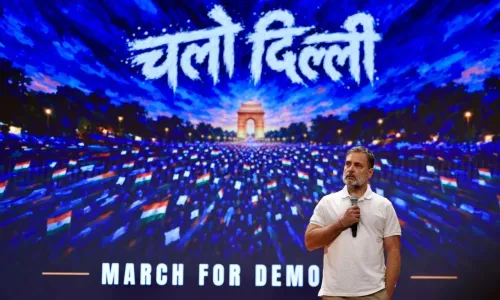
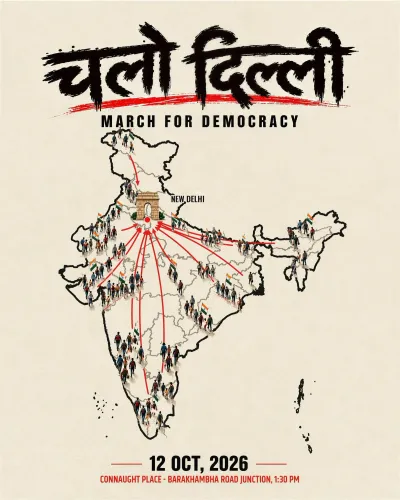
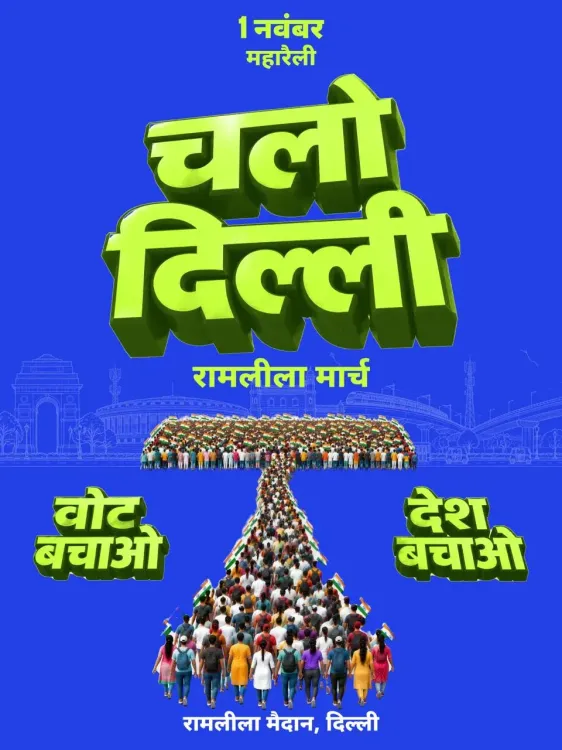
Congress leader Rahul Gandhi has called a 'Vote Bachao – Desh Bachao' Jan March and Maharally in Delhi on November 1, alleging names have been deleted from voter rolls, electoral rules broken, and lathi charges used on those who questioned the process.
Key Takeaways
Rahul Gandhi announced the 'Vote Bachao – Desh Bachao' Jan March and Maharally for November 1, 2026, in Delhi .
He alleged that names have been deleted from voter rolls , rules violated, and police force used against citizens raising questions.
The rally call is addressed to students, farmers, workers, and women — a broad four-pillar coalition.
The Election Commission of India has not publicly responded to the specific allegations as of this report.
Congress and opposition allies have raised concerns about voter list irregularities across multiple state elections between 2023 and 2024 .
Gandhi, as Leader of the Opposition in Lok Sabha , holds institutional standing to escalate the issue to parliament if the rally builds significant pressure.
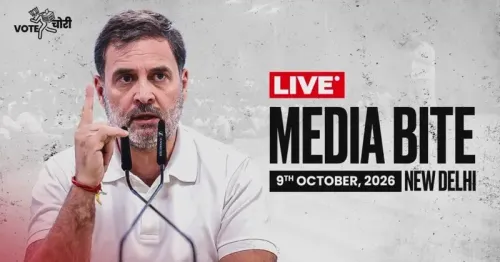
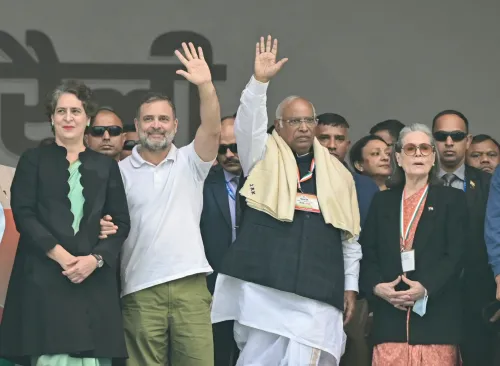
A mass mobilisation call echoing across India's political landscape — Congress leader Rahul Gandhi on Sunday, October 25, 2026, announced a 'Vote Bachao – Desh Bachao' Jan March and Maharally in Delhi on November 1, alleging that voter lists have been manipulated, rules violated, and citizens who dared to ask questions met with police batons.
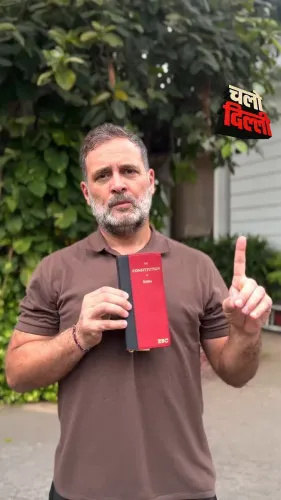
In a sharp Hindi-language post, Gandhi wrote: 'हमारा वोट चुराया जा रहा है और ये हम किसी हाल में चुपचाप नहीं सहेंगे' — 'Our vote is being stolen and we will not tolerate this silently under any circumstances.' He listed three specific charges: names struck off voter rolls, laws broken, and lathi charges on those who raised questions.
What Gandhi is specifically alleging
The post lays out a three-part indictment: deletion of names from electoral rolls, violation of electoral rules, and use of police force against citizens questioning the process. All three claims are framed not as administrative errors but as deliberate acts against democratic participation. The Election Commission of India has not publicly responded to these specific allegations as of this report.
Opposition parties — particularly the Indian National Congress and allies in the INDIA bloc — have raised concerns about alleged voter list irregularities during multiple state assembly elections between 2023 and 2024. Gandhi's post positions the November 1 rally as the direct answer: 'Ab jawab desh dega' — 'Now the country will respond.'
Students, farmers, workers, women — who the march is aimed at
The call explicitly names four constituencies: students, farmers, workers, and women — the same broad coalition Congress has repeatedly attempted to knit together on issues from unemployment to agrarian distress. Framing all four groups under the banner of electoral rights is a deliberate escalation, linking economic grievances to a threat to the ballot itself.
This follows a well-worn Congress playbook of large Delhi mobilisations — the party has previously used capital marches on farmers' rights, inflation, and democratic freedoms. But naming voter-roll deletions as the central charge sharpens the political stakes considerably, with the rally title — 'Vote Bachao – Desh Bachao' (Save the Vote – Save the Nation) — directly invoking the integrity of future elections.
November 1 and what follows
The immediate test is turnout on November 1 at Delhi. A large, visually striking rally would hand the opposition a narrative ahead of any upcoming electoral cycles; a thin crowd would be spun equally hard in the other direction. The formal response — or silence — from the Election Commission on voter list maintenance practices will be the other number to watch.
Gandhi, as Leader of the Opposition in Lok Sabha and MP from Rae Bareli, has the institutional standing to force a parliamentary debate on electoral roll integrity if the rally builds sufficient political pressure. Whether this march becomes a pressure valve or a genuine pivot point depends on how many of those four named groups — students, farmers, workers, women — actually make the journey to the capital next Sunday.
Point of View
Gandhi is attempting to elevate an administrative complaint into a constitutional crisis narrative — a higher-stakes framing that could resonate beyond the Congress base. The move fits a pattern of Delhi-centric mass mobilisations that serve dual purposes: generating street-level pressure and producing imagery that sustains news cycles ahead of electoral cycles. The explicit targeting of students, farmers, workers, and women signals an intent to build a cross-sectional coalition, though Congress has historically struggled to translate Delhi rally energy into durable state-level electoral outcomes. The Election Commission's response — or deliberate silence — will determine whether the opposition succeeds in making electoral roll integrity a live national issue.
NationPress
25 Oct 2026
Frequently Asked Questions
What is the 'Vote Bachao Desh Bachao' rally on November 1?
It is a Jan March and Maharally called by Congress leader Rahul Gandhi, scheduled for November 1, 2026, in Delhi, protesting alleged voter list deletions and electoral rule violations.
Why is Rahul Gandhi calling a march to Delhi?
Gandhi alleges that names have been illegally removed from voter rolls, electoral rules have been broken, and citizens who raised questions faced police lathi charges — issues he says demand a public response.
Who is invited to the November 1 Delhi rally?
Gandhi explicitly addressed the call to students, farmers, workers, and women.
Has the Election Commission responded to voter list deletion allegations?
As of October 25, 2026, no public response from the Election Commission of India to the specific allegations in Gandhi's post has been reported.
What does 'Vote Bachao Desh Bachao' mean?
'Vote Bachao Desh Bachao' translates to 'Save the Vote – Save the Nation', the slogan framing electoral integrity as a prerequisite for national survival.