Rahul Gandhi Calls Haldwani Stage 'Purification' an Insult to Constitution
Synopsis
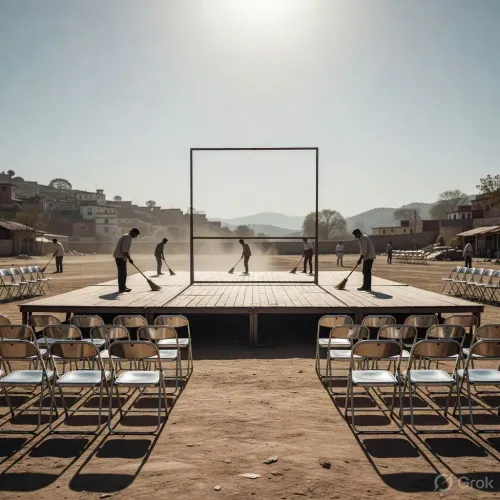
Congress leader Rahul Gandhi has condemned the alleged ritual 'purification' of a stage used by party president Mallikarjun Kharge at a Haldwani rally, calling it a violation of Article 17 of the Constitution and attributing it to BJP-RSS ideology.
Key Takeaways
Rahul Gandhi posted on 13 August 2026 condemning reports that the stage used by Congress President Mallikarjun Kharge at a Haldwani rally was 'purified' after his address.
Gandhi called the act an insult not just to Kharge personally but to the Constitution of India , which abolished untouchability under Article 17 (1950) .
He attributed the incident to what he termed the 'Manuvaadi soch' — Manuist ideology — of the BJP-RSS , calling it a mindset that judges a person's worth by birth rather than equality.
Mallikarjun Kharge is a member of the Scheduled Caste community and the first non-Gandhi to lead the Congress party in decades.
The incident occurred in Haldwani, Nainital district, Uttarakhand — a BJP-governed state — raising questions about the state administration's response.
The episode may be raised in Parliament's next session in the context of social justice legislation and constitutional rights enforcement.
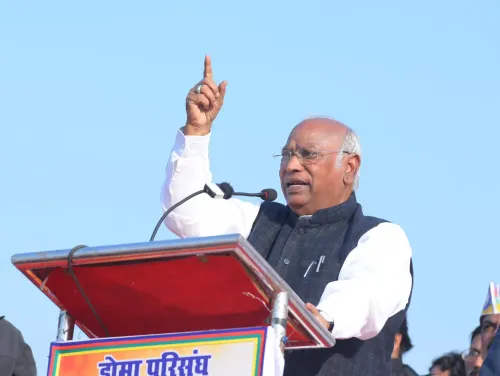
A political rally in Haldwani, Uttarakhand has ignited a sharp constitutional debate after reports emerged that the stage used by Congress President Mallikarjun Kharge was allegedly 'purified' after his address — an act that Congress leader Rahul Gandhi, Leader of the Opposition in Lok Sabha, has condemned as an act of untouchability and a direct assault on the Indian Constitution.
In a post on 13 August 2026, Gandhi wrote in Hindi: 'हल्द्वानी में कांग्रेस अध्यक्ष श्री मल्लिकार्जुन खरगे जी की सभा के बाद मंच का शुद्धिकरण' — 'the purification of the stage after Congress President Shri Mallikarjun Kharge's rally in Haldwani' — is not merely an insult to one individual, but an insult to the Constitution that declared untouchability a crime. He went on to call it a product of what he termed the 'Manuvaadi soch' — the Manuist ideology — that he attributed to the BJP-RSS, one that, in his words, 'still determines a person's worth by their birth, not by equality or humanity.'
Article 17 and the Law the Incident Allegedly Defied
Article 17 of the Constitution of India, adopted in 1950, abolished untouchability in all its forms and made its practice a punishable offence. The Protection of Civil Rights Act and subsequent legislation reinforced that prohibition with criminal penalties. Gandhi's framing is deliberate: by invoking the Constitution rather than party politics alone, he elevates the alleged act from a local provocation to a question of foundational law.
Kharge, who belongs to the Scheduled Caste community and is the first non-Gandhi to lead the Congress party in decades, has been a frequent target of identity-based political attacks. His presence at the top of the opposition hierarchy makes any incident touching on caste dignity politically explosive.
BJP-RSS and the 'Manuvaadi' Charge
Gandhi's post does not treat the reported Haldwani incident as isolated. He frames it as the logical outcome of 'years of cultivated Manuvaadi thinking' within the BJP-RSS ecosystem — a charge the opposition has deployed repeatedly, and one the Rashtriya Swayamsevak Sangh (founded 1925) and the Bharatiya Janata Party consistently reject. The RSS has in recent years publicly distanced itself from caste hierarchy, but critics argue that periodic local incidents reveal a persistent gap between stated ideology and ground-level practice.
Indian political discourse has long seen both major formations trade accusations on caste. What gives this moment sharper edges is the specificity: a named Congress president, a named town, and an alleged ritual act with an unmistakable social meaning.
Haldwani as Political Flashpoint
Haldwani, the largest city in Nainital district, Uttarakhand, has been a site of intense political mobilisation and, periodically, of social tensions. Uttarakhand is a BJP-governed state, which sharpens the political context of the alleged incident. Whether local Congress or state BJP leadership responds — and what position the Uttarakhand administration takes — will determine how far this episode travels beyond social media.
Gandhi's post signals that Congress intends to press the issue. With Parliament's next session on the horizon, the incident could surface in questions on social justice legislation or in zero-hour submissions on constitutional violations.
When the law says untouchability is a crime and a stage still gets 'purified,' the gap between the Constitution and the ground is not a footnote — it is the story.
Point of View
Gandhi attempts to shift the debate from political allegation to legal violation — a framing that is harder for the BJP to dismiss as routine opposition noise. The incident also underlines Kharge's symbolic weight as a Dalit leader at the top of the opposition hierarchy; any perceived slight against him carries amplified resonance among Scheduled Caste voters whom both parties are aggressively courting ahead of state elections. Whether the BJP responds, stays silent, or distances itself from the local act will itself become a data point in how each party manages the caste question going into the next electoral cycle.
NationPress
13 Aug 2026
Frequently Asked Questions
What happened at the Haldwani Congress rally involving Mallikarjun Kharge?
Reports emerged that the stage used by Congress President Mallikarjun Kharge at a public rally in Haldwani, Uttarakhand was allegedly 'purified' after his address — an act widely interpreted as rooted in caste-based untouchability. The specific details of the incident have not been independently confirmed.
What did Rahul Gandhi say about the Haldwani stage purification incident?
Rahul Gandhi posted on 13 August 2026 calling the alleged purification an insult not just to Kharge but to the Indian Constitution, which abolished untouchability under Article 17. He attributed the act to what he called the 'Manuvaadi' ideology of the BJP-RSS.
What does Article 17 of the Indian Constitution say about untouchability?
Article 17, adopted in 1950, abolished untouchability in all its forms and made its practice a punishable offence. Subsequent legislation including the Protection of Civil Rights Act reinforced this prohibition with criminal penalties.
Who is Mallikarjun Kharge and why is his caste identity significant?
Mallikarjun Kharge is the President of the Indian National Congress and belongs to the Scheduled Caste community. He is the first non-Gandhi to lead the Congress party in several decades, making any caste-based slight against him politically and symbolically significant.
What is 'Manuvaadi soch' and why does Rahul Gandhi use the term?
'Manuvaadi soch' refers to an ideology derived from the ancient Manu Smriti that critics say entrenches caste hierarchy and determines social worth by birth. Gandhi uses the term to link the alleged incident to what he characterises as the foundational social worldview of the BJP-RSS, a charge both organisations reject.