Rahul Gandhi calls INDIA bloc march to Supreme Court over 'vote theft'
Synopsis
Rahul Gandhi announces that INDIA alliance leaders will march from Connaught Place to the Supreme Court on October 12 to file a petition against alleged 'vote theft', after the Chief Justice directed the bloc to approach the court formally.
Key Takeaways
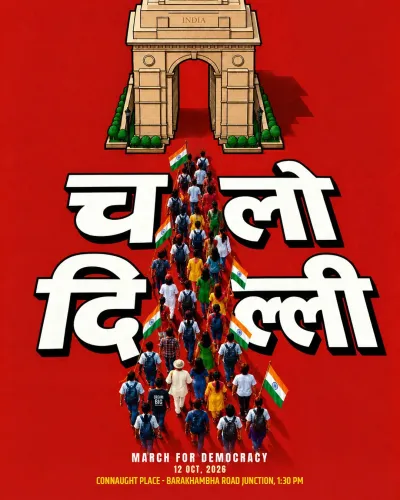
Congress leader Rahul Gandhi announced the INDIA bloc march to the Supreme Court on October 12, 2026 .
The alliance had written to the Chief Justice of India ; the CJI directed them to file a formal petition.
The march begins at Connaught Place, New Delhi and ends at the Supreme Court of India .
The petition targets alleged 'vote theft' (vote chori) , including concerns about electoral integrity.
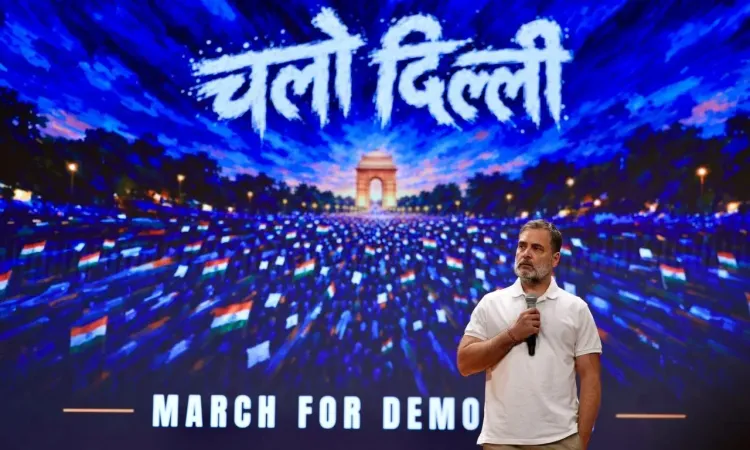
Gandhi urged citizens who cannot attend to 'raise their voice' from wherever they are under #ChaloDilli .
The move shifts the opposition's electoral grievances from political rhetoric into a formal constitutional legal challenge .
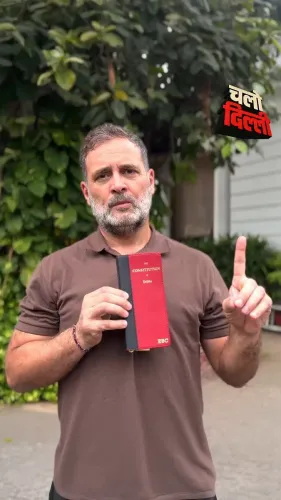
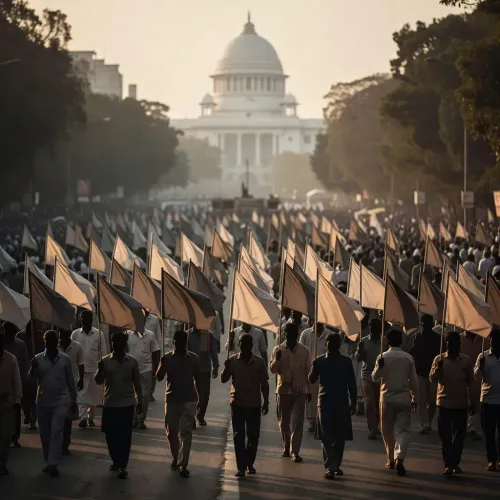
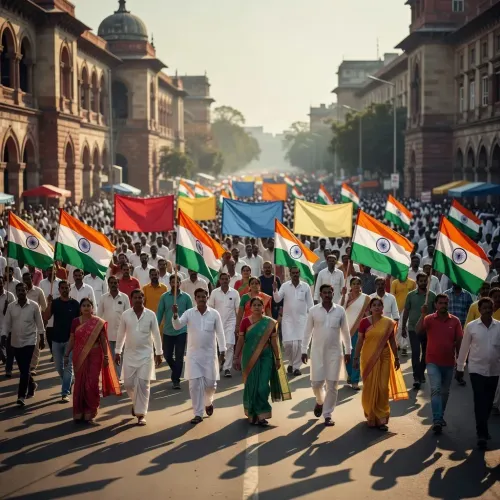
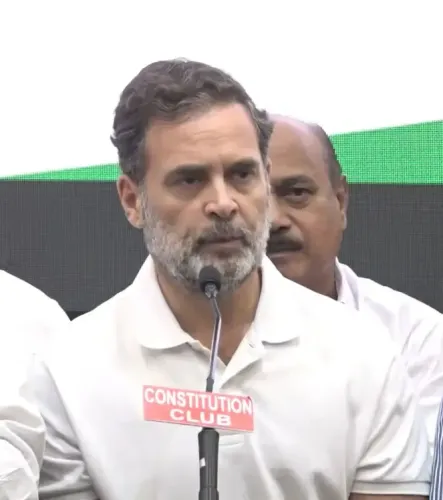
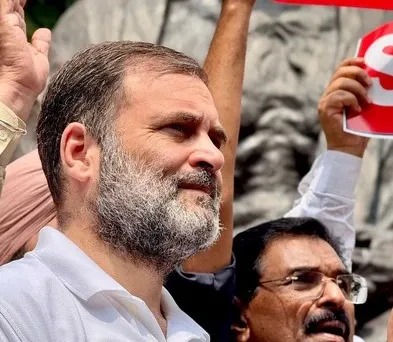
Democracy is on the march — literally. Congress leader Rahul Gandhi, Leader of the Opposition in the Lok Sabha, announced on Monday, October 12, 2026 that leaders of the INDIA alliance will march to the Supreme Court of India to file a petition against what the opposition is calling 'vote theft', after the Chief Justice of India directed the alliance to approach the court through a formal petition.
Posting in Hindi, Gandhi wrote: 'हमने CJI को पत्र लिखा था। उन्होंने हमें याचिका दाखिल करने का निर्देश दिया।' ('We had written to the CJI. He directed us to file a petition.') The post called on citizens to gather at Connaught Place, New Delhi and join the march, or, if unable to travel, to 'raise their voice from wherever they are' under the hashtag #ChaloDilli.From a letter to the CJI — to the steps of the Supreme Court
The sequence Gandhi describes is significant: the opposition alliance first wrote directly to the Chief Justice of India raising concerns about alleged electoral irregularities, and the CJI's office apparently responded by directing them to file a formal writ petition — the standard constitutional route for grievances before the apex court. By choosing a public street march to the court rather than a quiet legal filing, the INDIA bloc is turning a procedural step into a political demonstration, maximising visibility ahead of what could become a landmark electoral-integrity case.
The march originates from Connaught Place, the symbolic commercial and civic heart of New Delhi, and ends at the Supreme Court building on Tilak Marg — a route that passes through the capital's institutional core. The optics are deliberate: opposition leaders walking in formation past Parliament Street and toward the highest court in the land send a message that this fight will be waged on constitutional, not merely partisan, terrain.
What 'vote theft' means — and why the Supreme Court is the chosen arena
The phrase 'vote chori' ('vote theft') has been a recurring charge from the opposition directed at the conduct of recent elections, encompassing allegations around Electronic Voting Machine integrity, voter roll manipulation, and the fairness of counting processes. By filing a petition in the Supreme Court, the INDIA bloc is seeking judicial scrutiny of these claims rather than leaving them as political talking points — a move that, if admitted, could force the Election Commission of India to respond on record before a constitutional bench.
Gandhi's appeal to citizens to march or to 'raise their voice from wherever they are' signals that the alliance wants this framed as a mass democratic movement, not merely a legal technicality. The #ChaloDilli hashtag — 'Come to Delhi' — is an open mobilisation call, echoing the grammar of earlier mass-movement moments in Indian political history.
Whether the Supreme Court admits the petition or returns it for want of specifics will be the immediate test. But the march itself is already the story — an opposition alliance walking in step to the apex court is a tableau that no government can easily ignore.
Point of View
But the opposition's decision to amplify it with street theatre converts a legal formality into a political moment. If the Supreme Court admits the petition, it could force the Election Commission onto the defensive in the highest constitutional forum; if it is dismissed at the threshold, the government gains a powerful counter-narrative. Either way, the march marks a deliberate escalation — from letters and rallies to the marble steps of the apex court.
NationPress
12 Oct 2026
Frequently Asked Questions
Why is the INDIA alliance marching to the Supreme Court?
The INDIA alliance is marching to the Supreme Court to file a formal petition against alleged 'vote theft' in elections. After the bloc wrote to the Chief Justice of India, the CJI directed them to approach the court through a petition rather than a letter.
What is 'vote chori' that Rahul Gandhi is referring to?
'Vote chori' literally means 'vote theft'. The INDIA opposition alliance uses the term to describe alleged electoral irregularities — including concerns about Electronic Voting Machines, voter rolls, and counting processes — that they say undermined fair election outcomes.
Where does the INDIA bloc march start and end?
According to Rahul Gandhi's post, the march begins at Connaught Place in central New Delhi and proceeds to the Supreme Court of India on Tilak Marg.
What did the Chief Justice of India say about the INDIA bloc's letter?
As stated by Rahul Gandhi, the Chief Justice of India, upon receiving the alliance's letter, directed the INDIA bloc to file a formal writ petition before the Supreme Court — the standard constitutional route for such grievances.
What is #ChaloDilli?
#ChaloDilli means 'Come to Delhi' in Hindi. The INDIA alliance used the hashtag as a mobilisation call, urging supporters across the country to either join the march in New Delhi or raise their voices from wherever they are.