Rahul Gandhi Hails Pradhan Resignation, Lists Two Demands
Synopsis
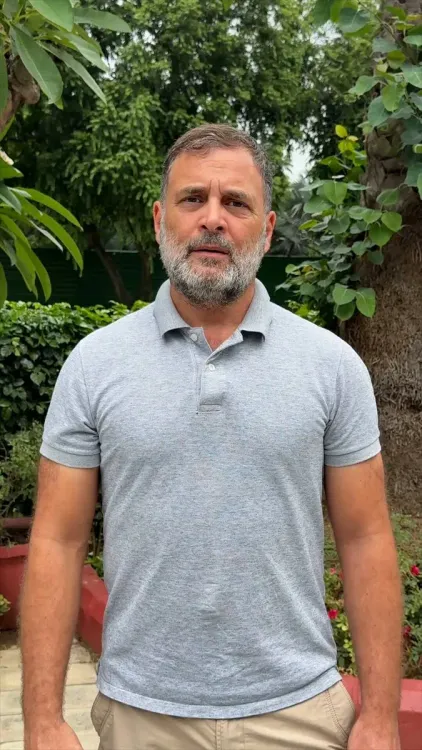
Congress leader Rahul Gandhi on 25 July 2026 hailed Education Minister Dharmendra Pradhan's resignation as a major victory for student protesters, while pressing two outstanding demands: a personal apology from Prime Minister Modi and accountability for violence against demonstrators.
Key Takeaways
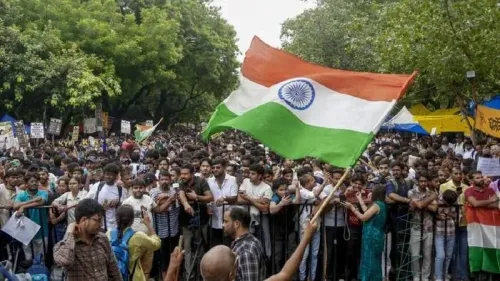
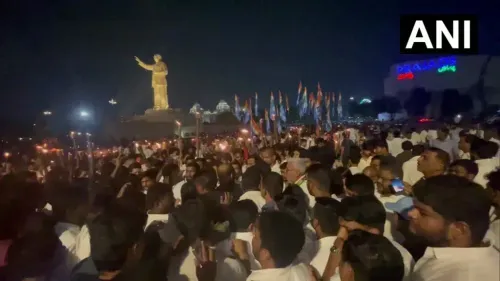
Congress leader Rahul Gandhi called Dharmendra Pradhan's resignation 'a very big step towards rebuilding our education system.' Gandhi congratulated students who protested on the streets to defend democracy, the Constitution and their futures.
He listed two remaining demands : a public apology from Prime Minister Modi and action against those responsible for violence on student protesters.
Gandhi extended his message to farmers, labourers and the poor , urging all suppressed sections to stand firm constitutionally for their dignity.
The post ended with the rallying call 'डरो मत!' ('Do not be afraid!'), language Gandhi has used in earlier mass mobilisations.
Congress framed the development as evidence that 'the time has come to remove this government,' signalling a broader electoral campaign.
Congress leader and Leader of the Opposition in Lok Sabha Rahul Gandhi on Saturday, 25 July 2026, welcomed the resignation of Union Education Minister Dharmendra Pradhan, calling it 'a very big step towards rebuilding our education system' and congratulating students across the country for their sustained street protests.
Context
Posting on X, Gandhi praised students who took to the streets, writing — 'सड़कों पर आ कर लोकतंत्र, संविधान और अपने भविष्य की रक्षा में डट कर खड़े होने वाले हर एक युवा' ['every young person who stood firm on the streets to defend democracy, the Constitution and their future'] — and said the country was proud of them. He framed Pradhan's exit as a direct result of student-led democratic pressure rather than a routine cabinet reshuffle.
Gandhi, however, was quick to note that the protest movement's work is not finished. 'Two demands still remain,' he said, calling on Prime Minister Narendra Modi to personally apologise to students and to take action against those responsible for violence on protesters.
Policy Backdrop
Dharmendra Pradhan had served as Union Minister of Education overseeing the rollout of the National Education Policy (NEP) 2020, which restructured India's education system from early childhood through higher education. The NEP replaced a policy dating to 1986 and introduced sweeping changes to school structure, vocational training and higher education regulation.
Student unrest around national examinations — particularly over allegations of paper leaks and administrative failures linked to NEET and other competitive tests — had already triggered large-scale protests in 2024, building a pattern of youth mobilisation centred on exam integrity and ministerial accountability. Congress and other opposition parties had repeatedly demanded accountability from the Education Ministry over those controversies.
Stakeholders and Impact
Gandhi explicitly broadened the message beyond students, addressing farmers, labourers and the poor — groups he said the government had 'suppressed and crushed' — urging them to 'stand firm constitutionally for their dignity.' The statement signals Congress's intent to stitch together multiple strands of anti-government sentiment ahead of any future electoral contest.
The call to action — 'डरो मत!' ['Do not be afraid!'] — echoed language Gandhi has used in earlier mobilisations, including during the farm-law protests. By linking student grievances to wider social discontent, the party is reinforcing a narrative of constitutional defence that has been central to its opposition strategy since 2021.
What's Next
With the resignation accepted, attention will shift to who succeeds Pradhan at the Education Ministry and whether the new minister moves quickly to address pending student demands. Gandhi's two outstanding demands — a prime ministerial apology and punitive action against those who allegedly used violence on protesters — are likely to be raised in Parliament and will test the government's willingness to engage with the protest movement's remaining agenda.
Congress's framing that 'the time has come to remove this government' signals that the party intends to convert the education crisis into a sustained political campaign, keeping student mobilisation at the centre of its opposition narrative in the months ahead.
Point of View
Welcomed by Gandhi with immediate conditions attached, illustrates how street protests have forced a tangible ministerial concession — a relatively rare outcome in recent Indian politics. By coupling congratulations with two unmet demands, Gandhi is careful not to let the moment be read as a complete victory, keeping the movement's energy alive. The broadening of the appeal to farmers, labourers and the poor is a deliberate strategic stitch: Congress is attempting to consolidate disparate grievances into a single constitutional-rights narrative ahead of the next electoral cycle. Whether the government responds to the outstanding demands or stonewalls will determine whether this episode becomes a lasting liability or a managed crisis.
NationPress
25 Jul 2026
Frequently Asked Questions
Why did Dharmendra Pradhan resign as Education Minister?
The specific circumstances of Pradhan's resignation in July 2026 have not been officially detailed, but Rahul Gandhi attributed it to sustained student protests demanding accountability over education policy failures and exam controversies.
What are the two demands Rahul Gandhi made after Pradhan's resignation?
Gandhi demanded that Prime Minister Modi personally apologise to students and that those responsible for violence against student protesters be held accountable and face action.
What is the National Education Policy and why are students protesting?
The National Education Policy 2020 restructured India's education system from school to higher education. Student protests have centred on exam integrity issues — particularly alleged paper leaks in competitive tests like NEET — and demands for ministerial accountability.
What did Rahul Gandhi say to students in his post?
Gandhi praised students who took to the streets to defend democracy and the Constitution, said the country was proud of them, and ended with the rallying call 'Do not be afraid!' ( डरो मत! ).
Why did Rahul Gandhi mention farmers and labourers in a post about student protests?
Gandhi deliberately linked student grievances to the wider discontent of farmers, labourers and the poor, framing all of them as groups suppressed by the current government and urging them to stand firm constitutionally — a strategy Congress has used since the farm-law protests of 2021.