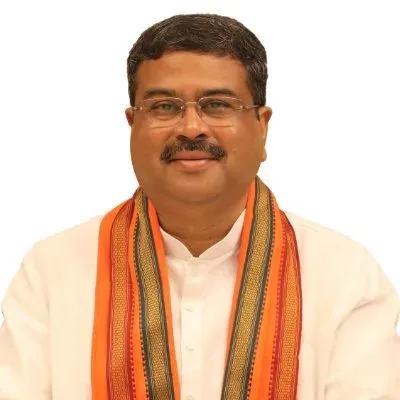
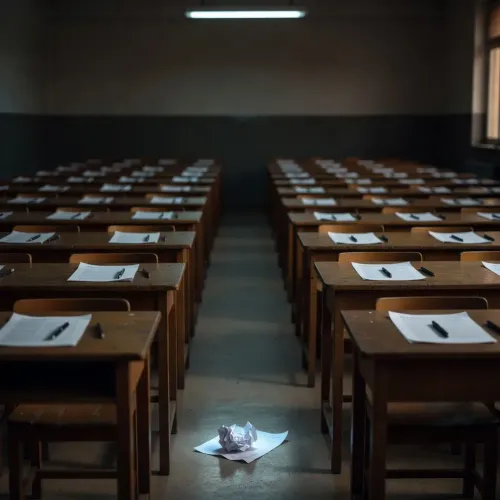
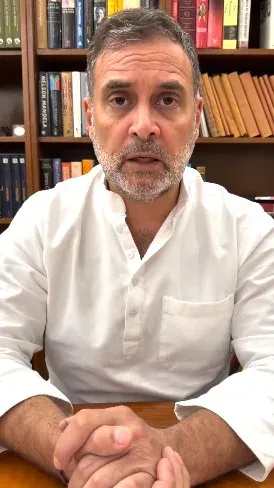
Rahul Gandhi Demands Dharmendra Pradhan's Resignation Over NEET Paper Leaks
Synopsis
Congress leader Rahul Gandhi on May 24, 2026, demanded Education Minister Dharmendra Pradhan's resignation and a foolproof system to stop NEET-style paper leaks, saying the Modi government is 'busy evading, not answering' while the futures of 22 lakh students hang in the balance.
Key Takeaways
Congress leader Rahul Gandhi posted on X on May 24, 2026 , demanding the resignation of Union Education Minister Dharmendra Pradhan .
Gandhi cited the futures of 22 lakh children being at stake due to alleged paper leaks in national entrance exams.
He specifically named NEET as an example of systemic examination failure requiring a foolproof preventive system.
Gandhi accused Prime Minister Narendra Modi of remaining silent while millions of youth protest on the streets.
The National Testing Agency (NTA) , which conducts NEET under the Ministry of Education , is at the centre of the accountability demand.
The Congress has signalled it will not halt its campaign until ministerial accountability and structural reforms are delivered.
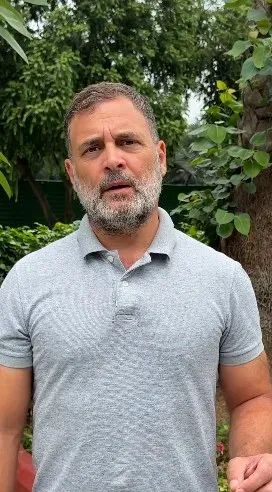
Congress leader Rahul Gandhi, Leader of the Opposition in the Lok Sabha, on Sunday, May 24, 2026, escalated his attack on the Narendra Modi government over alleged paper leaks in national entrance examinations, demanding the immediate resignation of Union Education Minister Dharmendra Pradhan and a foolproof system to prevent recurrence.
Posting in Hindi on X, Gandhi wrote: 'जब लाखों युवा सड़क पर हों, 22 लाख बच्चों का भविष्य दांव पर हो और PM चुप हो - तो सरकार जवाब देने नहीं, बचने में लगी है।' — translated: 'When millions of youth are on the streets, the future of 22 lakh children is at stake, and the PM is silent — the government is busy evading, not answering.' He added that his party would not stop until Dharmendra Pradhan resigns and a foolproof system to prevent paper leaks like those seen in NEET is put in place.
Context
The post comes amid sustained opposition pressure over alleged irregularities in the National Eligibility cum Entrance Test (NEET), the single national medical entrance examination for undergraduate admissions. Gandhi's demand targets Dharmendra Pradhan, who has served as Union Minister of Education since 2021 and oversees examination policy, including the functioning of the National Testing Agency (NTA) — the autonomous body under the Ministry of Education that conducts NEET and other major entrance tests.
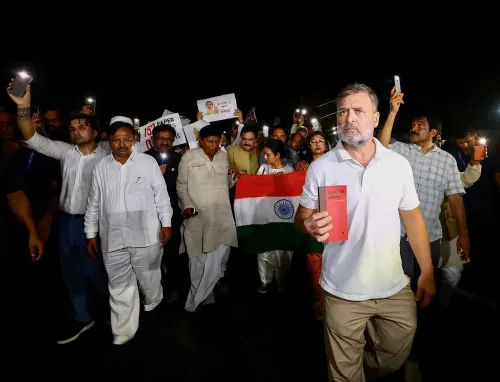
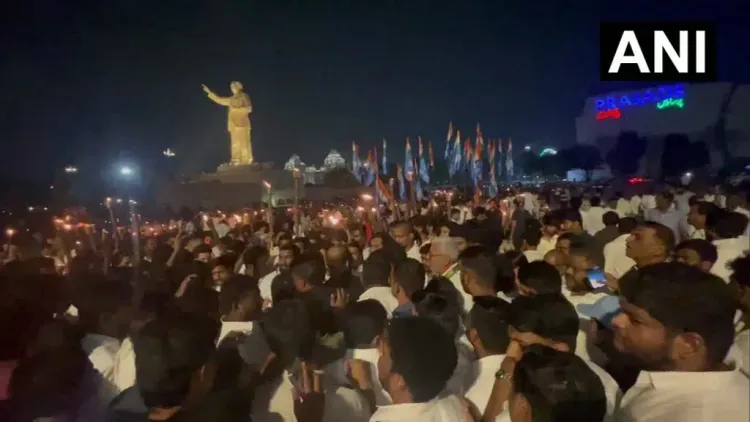
Gandhi specifically cited 22 lakh children whose futures he said are at stake, and referenced millions of young people protesting on the streets. He also criticised Prime Minister Narendra Modi directly for remaining silent on the issue.
Policy Backdrop
NEET was introduced in 2013 and became the mandatory single-window medical entrance examination from 2016 following directions from the Supreme Court. The centralisation of admissions through a single test was intended to bring uniformity and curb irregularities across state-level examinations.
However, opposition leaders have repeatedly highlighted alleged paper leaks and administrative lapses in national competitive examinations over successive years, demanding ministerial accountability and stronger technical safeguards. The NTA's conduct of high-stakes exams has faced scrutiny from multiple quarters, including parliamentary committees and the judiciary.
Stakeholders and Impact
The primary stakeholders are medical aspirants — students who invest years of preparation and significant financial resources to appear for NEET. Any compromise in examination integrity directly affects their prospects for admission to MBBS and BDS programmes across the country.
Gandhi's framing of the issue as a youth crisis — with 'millions on the streets' — signals that the Indian National Congress intends to keep exam integrity at the centre of its political mobilisation, particularly among first-time voters and student communities ahead of future electoral cycles.
What's Next
Political observers will watch whether the demand for Dharmendra Pradhan's resignation gains traction within parliament, particularly during the upcoming monsoon session. The Supreme Court has previously monitored NTA functioning, and any fresh judicial intervention or ministry announcement on revised exam protocols could shape the political response.
With the opposition signalling it will not relent, the government faces pressure to either defend its examination infrastructure publicly or announce structural reforms to the NTA — a test of how the ruling dispensation manages one of its most politically sensitive governance challenges.
Point of View
Designed to keep the opposition's narrative on the front foot. By invoking '22 lakh children' and 'millions on the streets,' he frames a governance failure as a generational grievance, connecting examination integrity to the wider youth unemployment and opportunity discourse that has dogged the ruling dispensation. The demand for a 'foolproof system' alongside a resignation call is also politically astute: it gives the government two distinct pressure points to respond to, making any partial concession look like an admission of failure. How the ruling party handles this dual demand — on personnel and on process — will signal its broader approach to managing accountability politics ahead of the monsoon session.
NationPress
13 Oct 2026
Frequently Asked Questions
Why is Rahul Gandhi demanding Dharmendra Pradhan's resignation?
Rahul Gandhi is demanding Dharmendra Pradhan 's resignation over alleged paper leaks in the NEET national medical entrance examination, holding the Union Education Minister accountable for failures in the examination system under his ministry.
What is NEET and why is it controversial?
NEET (National Eligibility cum Entrance Test) is the single national examination for medical undergraduate admissions in India, made mandatory from 2016 . It has faced repeated allegations of paper leaks and administrative lapses, drawing protests from students and opposition parties.
What is the National Testing Agency (NTA)?
The National Testing Agency (NTA) is an autonomous body under the Ministry of Education responsible for conducting NEET and other major national entrance examinations. It has faced scrutiny over alleged irregularities in examination conduct.
How many students are affected by the NEET paper leak controversy?
Rahul Gandhi has cited 22 lakh children as having their futures at stake due to the alleged examination irregularities, though this figure comes from his post and has not been independently verified.
What is Congress demanding to fix the NEET paper leak problem?
The Indian National Congress , through Rahul Gandhi , is demanding two things: the immediate resignation of Education Minister Dharmendra Pradhan and the creation of a foolproof system to prevent paper leaks in national entrance examinations like NEET .