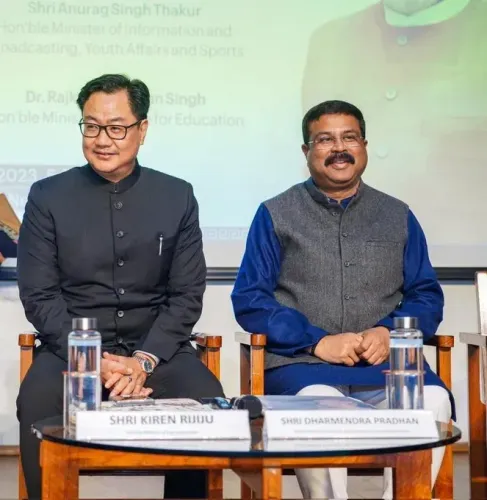
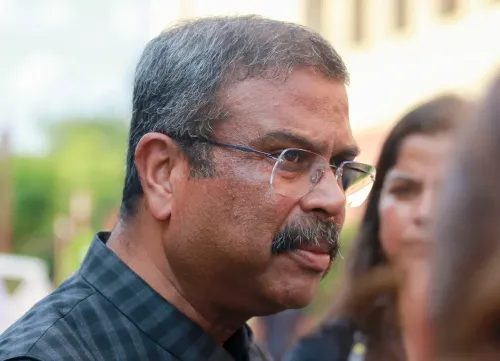
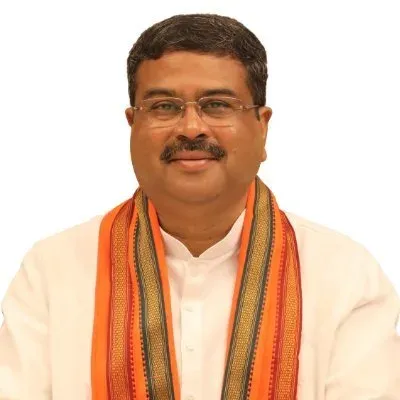
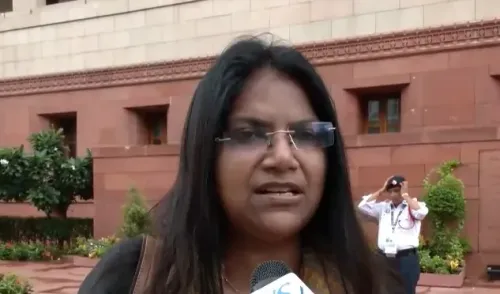
Congress demands Dharmendra Pradhan's exit over NEET-UG 2026 paper leak
Synopsis
NEET-UG 2026 has been cancelled over paper leak allegations — again. With 25 lakh students forced to reappear and Congress demanding Education Minister Dharmendra Pradhan's resignation, the episode revives a damaging pattern: leak, CBI referral, committee, repeat. The real question is whether this time the government moves beyond damage control.
Key Takeaways
NEET-UG 2026 was cancelled on 12 May 2026 following allegations of a paper leak.
An estimated 25 lakh students will have to reappear for the examination.
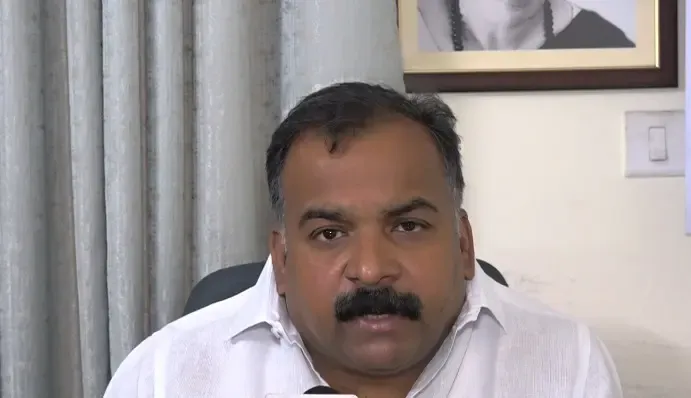
Congress MP Manickam Tagore demanded the resignation of Union Education Minister Dharmendra Pradhan , citing 12 years of examination failures.
Congress Rajya Sabha MP Pramod Tiwari called the leaks "organised crime," saying over one crore families are affected.
The CBI has reportedly been handed the investigation into the paper leak.
The leak is alleged to have originated in Rajasthan , with Congress also questioning the state's Chief Minister on accountability.
Congress leaders on Tuesday, 12 May launched a sharp political offensive against the Centre after the NEET-UG 2026 examination was cancelled following allegations of a paper leak, demanding the resignation of Union Education Minister Dharmendra Pradhan and calling the incident a symptom of a "corrupt system." The cancellation affects an estimated 25 lakh students who will now have to reappear for one of India's most competitive entrance examinations.
Congress Fires at the Centre
Congress MP Manickam Tagore alleged that repeated paper leaks had become routine under the National Democratic Alliance (NDA) government, accusing the Centre of failing to protect students' futures. "NEET paper leak is becoming an ordinary thing now. Lakhs and lakhs of students spend hours and days preparing for the exam. Their fathers and mothers borrow money and send them to coaching centres. After all that, papers are leaked," Tagore said.
He further claimed that over the last 12 years, the government had made a "mockery" of the examination system and argued that appointing enquiry committees after each incident amounted to a "waste of time." "Those responsible should quit. Particularly, Education Minister Dharmendra Pradhan must take responsibility," he added.
Demand for Ministerial Accountability
Congress Rajya Sabha MP Pramod Tiwari echoed those concerns, questioning whether political leaders — including Prime Minister Narendra Modi and the Chief Minister of Rajasthan, where the leak reportedly originated — would accept ethical responsibility. "Will Prime Minister Modi and members of his Council of Ministers take responsibility based on ethics?" Tiwari asked.
Tiwari described the repeated leaks as "organised crime," arguing that with 25 lakh students affected, the ripple effect extended to more than one crore families — calculated on an average of five members per family. He said the issue had moved beyond administrative failure into a systemic breakdown.
Pattern of Leaks and Committee Fatigue
This is not the first time NEET has been engulfed in controversy. The NEET-UG 2024 paper leak triggered a nationwide uproar, led to Supreme Court scrutiny, and prompted the government to hand the investigation to the Central Bureau of Investigation (CBI). Critics argue that despite repeated CBI referrals and committee formations, structural reforms to the examination delivery mechanism have not materialised. Notably, the latest cancellation follows a similar playbook — allegations surface, the CBI is brought in, and the exam is rescheduled — without a credible long-term deterrent in place.
Impact on Students and Families
The NEET-UG examination is the sole gateway to undergraduate medical admissions across India, making its integrity critical for hundreds of thousands of aspirants each year. A cancellation at this stage means months of additional preparation time lost, financial strain on families who have invested in coaching, and heightened anxiety for students already under intense pressure. The Congress leaders argued that the human cost of these recurring failures is disproportionately borne by students from economically weaker backgrounds whose families stretch their resources to fund medical entrance preparation.
Government Yet to Respond
As of the time of reporting, Union Education Minister Dharmendra Pradhan had not issued a formal response to the resignation demands. The CBI is reportedly already involved in investigating the paper leak. All eyes are now on whether the government will announce structural reforms to the examination delivery process — or whether this episode will follow the same cycle of inquiry, punishment of lower-level operatives, and systemic inaction that critics say has defined India's examination integrity crisis.
Point of View
CBI referral, committee formation, selective prosecutions, and a rescheduled exam. What is conspicuously absent is structural reform to how question papers are set, stored, and distributed. The Congress's demand for Pradhan's resignation is politically predictable, but the underlying accountability question is legitimate: after multiple high-profile leaks, why has no senior official faced consequences, and why has the examination delivery architecture not been overhauled? Until that changes, 25 lakh students will keep paying the price for a system that protects its architects.
NationPress
7 Oct 2026
Frequently Asked Questions
Why was NEET-UG 2026 cancelled?
NEET-UG 2026 was cancelled following allegations of a paper leak. The Central Bureau of Investigation (CBI) has reportedly been brought in to investigate the breach.
How many students are affected by the NEET-UG 2026 cancellation?
Approximately 25 lakh students are affected and will have to reappear for the examination. Congress MP Pramod Tiwari argued this impacts over one crore families when accounting for an average of five members per household.
Why is Congress demanding Dharmendra Pradhan's resignation?
Congress leaders allege that repeated NEET paper leaks under the NDA government reflect systemic failure and that Union Education Minister Dharmendra Pradhan must take political responsibility. They argue that forming inquiry committees after each incident without implementing long-term solutions is inadequate.
Where did the NEET-UG 2026 paper leak allegedly occur?
Congress MP Pramod Tiwari alleged the incident took place in Rajasthan, and questioned whether the state's Chief Minister would also accept ethical responsibility for the leak.
Has NEET faced paper leak controversies before?
Yes. NEET-UG 2024 was also hit by a major paper leak controversy that triggered Supreme Court scrutiny and a CBI investigation. Critics argue that despite repeated investigations, no structural reforms to examination delivery have been implemented.