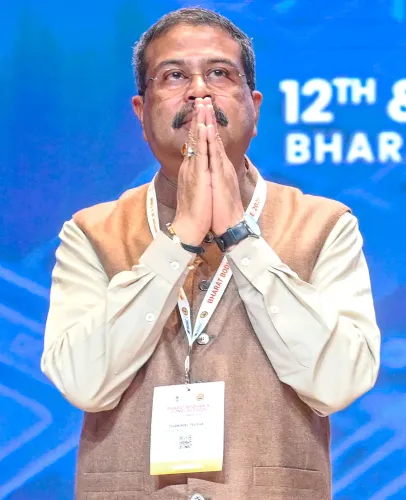
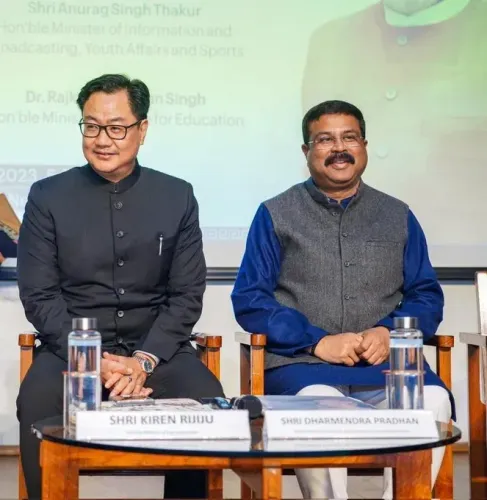
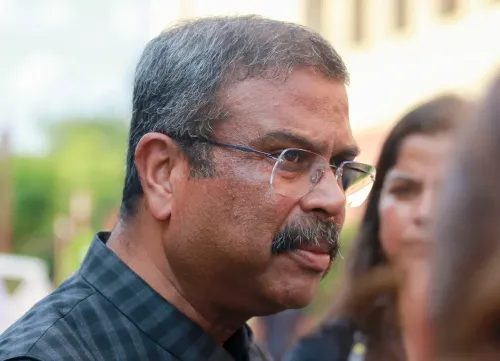
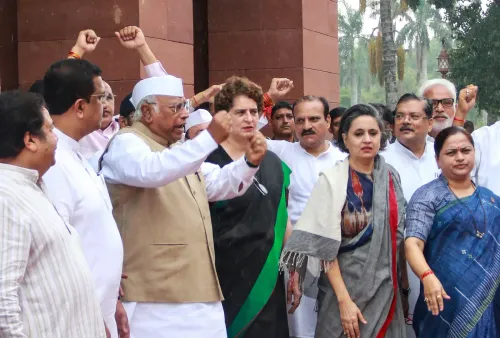
Kharge demands Dharmendra Pradhan's resignation over NEET paper leak crisis
Synopsis
Congress President Mallikarjun Kharge has made Dharmendra Pradhan's resignation the BJP government's first accountability test — pointing to 90 paper leaks over a decade, 9 crore affected youth, and a string of student suicides. His X post also took aim at the government's decision to block Telegram, framing it as symptom-management rather than a systemic fix.
Key Takeaways
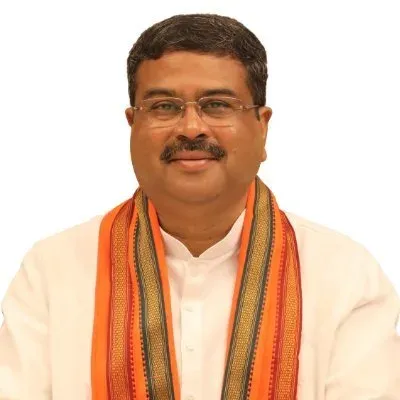
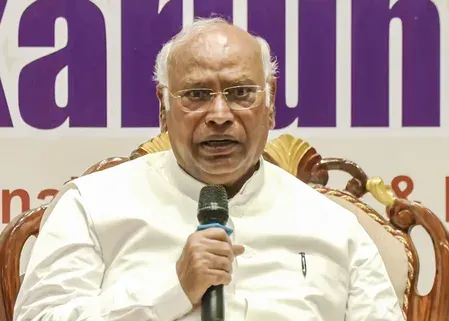
Congress President Mallikarjun Kharge on 16 June demanded the resignation of Union Education Minister Dharmendra Pradhan over the NEET paper leak crisis.
Kharge alleged 90 paper leaks over the past decade have affected approximately 9 crore youth across competitive exams including NEET, SSC, UGC-NET, and CUET.
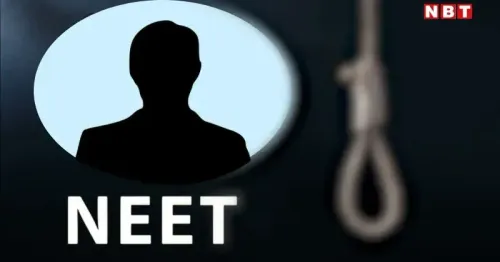
Around half a dozen young aspirants have reportedly died by suicide in connection with exam-related setbacks, according to Kharge.
The government temporarily blocked messaging app Telegram in connection with the NEET re-examination process.
Kharge also raised concerns about the credibility of the UPSC examination and alleged that CBSE results prompted student protests.
Congress President Mallikarjun Kharge on Tuesday, 16 June launched a pointed attack on the Narendra Modi government, demanding the immediate resignation of Union Education Minister Dharmendra Pradhan over the deepening crisis surrounding the NEET examination and a pattern of paper leaks across major competitive exams. Kharge's remarks came as the government temporarily blocked the messaging platform Telegram in connection with the NEET re-examination process.
What Kharge Said
In a post on X, Kharge directly addressed Prime Minister Modi, stating: 'Modi ji should first demand the resignation of his Education Minister, Dharmendra Pradhan, who has effectively blocked the futures of crores of young people.' He argued that Pradhan's resignation represents 'the first test of accountability' for a government he accused of shielding the principal architects of paper leak networks while pursuing only peripheral figures.
Kharge alleged that over the past decade, as many as 90 paper leaks have occurred across competitive examinations, severely affecting approximately 9 crore youth seeking government jobs and higher education seats. 'The country's aware youth are making just one demand: the resignation of Dharmendra Pradhan,' he asserted.
The Human Cost of Exam Scandals
The Congress chief drew attention to what he described as the devastating personal toll of the ongoing crisis. He noted that around half a dozen young aspirants have died by suicide following exam setbacks linked to alleged malpractice. Kharge also highlighted the financial burden on families — many of whom reportedly borrowed heavily to fund years of coaching for exams including NEET, SSC, UGC-NET, and CUET — only to see their children's prospects derailed by repeated leaks.
Broader Allegations Against the Government
Kharge criticised what he described as the government's reactive rather than remedial approach to the crisis. He alleged that measures such as deploying the Indian Air Force for question paper transport and blocking digital platforms were symptomatic of an administration failing to address systemic corruption in the education and recruitment sector.
He also referenced the recent CBSE results controversy, alleging that students as young as 17–18 years old were compelled to protest against what he characterised as a compromised system. He further claimed that the credibility of the UPSC examination had, in his words, 'come under a cloud of suspicion.'
Political Context
The demand for Pradhan's resignation is the sharpest escalation yet from the Congress in the NEET controversy, which has drawn widespread student protests and judicial scrutiny. This comes amid broader opposition pressure on the government over examination integrity — a politically sensitive issue given that competitive exams are a primary pathway to employment and higher education for millions of young Indians. The Bharatiya Janata Party (BJP) has not yet formally responded to Kharge's specific demand for the minister's resignation.
With the NEET re-examination process still under way and multiple investigations ongoing, the political battle over accountability in India's examination system is expected to intensify in the days ahead.
Point of View
But it lands on genuinely combustible ground. The NEET crisis is not an isolated incident — it is the latest in a documented pattern of examination failures that the government has struggled to explain away. Blocking Telegram and airlifting question papers are optics of panic, not governance. The deeper problem — structural vulnerability in paper-setting and distribution — remains unaddressed. If the opposition can sustain this pressure into the next Parliament session, the Education Ministry faces a credibility reckoning that a ministerial reshuffle alone may not resolve.
NationPress
15 Sept 2026
Frequently Asked Questions
Why is Mallikarjun Kharge demanding Dharmendra Pradhan's resignation?
Kharge is demanding Pradhan's resignation over the NEET examination controversy and a pattern of paper leaks across competitive exams. He alleges that 90 such leaks over the past decade have affected around 9 crore youth, and holds the Education Minister directly accountable for the systemic failure.
What is the NEET paper leak controversy?
The NEET controversy involves allegations that question papers for the National Eligibility cum Entrance Test were leaked ahead of the examination, compromising its integrity. The government subsequently announced a NEET re-examination and has been under pressure to explain how the breach occurred and who is responsible.
Why did the government block Telegram?
The government temporarily blocked the messaging app Telegram reportedly in connection with the NEET re-examination process, amid concerns that the platform was being used to circulate leaked material. Critics, including Kharge, have characterised the move as a reactive measure that fails to address the root cause of examination malpractice.
How many students have been affected by paper leaks in India?
According to Kharge, approximately 9 crore youth have been adversely affected by an estimated 90 paper leaks across competitive examinations over the past decade. These include high-stakes exams such as NEET, SSC, UGC-NET, CUET, and UPSC.
What is the BJP's response to the resignation demand?
As of the time of this report, the Bharatiya Janata Party had not formally responded to Kharge's specific demand for Education Minister Dharmendra Pradhan's resignation. The government's stated actions have focused on the re-examination process and platform restrictions rather than ministerial accountability.