Rahul Gandhi slams Great Nicobar project: 'Destruction, not development'
Synopsis
Rahul Gandhi's visit to Great Nicobar Island has escalated political opposition to the Centre's ₹92,000 crore mega project, with the Congress leader calling it destruction disguised as development. With 160 sq km of rainforest and indigenous communities in the crosshairs, the battle over India's most contested infrastructure plan is now firmly in the national political arena.
Key Takeaways
Rahul Gandhi visited Great Nicobar Island on 28 April and met Nicobarese community leaders at Campbell Bay .
He described the Centre's ₹92,000 crore project as "one of the biggest scams and gravest crimes against this country's natural and tribal heritage." Gandhi said 160 square kilometres of rainforest are "condemned to die" under the project.
He had earlier met a tribal leaders' delegation on Sunday and promised to raise concerns in Parliament .
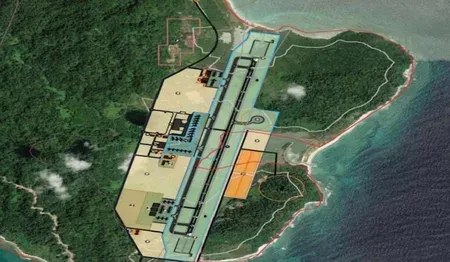
The project involves a transshipment port, airport, township, and power plant and has faced sustained scrutiny from environmentalists and tribal rights groups.
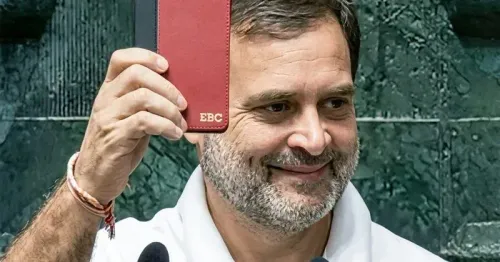
Congress leader Rahul Gandhi on Wednesday, 29 April launched a scathing attack on the Centre's Great Nicobar Island mega infrastructure project, describing it as "one of the biggest scams and gravest crimes against this country's natural and tribal heritage in our lifetime." Gandhi made the remarks after personally visiting the island and meeting local communities, marking one of the most high-profile political interventions against the ₹92,000 crore development plan.
What Rahul Gandhi Saw on the Ground
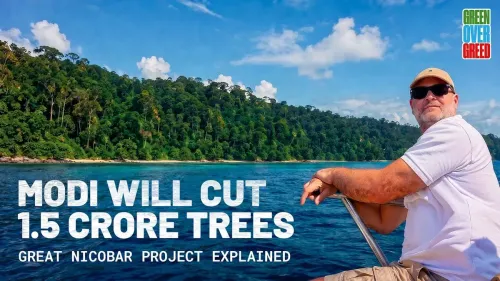
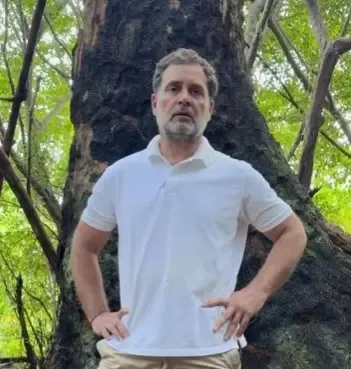
In a post on X, Gandhi described the island's forests as "the most extraordinary forests I have ever seen in my life," adding, "Trees older than memory. Forests that took generations to grow." He said both the adivasi communities and settler populations on the island were, in his words, "being robbed of what is rightfully theirs."
Gandhi was unsparing in his characterisation of the project. "The government calls what it is doing here a 'Project'. What I have seen is not a project. It is millions of trees marked for the axe. It is 160 square kilometres of rainforest condemned to die. It is communities that have been ignored while their homes have been snatched away. This is not development. This is destruction dressed in development's language," he wrote.
The Visit and Community Meetings
Gandhi had visited Great Nicobar Island on Tuesday, 28 April, meeting local Nicobarese community leaders at Rajiv Nagar in Campbell Bay. Addressing those gathered at the community hall, he said the visit fulfilled a promise made earlier this year when he met a Nicobarese delegation in New Delhi. "I don't want to say much here today. I am here to listen to you and assure you that we will do whatever we can to fight for you," he told the community.
The visit was preceded by a meeting on Sunday with a delegation of tribal leaders from the island who are opposing the project. Gandhi had at that point assured them he would raise their concerns in Parliament and visit personally to assess the situation on the ground.
The Project at the Centre of the Controversy
The ₹92,000 crore Union government project for Great Nicobar Island is one of India's most ambitious — and contested — infrastructure initiatives. It envisages a transshipment port, an international airport, a township, and a power plant across the island's southern tip. Proponents argue it will transform India's strategic and commercial footprint in the Indian Ocean Region. Critics, including environmentalists and tribal rights groups, contend the project will irreversibly damage one of Asia's last intact tropical rainforests and displace indigenous communities, including the particularly vulnerable Shompen tribe.
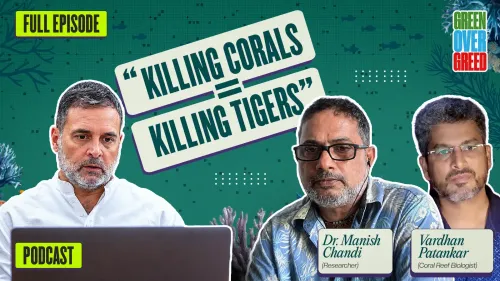
The project has previously attracted scrutiny from India's own environmental regulators. Concerns have been raised about the scale of forest diversion, the impact on coral reefs, and the adequacy of consultations with tribal communities — whose rights under the Forest Rights Act and the Particularly Vulnerable Tribal Groups framework are legally protected.
Gandhi's Call to Action
Calling for the project to be halted, Gandhi said, "What is being done in Great Nicobar is one of the biggest scams and gravest crimes against this country's natural and tribal heritage in our lifetime. It must be stopped. And it can be stopped — if Indians choose to see what I have seen."
His remarks signal that the Congress intends to make the Great Nicobar project a sustained political and parliamentary issue. With the monsoon session of Parliament approaching, the opposition is expected to press the Centre for a full environmental and social impact accounting of the project.
Point of View
But the underlying concerns are not easily dismissed. The Great Nicobar project has drawn criticism from credible environmental bodies — not just opposition politicians — over forest diversion, coral reef damage, and tribal displacement. The government has yet to provide a comprehensive public accounting of how it will meet its legal obligations under the Forest Rights Act and Particularly Vulnerable Tribal Group protections. Framing a ₹92,000 crore strategic infrastructure project as purely a scam oversimplifies a genuine policy tension between India's maritime ambitions and its ecological and indigenous rights commitments — but the Centre's opacity on community consultations has left that space open for exactly this kind of political charge.
NationPress
19 Sept 2026
Frequently Asked Questions
What is the Great Nicobar Island project that Rahul Gandhi is opposing?
It is a ₹92,000 crore Union government infrastructure initiative that includes a transshipment port, international airport, township, and power plant on the southern tip of Great Nicobar Island. Critics argue it will result in large-scale forest destruction and displacement of indigenous communities, including the Shompen tribe.
When did Rahul Gandhi visit Great Nicobar Island?
Rahul Gandhi visited Great Nicobar Island on Tuesday, 28 April, meeting Nicobarese community leaders at Rajiv Nagar in Campbell Bay. He shared his observations publicly on Wednesday, 29 April, via a post on X.
What did Rahul Gandhi say about the project?
Gandhi called the project 'destruction dressed in development's language,' saying 160 square kilometres of rainforest were condemned to die and that communities were being ignored while their homes were taken away. He described it as one of the biggest scams and gravest crimes against India's natural and tribal heritage.
Who are the communities affected by the Great Nicobar project?
The affected communities include indigenous Nicobarese adivasi groups and settler populations on the island. The particularly vulnerable Shompen tribe has also been cited by critics as facing existential risk from the scale of the project.
What action has Rahul Gandhi promised to take?
Gandhi has promised to raise the communities' concerns in Parliament and has called for the project to be stopped entirely. His visit signals that the Congress party intends to make the Great Nicobar project a sustained political issue in the upcoming parliamentary session.