Rajasthan CM Bhajanlal Sharma Stresses Respect for Elders
Synopsis
The Chief Minister's Office of Rajasthan posted a cultural message on June 6, 2026, with CM Bhajanlal Sharma affirming that respect for parents and elders is the highest value in Indian tradition, under the hashtag 'Our Leading Rajasthan'.
Key Takeaways
The Rajasthan CMO posted a cultural message on June 6, 2026 under the hashtag #आपणो_अग्रणी_राजस्थान .
CM Bhajanlal Sharma stated that respect for parents and elders is paramount in Indian culture.
The Maintenance and Welfare of Parents and Senior Citizens Act, 2007 legally obliges children to support elderly parents across India, including Rajasthan.
BJP -led state governments routinely use official social media to reinforce traditional social values alongside welfare delivery.
India's ageing demographic makes elder welfare an increasingly significant policy and political priority for state governments.
Upcoming Rajasthan budget sessions and assembly debates on senior citizen pensions and care facilities will indicate whether this messaging translates into policy action.
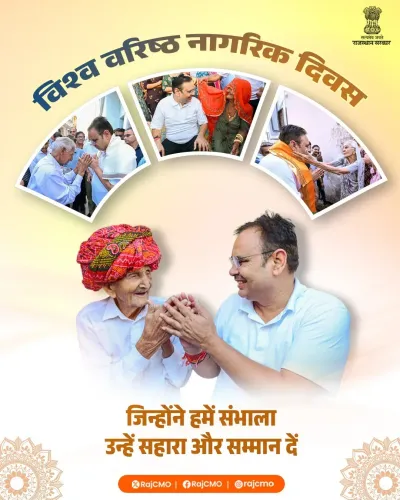
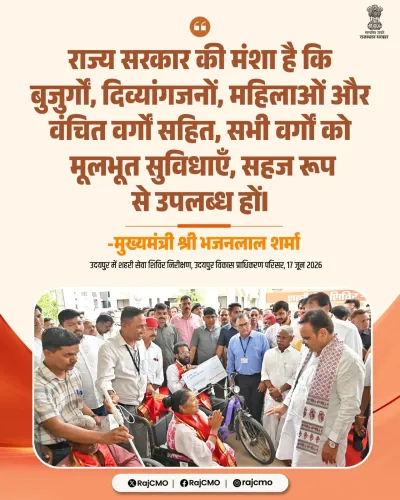
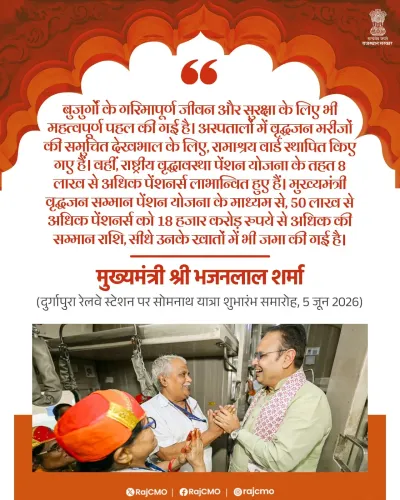
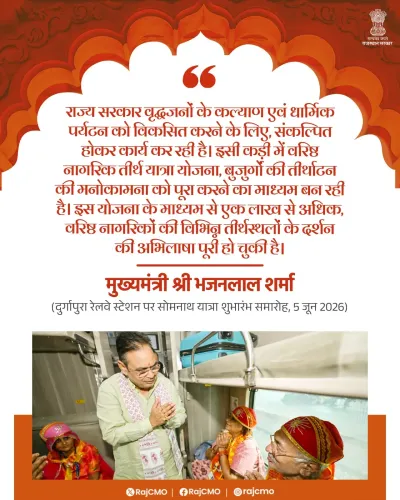
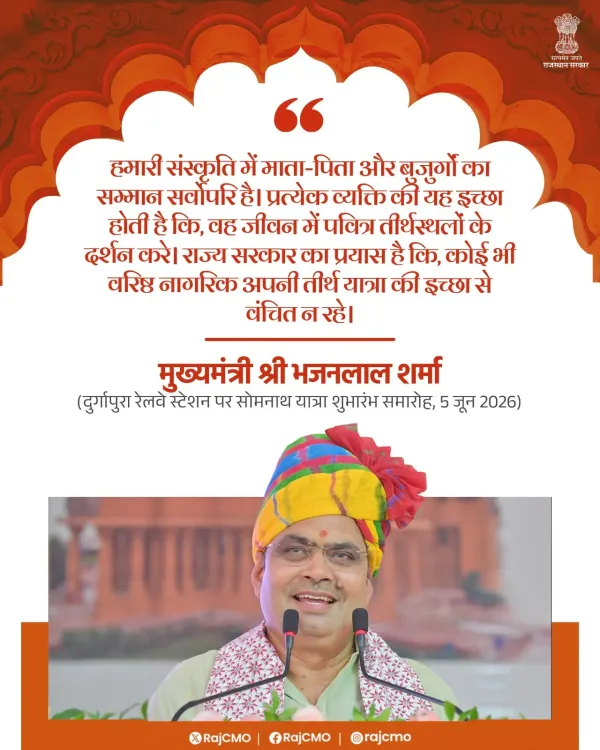
The Chief Minister's Office of Rajasthan, on behalf of Chief Minister Bhajanlal Sharma, posted a cultural message on Saturday, June 6, 2026, affirming that honouring parents and elders holds the highest place in Indian tradition.
The post, shared under the hashtag #आपणो_अग्रणी_राजस्थान ('Our Leading Rajasthan'), stated: 'In our culture, respect for parents and elders is paramount.' The message was attributed to CM Bhajanlal Sharma and accompanied by an image.
Context
Rajasthan is a state with deep-rooted cultural traditions in which filial piety and care for the elderly are considered foundational social values. The post reflects a recurring mode of official communication from BJP-led state governments, which frequently invoke traditional values on public platforms to reinforce social messaging alongside welfare delivery. The #आपणो_अग्रणी_राजस्थान hashtag has been used consistently by the Chief Minister's Office to project a vision of a culturally grounded yet forward-moving Rajasthan.Policy Backdrop
The cultural emphasis on elder care is not merely rhetorical — it is backed by legal and policy frameworks. The Maintenance and Welfare of Parents and Senior Citizens Act, 2007, places a statutory obligation on children to financially support elderly parents across all Indian states, including Rajasthan. The Act provides for maintenance tribunals and, in cases of neglect, legal recourse for senior citizens. Rajasthan, like other states, is bound to implement and enforce this central legislation at the district level. The broader national context includes India's ongoing demographic ageing, with the proportion of citizens above 60 years projected to rise significantly through the coming decades, placing elder welfare at the centre of long-term policy planning.Stakeholders and Impact
The primary stakeholders of such messaging are Rajasthan's senior citizens and their families. Official affirmations of elder respect serve a dual purpose: they reinforce community norms and signal the government's attentiveness to an ageing population that also constitutes a significant voter demographic. For families navigating the pressures of urbanisation and nuclear household formation, public messaging from the Chief Minister's Office can serve as a normative reminder of intergenerational obligations. Civil society organisations working in elder care and senior citizen welfare groups in the state are among those who watch such signals for indications of forthcoming policy action or budgetary prioritisation.What's Next
Observers of Rajasthan's social policy landscape will watch upcoming state budget sessions and assembly debates for concrete follow-through — particularly around expansion of senior citizen pensions, state-run care facilities, and enforcement mechanisms under elder welfare laws. Cultural messaging of this nature, when sustained and paired with legislative or budgetary action, can signal a broader policy shift toward elder-centric governance. Whether the Bhajanlal Sharma government translates this stated cultural priority into measurable welfare commitments will be the key question in the sessions ahead.Point of View
Culturally resonant, and strategically cost-free. For a BJP-led government, publicly affirming elder respect aligns with the party's broader civilisational narrative while simultaneously addressing a demographic that is growing in electoral weight. The message sits at the intersection of cultural identity politics and social welfare signalling, a combination that BJP state governments have deployed consistently since 2014. The real test of substance will come when Rajasthan's budget allocations for senior citizen pensions and care infrastructure are scrutinised — cultural messaging without policy follow-through tends to erode credibility with the very constituency it seeks to mobilise.
NationPress
21 Oct 2026
Frequently Asked Questions
What did Rajasthan CM Bhajanlal Sharma say about elders?
CM Bhajanlal Sharma, through the official Rajasthan CMO account, stated that in Indian culture, respect for parents and elders is paramount.
What is the Maintenance and Welfare of Parents and Senior Citizens Act?
The Maintenance and Welfare of Parents and Senior Citizens Act, 2007 is a central Indian law that legally obliges children and heirs to financially support elderly parents and senior citizens, and provides for maintenance tribunals across all states including Rajasthan.
What is the hashtag #आपणो_अग्रणी_राजस्थान?
It translates to 'Our Leading Rajasthan' and is used by the Rajasthan CMO to promote the state government's vision of a culturally rooted and progressive Rajasthan.
Why do BJP-led state governments post messages about traditional values?
BJP-led state governments routinely use official social media to reinforce traditional social norms such as elder respect, aligning cultural messaging with their broader political identity and welfare communication strategy.
What elder welfare policies exist in Rajasthan?
Rajasthan implements the central Maintenance and Welfare of Parents and Senior Citizens Act, 2007, and provides senior citizen pension schemes; further expansion of these programmes is expected to be debated in upcoming budget sessions.