Rajasthan CM Sharma Orders Action Plan to Scale Saras Dairy Marketing

Synopsis
Rajasthan CM Bhajan Lal Sharma has ordered a sweeping action plan to scale Saras dairy marketing, expand modern retail outlets at religious and tourist hubs, raise daily milk procurement from 4.5M to 8.5M litres, and invest Rs 530 crore in new processing plants — positioning dairy as the backbone of the state's rural economy.
Key Takeaways
CM Bhajan Lal Sharma chaired a high-level RCDF review meeting on April 25, 2025 in Jaipur, issuing directives to overhaul Saras dairy marketing and quality systems.
Rajasthan's daily milk procurement is targeted to rise from 4.5 million litres to 8.5 million litres per day in two phases, with new cooperative societies in uncovered areas.
The state is investing approximately Rs 530 crore to build new milk processing plants and expand existing dairy infrastructure across districts.
The fat procurement rate for farmers has been increased from Rs 50 to Rs 52 per kg , providing direct income support to livestock farmers.
New Saras Smart, Saras Café, and Saras Signature Plaza outlets will be established at key religious sites including Khatu Shyamji, Pushkar, Nathdwara, Salasar, and Ajmer .
Strict anti-adulteration measures and a quality monitoring system covering the full procurement-to-distribution chain have been mandated by the Chief Minister.
Jaipur, April 24: Rajasthan Chief Minister Bhajan Lal Sharma on Friday directed state officials to draft a comprehensive action plan to strengthen the marketing of Saras dairy products, while simultaneously expanding milk procurement capacity and curbing adulteration across the supply chain. The directives were issued at a high-level review meeting of the Rajasthan Cooperative Dairy Federation (RCDF) held at the Chief Minister's Office, underscoring the government's intent to position the dairy sector as a cornerstone of the state's rural economy.
Key Directives from the Chief Minister's Review Meeting
CM Sharma instructed officials to prepare a structured, time-bound plan to improve the marketing reach of Saras products, with strict quality standards enforced at every level — from raw milk procurement to final product distribution. He stressed that innovation and effective implementation are non-negotiable if Rajasthan's dairy sector is to realise its full potential.
He also directed the establishment of new dairy booths based on real-time data gathered through the ongoing 'Viksit Gram' and 'Viksit Ward' campaigns, ensuring that expansion is data-driven and targeted rather than ad hoc.
The Chief Minister reiterated the state government's dual commitment: protecting the financial interests of milk producers through schemes like the Chief Minister Milk Producer Sambal Yojana, while ensuring that consumers receive quality-assured Saras products at accessible prices.
Saras Brand Expansion: Cafés, Smart Outlets, and Tourist Destinations
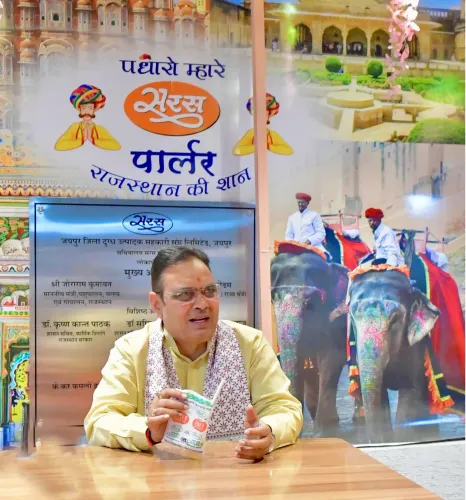
A significant portion of the meeting focused on expanding the Saras brand through modern retail formats including Saras Smart, Saras Café, and Saras Signature Plaza. CM Sharma directed that such outlets be strategically established at major religious and tourist destinations across Rajasthan — including Khatu Shyamji, Salasar, Nathdwara, Pushkar, and Ajmer — to maximise brand visibility and consumer reach.
He also reviewed the rollout of Saras Smart Parlours being operated through Rajeevika in government offices including Collectorates, and the expansion of Saras outlets in government hospitals, Rajasthan Roadways bus stands, and hotels under the Tourism Development Corporation.
Additionally, the Chief Minister directed officials to develop structured tie-ups with reputed private sector institutions to promote Saras products in other states, signalling an ambition to take the brand beyond Rajasthan's borders.
Milk Procurement Targets and Infrastructure Investment
Officials informed the meeting that Rajasthan currently procures approximately 4.5 million litres of milk daily. A phased expansion plan has been prepared: procurement is targeted to rise to 6.5 million litres per day in the first phase and 8.5 million litres per day in the second phase.
To support this scale-up, new dairy cooperative societies are being established in currently uncovered areas, and the procurement rate has been revised upward from Rs 50 to Rs 52 per kg of fat, directly benefiting livestock farmers across the state.
An investment of approximately Rs 530 crore has been earmarked for setting up new milk processing plants and expanding existing facilities across districts, significantly boosting Rajasthan's overall processing capacity.
Quality Control and Anti-Adulteration Measures
CM Sharma issued strict directives to curb milk adulteration — a persistent challenge in India's dairy supply chains. He called for a robust quality monitoring system covering the entire chain from milk procurement to final product delivery, ensuring that the Saras brand's reputation for quality and trust is never compromised.
This focus on quality assurance is particularly significant given that consumer trust in dairy brands has been repeatedly shaken by adulteration scandals across India. By institutionalising quality checks at every stage, the Rajasthan government is making a structural bet on brand integrity as a long-term competitive advantage.
Why This Matters: Dairy as Rajasthan's Rural Economic Engine
Rajasthan is home to one of India's largest livestock populations, yet a significant proportion of its rural farmers remain outside the formal dairy cooperative network. CM Sharma's directive to connect the maximum number of livestock farmers with the dairy sector is both an economic and a social equity intervention — one that could meaningfully supplement farm incomes in a state where agriculture alone is increasingly insufficient.
This comes amid a broader national push under the White Revolution 2.0 agenda, with states competing to scale dairy output and formalise procurement networks. Rajasthan's phased target of reaching 8.5 million litres per day would make it one of the top milk-producing cooperative states in the country.
The meeting was attended by Animal Husbandry and Dairy Minister Joraram Kumawat, Chief Secretary V. Srinivas, Additional Chief Secretary (CM's Office) Akhil Arora, Principal Secretary (Animal Husbandry Development) Sitaram Bhale, Secretary (Cooperation) Dr Samit Sharma, the Managing Director of RCDF, and other senior officials.
With a Rs 530 crore infrastructure investment already in motion and phased procurement targets set, the coming months will be a critical test of whether Rajasthan can translate policy ambition into measurable gains for its dairy farmers and consumers alike.
Point of View
Brand-driven industry. The ambition to nearly double daily milk procurement to 8.5 million litres, combined with a Rs 530 crore infrastructure bet and aggressive retail expansion, signals that the BJP government sees dairy as both an electoral asset among farming communities and a genuine development lever. However, the real test lies in execution: India's cooperative dairy sector has a long history of ambitious targets that falter at the last mile due to procurement politics, cold chain gaps, and adulteration. Whether Rajasthan can avoid those pitfalls will depend entirely on whether the quality monitoring systems ordered by the CM are actually institutionalised — or remain on paper.
NationPress
19 Sept 2026
Frequently Asked Questions
What is the Rajasthan government's plan for Saras dairy marketing?
The Rajasthan government, under CM Bhajan Lal Sharma, has directed officials to prepare a comprehensive action plan to improve Saras dairy product marketing with strict quality standards. The plan includes expanding modern retail formats like Saras Smart, Saras Café, and Saras Signature Plaza at major religious and tourist destinations across the state.
What is Rajasthan's milk procurement target under the new dairy plan?
Rajasthan currently procures around 4.5 million litres of milk daily. The state has set a phased target to increase this to 6.5 million litres per day in the first phase and 8.5 million litres per day in the second phase, backed by new dairy cooperative societies in uncovered areas.
How much is Rajasthan investing in new dairy processing plants?
Rajasthan is investing approximately Rs 530 crore to establish new milk processing plants and expand existing facilities across districts. This investment is aimed at significantly increasing the state's overall dairy processing capacity.
What is the Chief Minister Milk Producer Sambal Yojana?
The Chief Minister Milk Producer Sambal Yojana is a Rajasthan government scheme that provides direct financial support to dairy farmers. It is part of the state's broader effort to safeguard the economic interests of milk producers while expanding the Saras dairy cooperative network.
Where will new Saras outlets be opened in Rajasthan?
CM Bhajan Lal Sharma has directed that new Saras brand outlets — including Saras Smart, Saras Café, and Saras Signature Plaza — be set up at major religious and tourist destinations such as Khatu Shyamji, Salasar, Nathdwara, Pushkar, and Ajmer. Outlets are also being expanded in government hospitals, Rajasthan Roadways bus stands, and Tourism Development Corporation hotels.