Rajasthan CM Bhajanlal Sharma completes 21-km Govardhan Sapt-Kosi Parikrama
Synopsis
Rajasthan Chief Minister Bhajanlal Sharma walked the full 21-km Sapt-Kosi Parikrama of Govardhan through the night of 9 June — as an ordinary devotee, without VIP trappings — capping a family religious vow that included his wife and son completing the far more demanding Dandoti Parikrama the previous night. He also held an administrative review mid-pilgrimage, blending devotion with governance in one of the Braj region's most revered corridors.
Key Takeaways
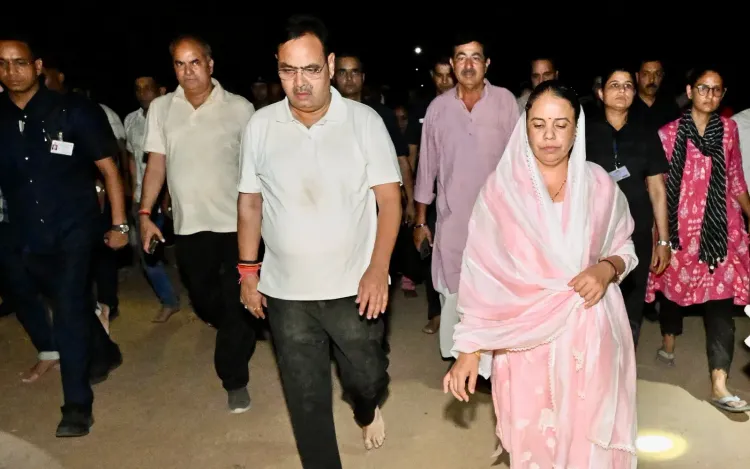
Rajasthan CM Bhajanlal Sharma undertook the 21-km Sapt-Kosi Parikrama of Govardhan on the night of 9 June , starting at 8:30 pm from Punchari Ka Lautha .
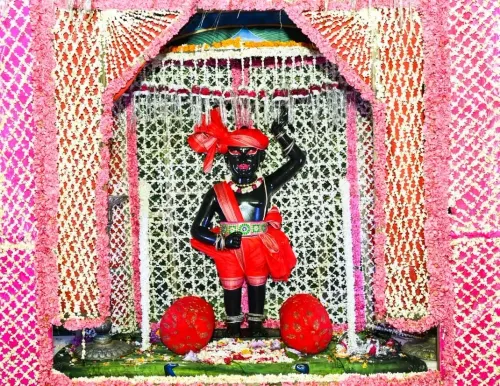
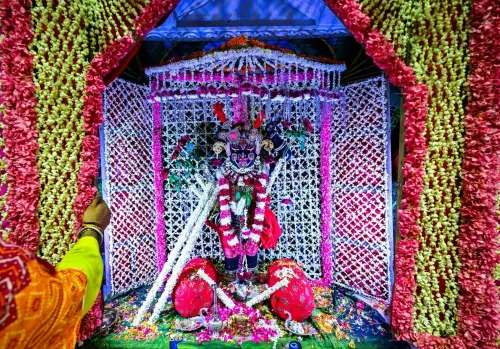
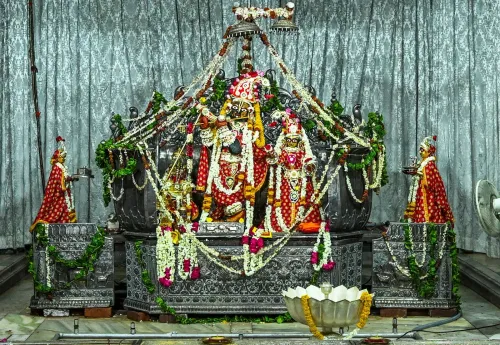
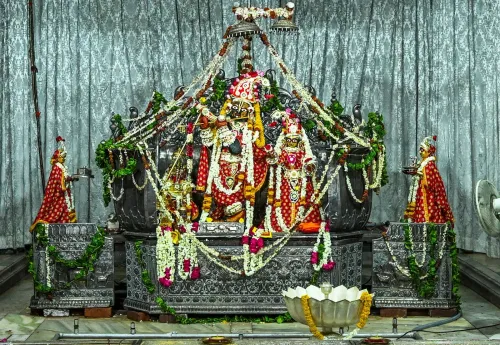
The six-hour yatra concluded with a grand Dugdhabhishek of Giriraj Maharaj and Shrinathji on Tuesday morning .
His wife Geeta Sharma and son Dr Kunal Sharma had completed the more demanding Sapt-Kosi Dandoti Parikrama on Sunday night .
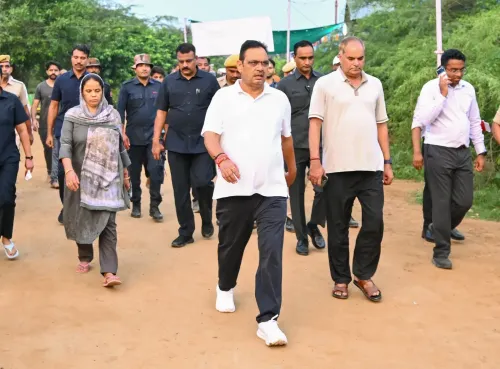
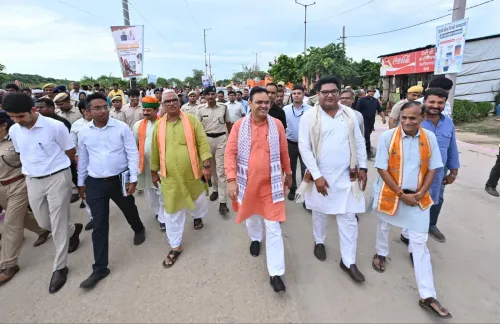
Sharma walked as an ordinary devotee, forgoing VIP privileges, accompanied by ministers, MLAs, and senior officials.
During the visit, the CM held an administrative review on pilgrim facilities and infrastructure in the Bharatpur Division and Deeg district .
Rajasthan Chief Minister Bhajanlal Sharma undertook the sacred 21-kilometre Sapt-Kosi Parikrama of Govardhan Giriraj Maharaj on the night of Monday, 9 June, commencing the six-hour yatra from Punchari Ka Lautha at around 8:30 pm. The pilgrimage concluded with a grand Dugdhabhishek of Giriraj Maharaj and Shrinathji on Tuesday morning, drawing large numbers of devotees to the revered Braj region.
How the Parikrama Unfolded
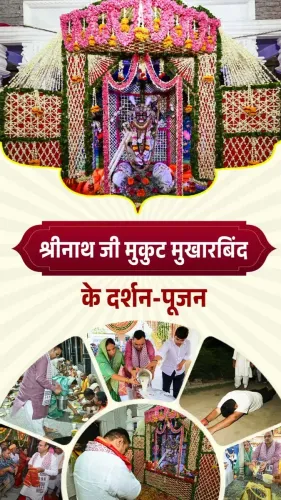
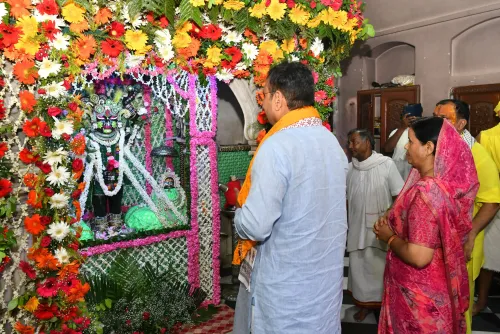
Chief Minister Sharma formally began the circumambulation by offering Sashtang Dandavat Pranam at the temple gate and performing seven dandavats as prescribed by the religious ritual. Before setting out, he offered prayers at the Shrinathji Temple and sought the blessings of Giriraj Maharaj. The route echoed with chants of 'Giriraj Dharan Ki Jai' and 'Radhe-Radhe' as fellow pilgrims joined him throughout the journey.
Sharma undertook the pilgrimage alongside his wife, Geeta Sharma, choosing to walk as an ordinary devotee and forgoing any special VIP privileges — a stance observers noted was consistent with his long-standing personal practice even after assuming office.
A Family Religious Observance
According to family sources, the Chief Minister's visit marked the culmination of a multi-day religious vow undertaken by his family. His wife, Geeta Sharma, and son, Dr Kunal Sharma, had earlier completed the more arduous Sapt-Kosi Dandoti Parikrama — performed through repeated prostrations along the route — on Sunday night. CM Sharma arrived at Punchari Ka Lautha to mark the vow's successful completion and to offer gratitude to Giriraj Maharaj.
Officials and Representatives Who Accompanied the CM
Several public representatives and senior officials chose to walk the route alongside the Chief Minister rather than use vehicles. Among those present were Minister of State for Home Jawahar Singh Bedham, Deeg-Kumher MLA Dr Shailesh Digambar Singh, Viratnagar MLA Kuldeep Dhankhar, Chief Minister's Secretary Siddharth Sihag, and Bharatpur Zila Parishad CEO Mridul Singh. Security and logistical arrangements were closely monitored from the time Sharma's helicopter landed at the temporary helipad in Punchari until the programme concluded.
Governance on the Pilgrimage Trail
Even during the religious visit, Sharma reviewed development and public welfare works in the region. At the Safe House in Punchari, he convened a brief meeting with senior officials from the Bharatpur Division and Deeg district, covering facilities for pilgrims, development of the Braj Chaurasi Kos Parikrama route, drinking water arrangements, and ongoing infrastructure projects. He directed officials to ensure that devotees travelling from across the country face no inconvenience and that essential facilities are strengthened. A large Bhandara was also organised for saints, local residents, and pilgrims visiting the Braj region.
The visit underscores a pattern of senior political figures combining religious observance with on-ground administrative reviews in pilgrimage-heavy constituencies — a visible signal of intent ahead of continued development work in the Braj corridor.
Point of View
The Braj Chaurasi Kos route, drinking water — actually translate into budgeted projects, or remain announcements made in the glow of a religious occasion.
NationPress
20 Sept 2026
Frequently Asked Questions
What is the Sapt-Kosi Parikrama of Govardhan?
The Sapt-Kosi Parikrama is a sacred circumambulation of Govardhan hill in the Braj region, covering approximately 21 kilometres. Devotees undertake it on foot as an act of devotion to Giriraj Maharaj, often accompanied by chanting and ritual prostrations.
When did CM Bhajanlal Sharma perform the Govardhan Parikrama?
Chief Minister Bhajanlal Sharma began the Sapt-Kosi Parikrama at around 8:30 pm on Monday, 9 June, from Punchari Ka Lautha. The six-hour yatra concluded with a Dugdhabhishek ceremony on Tuesday morning.
Did CM Sharma's family also participate in the pilgrimage?
Yes. His wife Geeta Sharma and son Dr Kunal Sharma had completed the more demanding Sapt-Kosi Dandoti Parikrama — performed through repeated prostrations along the route — on Sunday night. CM Sharma arrived to mark the completion of the family's religious vow.
Who accompanied CM Sharma during the Parikrama?
Several officials and elected representatives walked the route alongside the Chief Minister, including Minister of State for Home Jawahar Singh Bedham, Deeg-Kumher MLA Dr Shailesh Digambar Singh, Viratnagar MLA Kuldeep Dhankhar, Chief Minister's Secretary Siddharth Sihag, and Bharatpur Zila Parishad CEO Mridul Singh.
What administrative work did CM Sharma undertake during the visit?
Sharma held a brief review meeting at the Safe House in Punchari with senior officials from the Bharatpur Division and Deeg district. Discussions covered pilgrim facilities, development of the Braj Chaurasi Kos Parikrama route, drinking water arrangements, and ongoing infrastructure projects in the region.