Rajasthan CMO: 2.6 Lakh Volunteers Enrolled in Citizen Security Drives
Synopsis
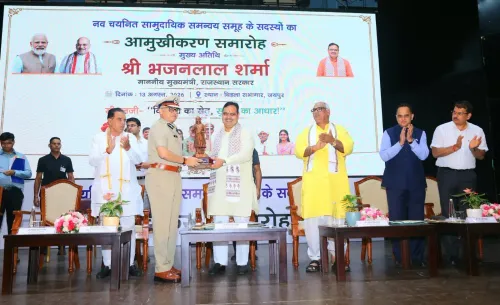
Over 2.6 lakh citizens have been enrolled in Rajasthan's community policing frameworks — Youth CLG, CLG, Police Mitra, and Gram Rakshak — under the Bhajanlal Sharma government, the Chief Minister's Office announced on 18 October 2026.
Key Takeaways
More than 2 lakh 60 thousand volunteers enrolled across Rajasthan's citizen-security programmes.
84,000+ Youth CLG members form the single largest cohort, targeting younger volunteers.
83,000+ CLG members serve as structured police-public liaisons at the local level.
40,000+ Police Mitras assist Rajasthan Police in community outreach and support roles.
29,000+ Gram Rakshaks provide village-level security and intelligence in rural areas.
The expansion is a flagship plank of CM Bhajanlal Sharma's governance agenda since taking office in December 2023.
More than 2 lakh 60 thousand citizens have now been enrolled into Rajasthan's community policing networks — a number that signals how far Chief Minister Bhajanlal Sharma's administration has pushed the idea of putting ordinary residents at the frontline of local law and order.
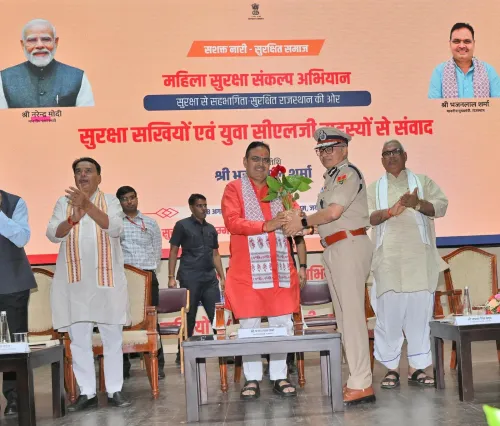
The Chief Minister's Office of Rajasthan announced the figures on Sunday, 18 October 2026, tagging CM Sharma directly and publishing them under the campaign hashtag #आपणो_अग्रणी_राजस्थान ('Our Forward-Marching Rajasthan'). The breakdown lays out four distinct volunteer streams: more than 84,000 Youth CLG members, over 83,000 Community Liaison Group (CLG) members, more than 40,000 Police Mitras, and upwards of 29,000 Gram Rakshaks.
Four schemes, one goal: closing the policing gap
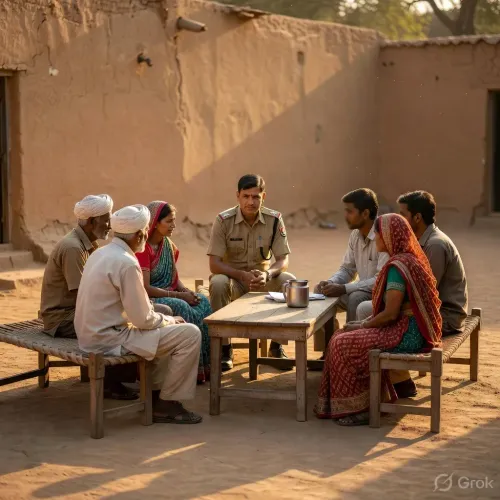
Community Liaison Groups are designed to bridge the communication gap between local police stations and the neighbourhoods they serve, creating structured channels for residents to flag concerns and share intelligence. The Youth CLG variant targets younger volunteers specifically, drawing in the demographic most likely to spot early signs of unrest or crime in their peer circles.
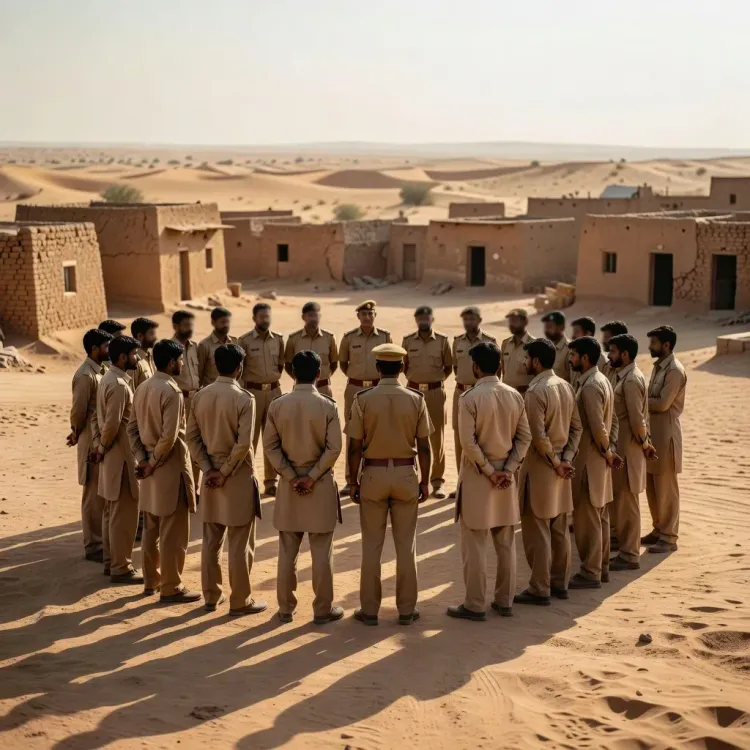
Police Mitra — literally 'friend of the police' — deploys citizen volunteers in support roles, assisting with traffic management, community outreach, and event security. Gram Rakshak, the village-guard scheme, concentrates on rural areas where the nearest police post may be miles away, giving hamlets a trained first line of alert and response.
Why the scale matters in a state Rajasthan's size
Rajasthan is India's largest state by area, and its vast semi-arid hinterland means that formal police coverage is structurally thin in thousands of villages. Successive governments have leaned on volunteer networks to fill the gap; the Sharma administration, in office since December 2023, has framed the expansion of these programmes as a cornerstone of its citizen-participation governance model.
A combined enrolment of over 2.6 lakh volunteers — spread across youth wings, neighbourhood liaisons, rural guards, and police friends — represents one of the more ambitious community-security mobilisations the state has undertaken in recent memory. Whether that scale translates into measurable drops in crime rates or faster incident response will be the real test, and is likely to feature in upcoming state budget discussions and police modernisation proposals.
For now, the numbers put a concrete face on what the Bhajanlal government is calling 'Agrani Rajasthan' — a Rajasthan that leads. The volunteers are already on the ground. The verdict on whether they change things will follow.
Point of View
But also a practical necessity in a state where geographic scale outstrips police capacity. The breakdown into four distinct streams suggests deliberate institutional design rather than a single catch-all drive. The real political and policy test will come when the administration is asked to show outcomes: response-time data, crime statistics, or incident reports — numbers that will determine whether 'Agrani Rajasthan' is a slogan or a shift.
NationPress
19 Oct 2026
Frequently Asked Questions
What is the Police Mitra scheme in Rajasthan?
Police Mitra is a citizen-volunteer programme in Rajasthan that deploys ordinary residents in support roles alongside police, including traffic assistance, community outreach, and event security. The Bhajanlal Sharma government reports over 40,000 Police Mitras have been enrolled.
What is Gram Rakshak in Rajasthan?
Gram Rakshak is a village-level guard scheme aimed at strengthening rural security and intelligence support in areas where regular police presence is limited. More than 29,000 Gram Rakshaks have been enrolled as of October 2026.
What is a Community Liaison Group (CLG) in Rajasthan Police?
Community Liaison Groups are structured bodies that facilitate coordination between local police stations and community members, allowing residents to share intelligence and concerns formally. Rajasthan currently has over 83,000 CLG members enrolled.
How many volunteers has Rajasthan enrolled in community policing schemes?
As of 18 October 2026, the Rajasthan Chief Minister's Office states that more than 2 lakh 60 thousand (260,000) citizens have been enrolled across four schemes: Youth CLG, CLG, Police Mitra, and Gram Rakshak.
What is the Aapno Agrani Rajasthan campaign?
Aapno Agrani Rajasthan — meaning 'Our Forward-Marching Rajasthan' — is a campaign hashtag used by CM Bhajanlal Sharma's government to communicate governance milestones and citizen-participation initiatives across the state.