Rajasthan CM Office Links Water Security to Viksit Bharat 2047
Synopsis
The Chief Minister's Office of Rajasthan on 1 July 2026 publicly aligned state water policy with PM Modi's Viksit Bharat 2047 vision, framing water security as a foundational pillar of national development and signalling Rajasthan's commitment to central water missions.
Key Takeaways
The Chief Minister's Office of Rajasthan posted on 1 July 2026 linking state water priorities to the Viksit Bharat 2047 national vision.
The post was addressed to Chief Minister Bhajan Lal Sharma under the campaign hashtag #आपणो_अग्रणी_राजस्थान ('Our Leading Rajasthan').
The Jal Jeevan Mission (launched 2019 ) and Atal Bhujal Yojana ( 2019-20 ) are the two central water schemes most relevant to Rajasthan's water security commitments.
Rajasthan is one of seven states covered under the Atal Bhujal Yojana for sustainable groundwater management.
Farmers and rural households in the water-scarce state are the primary stakeholders of any policy action arising from this alignment.
State-level water action plans and 2026-27 budget allocations will be key indicators of follow-through on the stated vision.
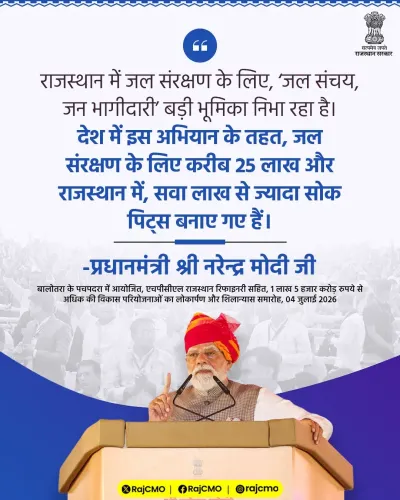
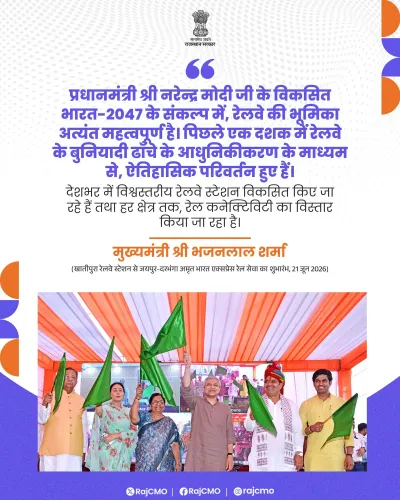
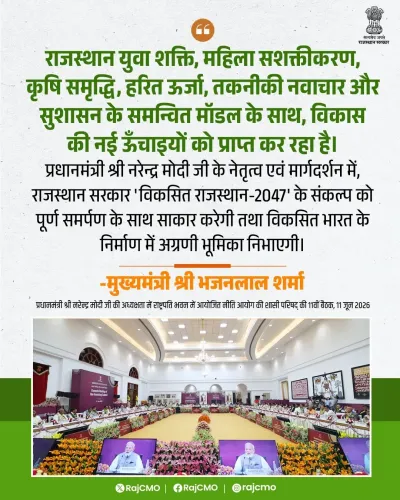
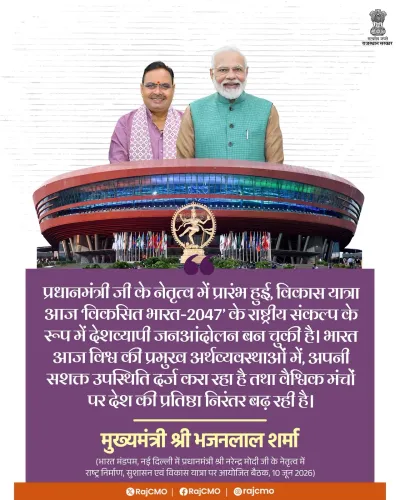
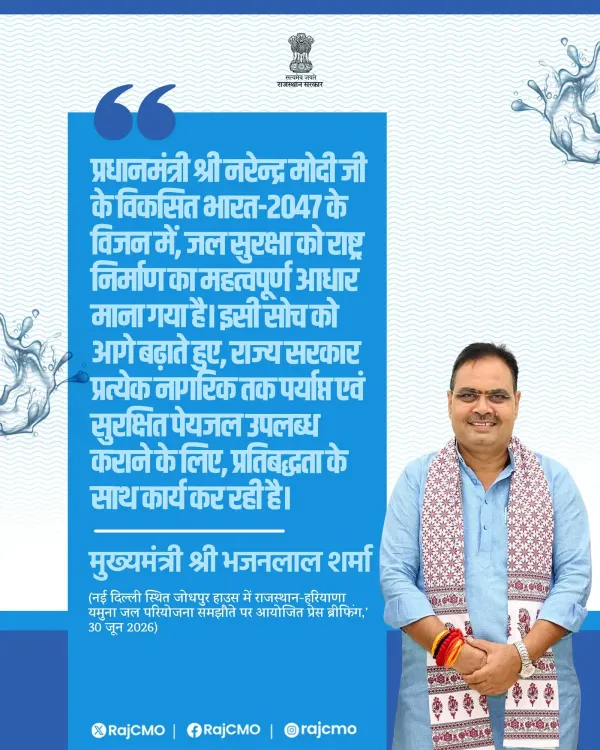
The Chief Minister's Office of Rajasthan on Wednesday, 1 July 2026 aligned the state's water security agenda with Prime Minister Narendra Modi's Viksit Bharat 2047 vision, stating that water security is a foundational pillar of nation-building under the long-term national development roadmap.
The post, addressed to Chief Minister Bhajan Lal Sharma (@BhajanlalBjp) and tagged under the campaign hashtag #आपणो_अग्रणी_राजस्थान ('Our Leading Rajasthan'), states: 'प्रधानमंत्री श्री नरेन्द्र मोदी जी के विकसित भारत-2047 के विजन में, जल सुरक्षा को राष्ट्र निर्माण का महत्वपूर्ण आधार माना गया है' — 'In Prime Minister Narendra Modi's Viksit Bharat 2047 vision, water security has been recognised as a vital foundation of nation-building.'
Context
Viksit Bharat 2047 is the central government's official vision and roadmap to transform India into a fully developed nation by the centenary of its independence. Water security features prominently within this framework, linking access to clean water with agricultural productivity, public health, and sustainable urban growth. The Rajasthan CMO's statement positions the state as an active participant in this national agenda.
The hashtag #आपणो_अग्रणी_राजस्थान — translating to 'Our Leading Rajasthan' — has been used by the state government to highlight development milestones and policy alignment with central schemes. Tuesday's post reinforces Rajasthan's public communication strategy of anchoring state governance within the broader national vision articulated by Prime Minister Modi.
Policy Backdrop
Water security has been a recurring priority in central policy for over a decade. The Jal Jeevan Mission, launched in 2019, set the target of providing functional household tap connections to every rural household in India, directly addressing access gaps in arid states like Rajasthan. Separately, the Atal Bhujal Yojana, initiated in 2019-20, targets sustainable groundwater management in water-stressed blocks across seven states, with Rajasthan among the key beneficiaries.
These programmes reflect a broader pattern in which successive central governments have embedded water infrastructure into national planning through dedicated missions, river-linking proposals, and climate-adaptation strategies. The explicit invocation of Viksit Bharat 2047 by the Rajasthan CMO signals the state's intent to frame its water-related investments as contributions to this generational goal.
Stakeholders and Impact
Rajasthan is among India's most water-scarce states, with large swathes of the Thar Desert and semi-arid zones making groundwater depletion and erratic monsoon patterns persistent challenges. Farmers and rural households — who depend heavily on both surface water and groundwater — stand to be most directly affected by any policy shifts or new budgetary allocations that follow from this alignment.
Urban centres in the state also face seasonal water stress, making the Viksit Bharat framework relevant beyond agricultural communities. The CMO's communication is directed at Chief Minister Bhajan Lal Sharma, signalling that water security remains a political and administrative priority at the highest level of the state government.
What's Next
Attention will now turn to whether the Rajasthan government submits or updates a state-level water action plan under the national vision framework, and whether the 2026-27 state budget reflects new allocations or extensions of existing water schemes. Any announcements on groundwater recharge, canal infrastructure, or drinking water coverage in the state will be watched as concrete follow-through on the CMO's stated commitment. The broader trajectory of Viksit Bharat 2047 implementation across states will determine how effectively this vision translates from policy rhetoric into measurable water security outcomes.
Point of View
The Sharma government signals its intent to compete for central scheme funds and recognition in a sector where Rajasthan's structural vulnerabilities are well-documented. The move also reflects a broader pattern among BJP-governed states of reinforcing ideological coherence with the Centre through public communications, particularly ahead of budgetary cycles. The real test will be whether this rhetorical alignment is followed by measurable state-level investments in water infrastructure and groundwater management.
NationPress
29 Sept 2026
Frequently Asked Questions
What is the Viksit Bharat 2047 vision and how does it relate to water security?
Viksit Bharat 2047 is the Indian central government's official roadmap to make India a fully developed nation by 2047, the centenary of independence. Water security is identified as a core pillar within this vision, linking access to clean water with agricultural productivity, public health, and sustainable development.
What did the Rajasthan Chief Minister's Office say about water security?
On 1 July 2026, the Rajasthan CMO stated that in PM Narendra Modi's Viksit Bharat 2047 vision, water security has been recognised as a vital foundation of nation-building, aligning the state's priorities with the national development agenda.
What central water schemes are active in Rajasthan?
Two major central schemes cover Rajasthan: the Jal Jeevan Mission, launched in 2019 to provide tap water connections to all rural households, and the Atal Bhujal Yojana, initiated in 2019-20 for sustainable groundwater management in water-stressed blocks across seven states including Rajasthan.
Who is Bhajan Lal Sharma and what is his role in Rajasthan's water policy?
Bhajan Lal Sharma is the Chief Minister of Rajasthan. The CMO's post was addressed to him, indicating that water security is a stated priority at the highest level of the state government under his leadership.
What is the hashtag Aapno Agrani Rajasthan used for?
The hashtag #आपणो_अग्रणी_राजस्थान, meaning 'Our Leading Rajasthan', is used by the Rajasthan state government to highlight development milestones, policy achievements, and alignment with central government schemes and visions.