Rajasthan CMO Calls on Diaspora to Power State's Growth

Synopsis
The Chief Minister's Office of Rajasthan has called on overseas Rajasthanis to actively participate in the state's development by contributing their global experience, networks, and expertise — framing diaspora engagement as partnership under CM Bhajan Lal Sharma's growth agenda.
Key Takeaways
The Chief Minister's Office of Rajasthan issued a diaspora outreach appeal on 10 August 2026 .
The appeal targets pravasi Rajasthanis — overseas Rajasthanis — asking them to contribute experience, global networks, and expertise.
The post was addressed to Chief Minister Bhajan Lal Sharma , who has been in office since December 2023 .
The hashtag #आपणो_अग्रणी_राजस्थान ('Our Leading Rajasthan') frames the outreach within a broader state branding effort.
Diaspora engagement appeals are an established practice across Indian state governments, but the framing here emphasises sustained participation over symbolic goodwill.
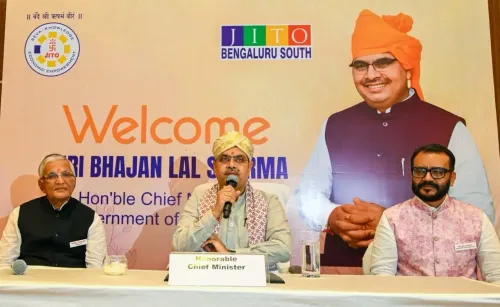
Rajasthan's overseas community is being called back into the fold — not just in sentiment, but in substance. The Chief Minister's Office of Rajasthan on Monday, 10 August 2026 issued a direct appeal to pravasi Rajasthanis (overseas Rajasthanis), urging them to channel their global experience, professional networks, and expertise into the state's development journey.
The post, addressed to Chief Minister Bhajan Lal Sharma and tagged with the hashtag #आपणो_अग्रणी_राजस्थान ('Our Leading Rajasthan'), frames diaspora engagement not as charity but as partnership — an invitation to co-author the state's economic future from wherever in the world they stand.
A familiar playbook, sharpened with intent
Diaspora outreach is not new to Indian state politics. Administrations across the country — regardless of party — have long recognised that the Indian diaspora carries something no domestic policy can manufacture overnight: globally tested expertise, cross-border business networks, and the credibility that comes from succeeding on the world stage. What matters is whether the appeal is backed by concrete channels.
Rajasthan, a state with a large and economically active diaspora particularly in the Gulf, the United States, and the United Kingdom, has both the audience and the opportunity. Chief Minister Bhajan Lal Sharma, who took office in December 2023, has positioned economic growth and investment attraction as central planks of his administration's agenda.
What 'participation' actually means for diaspora Rajasthanis
The CMO's framing is deliberate: the call is to become sahbhagi — participants, not just donors. That distinction matters. It signals a preference for sustained engagement — mentorship, investment facilitation, knowledge transfer — over one-time remittances or ceremonial goodwill. Whether structured programmes or dedicated diaspora investment windows follow this appeal remains to be confirmed, but the directional intent is clear.
For a state that spans 342,239 square kilometres and is actively working to diversify its economic base beyond tourism and mining, tapping the diaspora's global footprint could open doors to sectors from technology to manufacturing to agribusiness. The question now is what infrastructure the government builds to turn this call into a two-way corridor.
Point of View
It also serves a political purpose: signalling outward ambition and positioning Rajasthan as a state open for global partnership, not just domestic investment. The use of 'sahbhagi' (participant) over 'donor' language is a meaningful upgrade in framing, suggesting the administration wants structural engagement rather than goodwill gestures. Whether this translates into formal diaspora investment windows or engagement summits will determine if the appeal has teeth.
NationPress
25 Sept 2026
Frequently Asked Questions
What did the Rajasthan CMO post about on 10 August 2026?
The Chief Minister's Office of Rajasthan called on overseas Rajasthanis to participate in the state's development journey by contributing their global experience, professional networks, and expertise.
Who is the Chief Minister of Rajasthan in 2026?
Bhajan Lal Sharma of the Bharatiya Janata Party is the Chief Minister of Rajasthan, having taken office in December 2023.
What does #आपणो_अग्रणी_राजस्थान mean?
The hashtag translates to 'Our Leading Rajasthan' and is used by the Rajasthan government as a branding tag for its development and progress messaging.
Why does Rajasthan reach out to its diaspora for development?
Overseas Rajasthanis, particularly in the Gulf, the US, and the UK, bring globally tested expertise and cross-border networks that state governments seek to channel into local economic growth — a practice common across Indian states.
What is pravasi Rajasthan outreach?
Pravasi Rajasthan outreach refers to efforts by the Rajasthan state government to engage overseas Rajasthanis in contributing to the state's economic and social development through investment, expertise, and professional networks.