Rajasthan CMO: Retired Officers Never Retire from Society
Synopsis
The Chief Minister's Office of Rajasthan, tagging CM Bhajan Lal Sharma, shared a pointed message on 12 August 2026: officers may retire from government service, but their social responsibilities never end — a signal about the state's expectations of its retired bureaucracy.
Key Takeaways
The Rajasthan CMO posted on 12 August 2026 that officers retire from service but never from social responsibility.
The post was tagged to Chief Minister Bhajan Lal Sharma , a BJP leader who has held the post since December 2023 .
The hashtag #AapnoAgraniRajasthan ('Our Leading Rajasthan') linked the message to the state's governance identity.
The message reflects a broader Indian administrative culture encouraging post-service public engagement by retired officers.
No specific event, programme, or individual retirement was cited — the statement was framed as a governing principle.
Duty does not end with a farewell. The Chief Minister's Office of Rajasthan posted a pointed reminder on Wednesday, 12 August 2026 — one that cuts to the heart of what public service is really about.
The post, shared on the official CMO handle and tagged to Chief Minister Bhajan Lal Sharma, carried a single, sharp line in Hindi: 'Adhikari sarkari seva se sevanivritt hote hain, lekin samajik zimmedariyon se kabhi nahin' — 'Officers retire from government service, but never from social responsibilities.' The hashtag #AapnoAgraniRajasthan ('Our Leading Rajasthan') anchored it to the state's broader governance identity.
The Idea Behind the Message
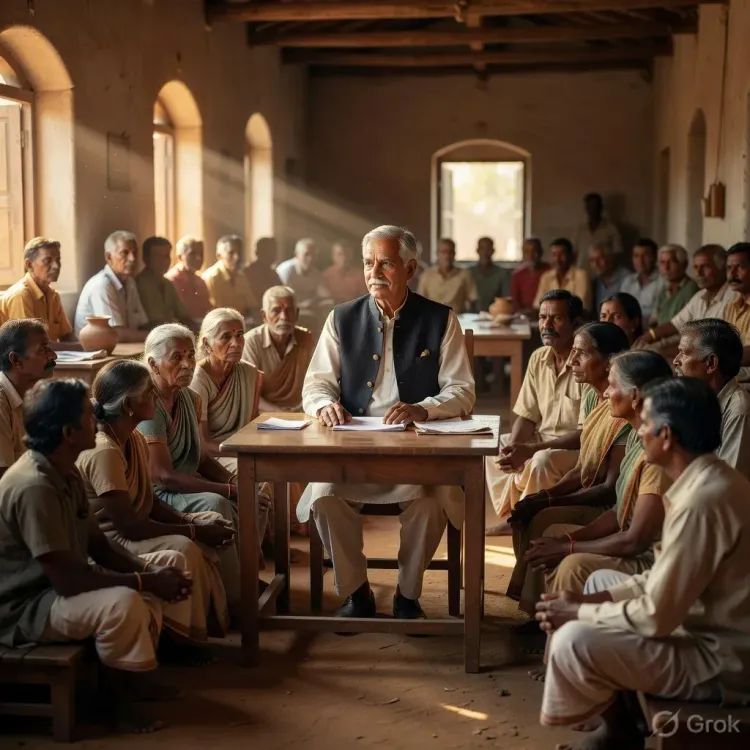
The sentiment is deceptively simple, but it carries real administrative weight. India's retired bureaucracy — IAS, IPS, IFS, and state-cadre officers — numbers in the tens of thousands. Once they leave formal service, their institutional knowledge, networks, and credibility do not vanish. The Rajasthan government's message is an implicit call: that experience is a public asset, not a personal pension.
Rajasthan's state communications have periodically underscored this theme, framing retired officials as continuing stakeholders in civil society rather than alumni of it. It aligns with a wider culture in Indian administration that quietly encourages post-service engagement — in advisory roles, mentorship, community initiatives, and voluntary governance support — without imposing formal obligation.
Bhajan Lal Sharma's Governance Signal
Bhajan Lal Sharma has served as Chief Minister since December 2023, heading a BJP government that came to power on a platform of administrative reform and service delivery. Tagging the CM directly in a message about retired officers signals that this is not a routine social media filler — it is a positioning statement about how the government views the relationship between the state and those who served it.
The message asks nothing specific. It promises nothing specific. But its directness is the point. Four words in the original Hindi carry the entire argument: kabhi nahin — never.
Point of View
Credentialed, and often underutilised constituency: the state's retired bureaucracy. By tagging CM Bhajan Lal Sharma directly, the post elevates the sentiment from a social media aphorism to a governance stance. It fits a pattern in BJP-run states of framing civic duty in moral rather than transactional terms — asking retired officials to remain invested in public life without offering formal incentives. Whether this precedes a structured programme for retired officer engagement, or remains an aspirational statement, will determine its real administrative weight.
NationPress
12 Aug 2026
Frequently Asked Questions
What did the Rajasthan CMO post on 12 August 2026?
The Rajasthan Chief Minister's Office posted that government officers retire from service but never from their social responsibilities, tagging CM Bhajan Lal Sharma and using the hashtag #AapnoAgraniRajasthan.
Who is Bhajan Lal Sharma?
Bhajan Lal Sharma is the Chief Minister of Rajasthan from the Bharatiya Janata Party, in office since December 2023.
What does #AapnoAgraniRajasthan mean?
It is a Hindi-Rajasthani phrase meaning 'Our Leading Rajasthan,' used by the state government as a governance and identity hashtag.
What is the significance of the message about retired officers?
The message signals that the Rajasthan government views retired bureaucrats as continuing stakeholders in civil society, not merely former employees, encouraging post-service public engagement.
Does this post announce a specific scheme for retired officers in Rajasthan?
No specific scheme or event was announced. The post is a principled statement about social responsibility, with no formal programme cited.