Rajasthan CMO: Yamuna water to anchor Shekhawati's future
Synopsis
The Chief Minister's Office of Rajasthan announced on 21 July 2026 that Yamuna river water will anchor the future of the drought-prone Shekhawati region, signalling a renewed push for inter-state water linkages to address chronic groundwater depletion across Sikar, Jhunjhunu and Churu districts.
Key Takeaways
The Chief Minister's Office of Rajasthan posted on 21 July 2026 that Yamuna water will form the foundation of Shekhawati's future development.
Shekhawati covers Sikar , Jhunjhunu , and parts of Churu — a semi-arid belt facing severe groundwater depletion.
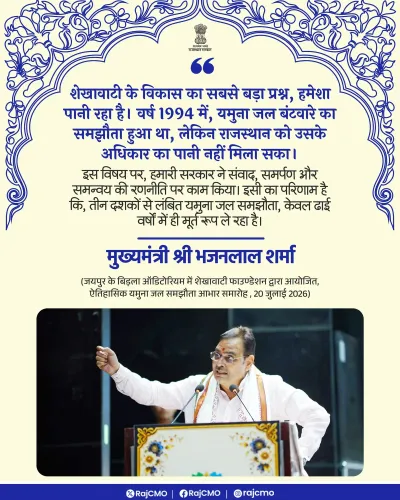
Rajasthan has sought additional Yamuna water allocation from Haryana and the Upper Yamuna River Board since the 1990s .
Any fresh allocation requires multi-state agreement and central government approval, given existing tribunal and MoU frameworks.
CM Bhajan Lal Sharma , who has political roots in Shekhawati, has made the region's development a stated priority since December 2023 .
Next steps include MoU revisions, project DPR approvals, and budgetary allocations in the Rajasthan Assembly.
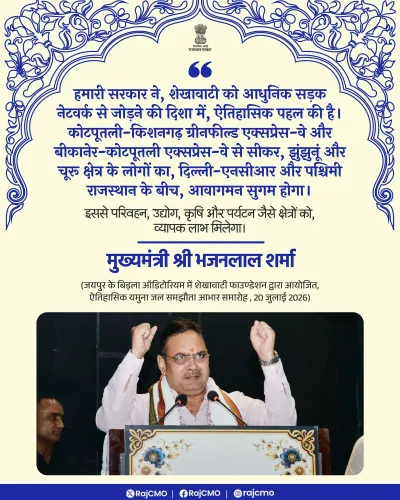
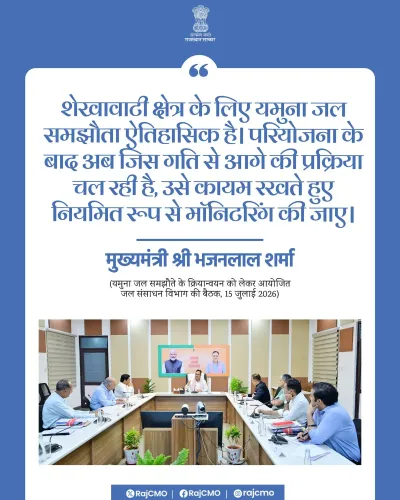
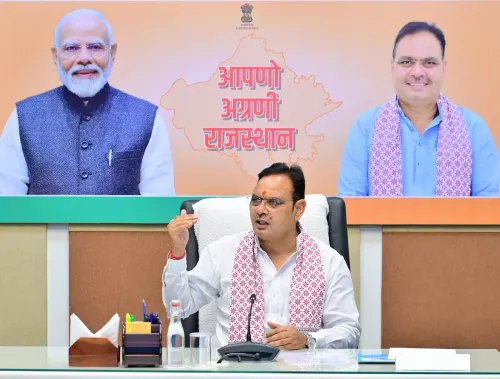
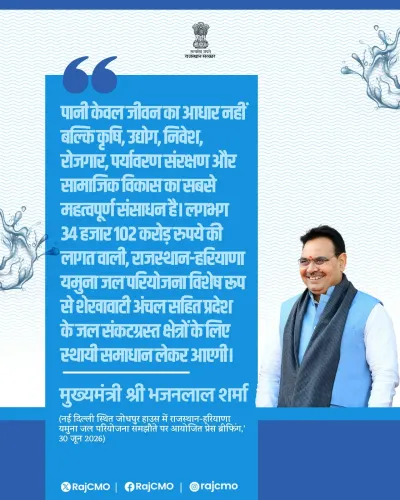
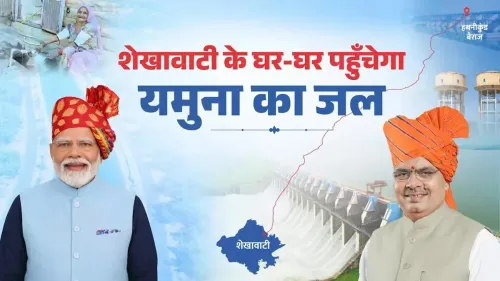
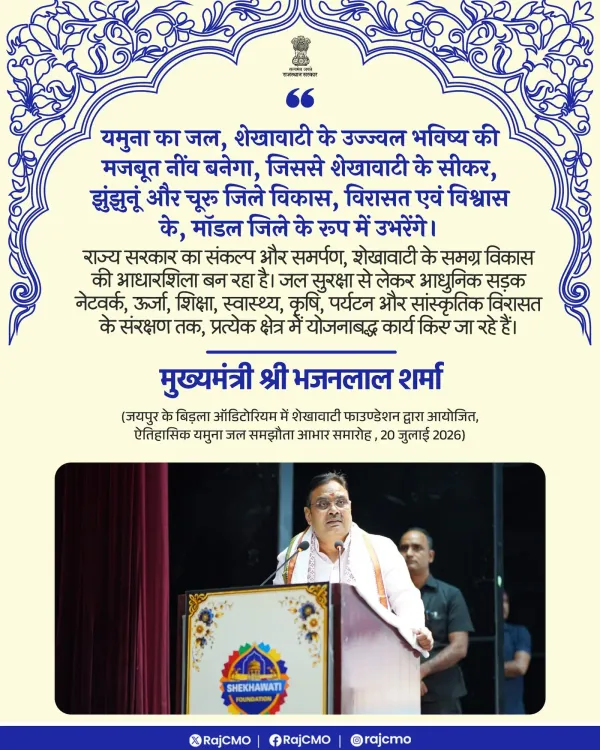
The Chief Minister's Office of Rajasthan declared on Tuesday, 21 July 2026 that Yamuna river water will form the foundation of a prosperous future for the Shekhawati region, tagging Chief Minister Bhajan Lal Sharma in the announcement under the campaign hashtag #आपणो_अग्रणी_राजस्थान ('Our Leading Rajasthan').
Context
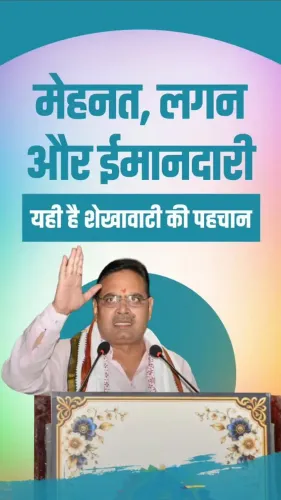
The post, shared by the official CMO handle, states: 'यमुना का जल, शेखावाटी के उज्ज्वल भविष्य की मजबूत नींव बनेगा' — 'The waters of the Yamuna will become the strong foundation of Shekhawati's bright future.' The message directly associates the state government's ambitions for northern Rajasthan with a long-sought inter-state water resource.
Shekhawati — spanning the districts of Sikar, Jhunjhunu, and parts of Churu — is a semi-arid zone historically dependent on erratic monsoon patterns and rapidly depleting groundwater. Farmers and rural households across the belt have faced recurring drought stress, making external water linkages a political and developmental priority for successive state administrations.
Policy Backdrop
Rajasthan's pursuit of Yamuna water for its northern districts stretches back to the 1990s, when the state began formal engagement with Haryana through bilateral talks and the Upper Yamuna River Board. The Yamuna is a transboundary river whose flows are governed by tribunal awards and memoranda of understanding shared among Uttarakhand, Haryana, Delhi, and Uttar Pradesh — making any fresh allocation to Rajasthan contingent on multi-state and central government agreement.
The broader pattern in Rajasthan's water policy has been to leverage inter-basin transfers and upstream river systems — most notably the Indira Gandhi Canal from the Sutlej-Beas system — to address groundwater depletion in its western and northern districts. Extending that logic to the Yamuna for Shekhawati represents a continuation of that strategy. These efforts frequently intersect with ongoing inter-state disputes and central government river-linking proposals.
Stakeholders and Impact
The primary beneficiaries of any Yamuna water linkage to Shekhawati would be farmers across Sikar and Jhunjhunu districts, who rely on groundwater for both drinking supply and irrigation. The water table in parts of Shekhawati has fallen sharply over decades, and canal or pipeline connectivity to a perennial river system could materially alter agricultural viability in the region.
Rural households — particularly in villages distant from urban water infrastructure — stand to gain improved drinking-water security. Chief Minister Bhajan Lal Sharma, who has political roots in the Shekhawati belt, has made the region's development a visible priority since taking office in December 2023.
What's Next
Translating this declaration into a functioning water supply will require formal revision of Yamuna water-sharing agreements, approval of detailed project reports for canal or pipeline infrastructure, and corresponding budgetary allocations in the Rajasthan Legislative Assembly. Each of these steps involves negotiations with neighbouring states and the central government.
Observers will watch for any movement on inter-state MoU amendments, project sanctions, or line-item allocations in upcoming state budgets as concrete indicators of whether this announcement advances from political signal to infrastructure reality.
Point of View
Who draws significant support from the Shekhawati belt, is publicly staking his administration's credibility on resolving a water crisis that has festered for decades. The announcement fits a pattern in which BJP-governed Rajasthan has sought to differentiate itself on large infrastructure promises to historically underserved northern districts. However, the gap between rhetorical commitment and operational delivery remains wide: Yamuna water-sharing is entangled in multi-state disputes that no single state government can resolve unilaterally. Until project reports are sanctioned and budgets allocated, the statement is best read as the opening of a political and diplomatic campaign rather than the launch of a construction programme.
NationPress
21 Jul 2026
Frequently Asked Questions
What is the Shekhawati region and why does it need Yamuna water?
Shekhawati is a semi-arid region in northern Rajasthan covering Sikar, Jhunjhunu and parts of Churu districts. It faces severe groundwater depletion and recurring drought, making a perennial river source like the Yamuna critical for irrigation and drinking-water security.
Can Rajasthan get water from the Yamuna river?
Rajasthan has sought Yamuna water allocation since the 1990s through talks with Haryana and the Upper Yamuna River Board, but any fresh share requires revision of existing inter-state agreements and central government approval, since the Yamuna is shared by Uttarakhand, Haryana, Delhi and Uttar Pradesh.
What did the Rajasthan CMO announce about Shekhawati on 21 July 2026?
The Chief Minister's Office of Rajasthan posted on 21 July 2026 that Yamuna river water will form the strong foundation of a bright future for the Shekhawati region, tagging CM Bhajan Lal Sharma in the announcement.
Who is Bhajan Lal Sharma and what is his connection to Shekhawati?
Bhajan Lal Sharma is the BJP Chief Minister of Rajasthan since December 2023. He has political roots in the Shekhawati region and has made its development a visible priority of his administration.
What needs to happen before Yamuna water actually reaches Shekhawati?
Formal revision of Yamuna water-sharing MoUs, approval of detailed project reports for canal or pipeline infrastructure, and budgetary allocations in the Rajasthan Legislative Assembly are all required before any water can be delivered to the region.