Rajasthan govt schools restrict outsider entry; principal nod must for photos, videos
Synopsis
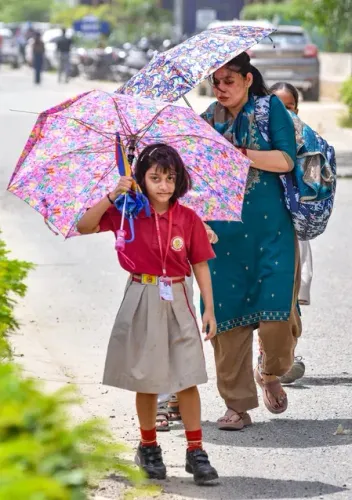
Rajasthan has moved to lock down its government schools — no outsider, including journalists, gets in without the principal's nod, and any camera or microphone requires written clearance. Violations could trigger POCSO and BNS proceedings, making this one of the most stringent school-access frameworks any Indian state has put in place.
Key Takeaways
The Rajasthan Education Department issued new school-entry guidelines on 17 August , restricting all outsider access to government schools.
Photography, videography, audio recording, interviews, and live streaming now require prior written permission from the school principal.
All visitors must register in the school's visitor register before entering the premises.
Outsiders are barred from classrooms, labs, libraries, hostels, and playgrounds without a teacher or principal escort.
Violations may attract action under BNS 2023 , POCSO 2012 , Juvenile Justice Act 2015 , and the IT Act 2000 .
Principals are empowered to call local police and alert the District Education Officer against non-compliant visitors.
The Rajasthan Education Department has issued fresh guidelines restricting the entry of outsiders — including media personnel — into government schools across the state, effective from 17 August. Under the new directives, any photography, videography, audio recording, interviews, or live streaming involving students, teachers, or school activities will require prior written permission from the school principal or head of the institution.
Key Provisions of the Order
The order, issued by Director of Secondary Education Lalit Kumar, mandates that no outsider may enter school premises without prior approval from the principal or an authorised school authority. All visitors must record their details in the school's visitor register before being allowed inside.
Outsiders are explicitly barred from entering classrooms, laboratories, libraries, hostels, playgrounds, restrooms, or any area where student activities are taking place — unless accompanied by the principal, a teacher, or another designated school official.
Photography and Privacy Restrictions
The guidelines prohibit the collection or dissemination of students' photographs, videos, or personal information in any manner that could compromise their privacy, dignity, or safety. This includes live streaming on social media platforms. Principals have been empowered to deny entry to any visitor whose presence is deemed a potential threat to school security, student privacy, or the academic environment.
Penalties and Legal Action
Principals have been directed to immediately alert the local police and the District Education Officer if anyone enters without permission, refuses to leave, attempts unauthorised photography or videography, or disrupts school activities. Depending on the circumstances, action may be initiated under the Bharatiya Nyaya Sanhita, 2023 (BNS), the Protection of Children from Sexual Offences Act, 2012 (POCSO), the Juvenile Justice (Care and Protection of Children) Act, 2015, and the Information Technology Act, 2000.
Compliance and Enforcement
The department has directed all supervisory officers and heads of institutions to ensure strict compliance with the new rules. Officials have underscored that student safety and privacy must remain the top priority, instructing schools to enforce the provisions rigorously. Where necessary, an unauthorised visitor may be removed from the premises with police assistance.
The move signals a broader push by the Rajasthan government to tighten institutional security in public schools — a concern that has gained urgency nationally amid rising incidents of unauthorised access and privacy violations in educational settings.
Point of View
BNS, and the IT Act in a single school-access circular signals that the department is treating unauthorised entry as a potential criminal matter, not merely an administrative one. While student safety justifications are sound, the media-access restrictions deserve scrutiny: requiring prior written principal permission for journalists could chill legitimate accountability reporting on school conditions, mid-day meal quality, or infrastructure failures. The order does not specify an appeal or grievance mechanism if permission is denied, leaving that discretion entirely with a single official. As other states watch, the Rajasthan framework could become a template — or a cautionary tale — depending on how principals exercise that power on the ground.
NationPress
17 Aug 2026
Frequently Asked Questions
What are the new Rajasthan government school entry rules?
The Rajasthan Education Department has directed that no outsider may enter a government school without prior approval from the principal or authorised school authority. All visitors must log their details in a visitor register, and any photography, videography, audio recording, or live streaming requires the principal's prior written permission.
Who issued the Rajasthan school entry order and when?
The order was issued by Director of Secondary Education Lalit Kumar on 17 August . It applies to all government schools under the Secondary Education Department across Rajasthan.
What legal action can be taken against violators?
Principals are directed to inform local police and the District Education Officer immediately. Depending on the circumstances, action may be initiated under the Bharatiya Nyaya Sanhita 2023, POCSO 2012, Juvenile Justice Act 2015, and the IT Act 2000.
Are media personnel affected by these rules?
Yes. Journalists and media personnel are classified as outsiders under the order. They must obtain the principal's prior written permission before conducting photography, videography, interviews, audio recording, or live streaming on school premises.
Why has Rajasthan introduced these school security guidelines?
The department has cited student safety and privacy as the primary reasons. The guidelines aim to prevent unauthorised access to sensitive areas such as classrooms, hostels, and restrooms, and to stop the dissemination of student images or personal information in ways that could compromise their dignity or safety.