HP CM Office Hails Major Arnav Bali's Sena Medal for Valour

Synopsis
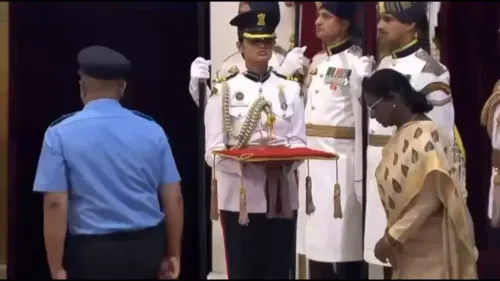
Major Arnav Bali of Shimla, serving with 9 Rashtriya Rifles, has been awarded the Sena Medal (Gallantry) by the President of India. The Himachal Pradesh CMO's Office lauded his act of refusing to retreat even after sustaining two abdominal and one spinal bullet wound.
Key Takeaways
Major Arnav Bali , a Shimla resident, has been awarded the Sena Medal (Gallantry) by the President of India.
He sustained two bullet wounds in the abdomen and one in the spine yet did not retreat from his position.
Major Bali is deployed with 9 Rashtriya Rifles , a counter-insurgency formation of the Indian Army.
The Chief Minister's Office of Himachal Pradesh extended formal congratulations on 17 August 2026 .
The Sena Medal (Gallantry) is awarded by the President for individual acts of bravery in the face of the enemy.
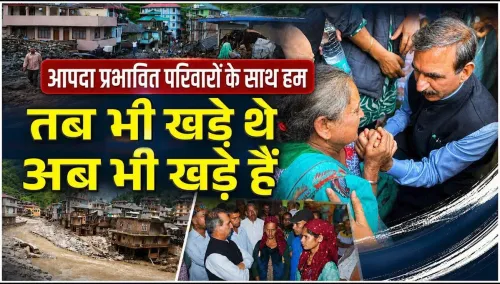
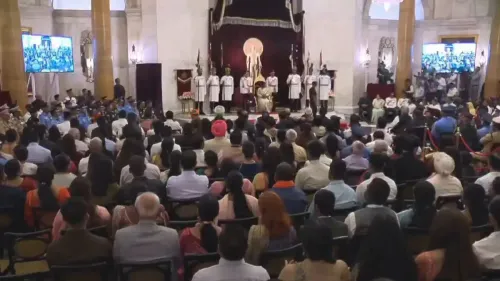
Three bullets — two in the abdomen, one in the spine — and Major Arnav Bali still did not fall back. On Monday, 17 August 2026, the Chief Minister's Office of Himachal Pradesh extended its congratulations to the Shimla-based Army officer, deployed with the 9 Rashtriya Rifles, on being awarded the Sena Medal (Gallantry) by the President of India.
Three Bullets, Zero Retreat: What Major Bali Endured
The CMO's post captured the stark facts without embellishment: 'Do goliyan pet mein aur ek reed mein lagne ke baad bhi Major Bali ji peeche nahi hate' — ('Even after two bullets in the stomach and one in the spine, Major Bali did not retreat'). It is the kind of detail that renders abstract bravery entirely concrete. A soldier, grievously wounded, choosing to hold his ground.
9 Rashtriya Rifles is a counter-insurgency unit of the Indian Army, typically deployed in active operational zones. Officers serving in such formations routinely face close-quarter engagements under extreme duress — the conditions that forged the act now being formally recognised.
The Sena Medal (Gallantry) and What It Signifies
The Sena Medal is one of the Indian Army's distinguished service and gallantry decorations, awarded by the President of India. The gallantry variant — distinct from the distinguished service category — is conferred specifically for acts of individual bravery in the face of the enemy. It sits in the tier of battlefield honours that the nation reserves for soldiers who act beyond the call of duty under fire.
For Himachal Pradesh, a state with a deep and proud military tradition, the recognition of a Shimla resident at this level carries particular resonance. The hills of Himachal have supplied the Indian Army with soldiers across generations; Major Bali's decoration adds a new chapter to that lineage.
Shimla's Son, the Nation's Soldier
The CMO's message was one of congratulation and pride — 'hardik badhai evam shubhkamnayein' ('heartfelt congratulations and best wishes') — framing Major Bali not just as a national hero but as a son of Shimla. That local anchoring matters: it connects the abstract weight of a gallantry medal to a specific street, a specific home, a specific family that now knows what their soldier carried back from the field.
Wounds that would stop most men did not stop Major Arnav Bali. The President of India has taken note. So has his home state.
Point of View
Partly as a signal of institutional pride in the armed forces. Himachal Pradesh, one of India's most recruitment-intensive states for the Army, has a political and cultural incentive to spotlight such honours. The CMO's post also subtly reinforces the Rashtriya Rifles' operational significance at a time when counter-insurgency deployments remain a live national-security concern. Personalising the medal — naming the soldier, naming his wounds, naming his hometown — transforms a formal decoration into a story the public can hold.
NationPress
17 Aug 2026
Frequently Asked Questions
Who is Major Arnav Bali?
Major Arnav Bali is a resident of Shimla, Himachal Pradesh, and an Indian Army officer deployed with 9 Rashtriya Rifles. He was awarded the Sena Medal (Gallantry) by the President of India for refusing to retreat despite sustaining three bullet wounds — two in the abdomen and one in the spine.
What is the Sena Medal (Gallantry)?
The Sena Medal is an Indian Army decoration awarded by the President of India. Its gallantry variant is specifically conferred for acts of individual bravery in the face of the enemy, distinct from the distinguished service category of the same medal.
What is 9 Rashtriya Rifles?
9 Rashtriya Rifles is a counter-insurgency battalion of the Indian Army, typically deployed in active operational areas. Officers in such units frequently face high-risk close-quarter engagements.
Why did the Himachal Pradesh CMO post about Major Bali's award?
The Chief Minister's Office of Himachal Pradesh congratulated Major Bali because he is a Shimla resident, and the state has a strong tradition of military service. The post expressed 'heartfelt congratulations and best wishes' on behalf of the state government.
When was Major Arnav Bali awarded the Sena Medal?
The Himachal Pradesh CMO's Office announced and congratulated Major Arnav Bali on his Sena Medal (Gallantry) on 17 August 2026 . The award was conferred by the President of India.