CM Yogi: 15 Crore UP Residents Now Get Free Ration Under PM Scheme
Synopsis
CM Yogi Adityanath claims that before 2017, SP workers misappropriated ration cards meant for the poor in UP. Today, he says, over 15 crore people in the state receive free grain under the PM Garib Kalyan Anna Yojana — framing welfare delivery as the defining difference between the two regimes.
Key Takeaways
CM Yogi posted on August 17, 2026 alleging that before the BJP came to power in 2017 , Samajwadi Party workers retained ration cards meant for the poor.
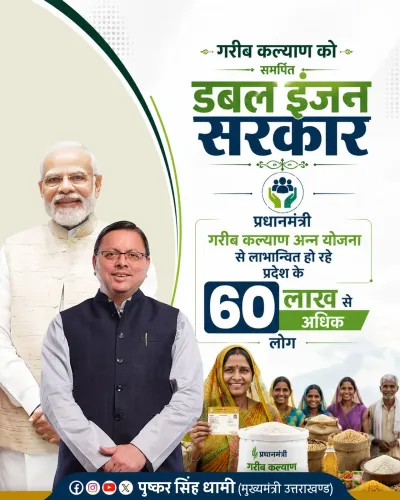
He claims more than 15 crore people in Uttar Pradesh now receive free foodgrain under the Pradhan Mantri Garib Kalyan Anna Yojana (PM-GKAY) .
PM-GKAY was originally a COVID-era relief scheme later made permanent by the central government.
At 15 crore beneficiaries, roughly half of UP's population is covered under the free grain programme.
The post is a direct political attack on the Samajwadi Party's welfare delivery record ahead of what is expected to be a fiercely contested political cycle in UP.
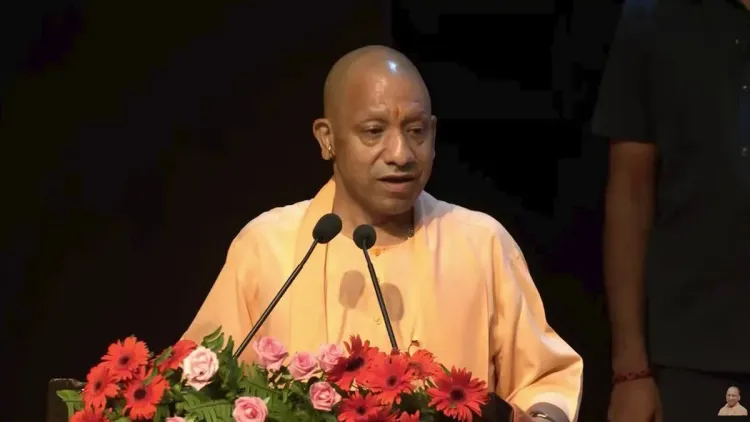
Before 2017, ration cards meant for the poor in Uttar Pradesh never reached them — Uttar Pradesh Chief Minister Yogi Adityanath says Samajwadi Party functionaries pocketed those cards while the hungry went without. Today, he says, that era is over.
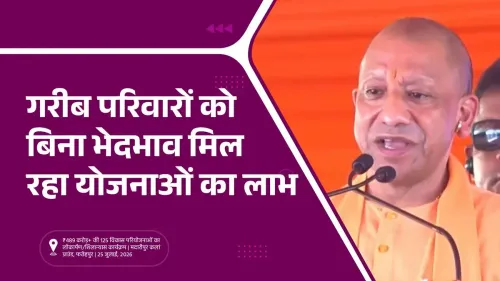
Posting on Monday, August 17, 2026, CM Yogi wrote in Hindi: 'वर्ष 2017 के पहले गरीब का राशन कार्ड सपाई अपने घर में रख लेते थे और गरीब भूख से मरता था' — 'Before 2017, Samajwadi Party workers used to keep the poor man's ration card at their own homes, and the poor would die of hunger.' He contrasted that with the present: more than 15 crore people in the state now receive free grain through the Pradhan Mantri Garib Kalyan Anna Yojana (PM-GKAY).
The scheme at the centre of the claim
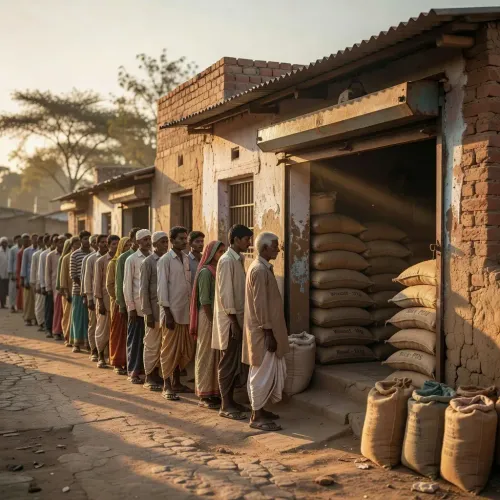
PM-GKAY is a central government food security programme that provides free foodgrains — typically 5 kg per person per month — to beneficiaries covered under the National Food Security Act. Originally launched during the COVID-19 pandemic to cushion the economic shock on the poorest households, the scheme was extended and eventually made permanent by the central government. Uttar Pradesh, as India's most populous state, accounts for one of the largest beneficiary pools in the country.
A direct hit at the Samajwadi Party's record
CM Yogi's post is an explicit political contrast: the BJP government that took office in March 2017 against the preceding Samajwadi Party administration. The allegation of ration-card misappropriation — local party workers retaining cards and diverting entitlements — has been a recurring BJP charge against the SP era in UP. By anchoring the attack to a concrete beneficiary number (15 crore-plus), the post frames welfare delivery as the sharpest dividing line between the two regimes.
The figure of 15 crore beneficiaries in a single state underscores UP's demographic weight: the state alone holds roughly one in every six Indians, making its food-security pipeline one of the largest logistics operations in the world.
What the numbers mean on the ground
At 15 crore recipients, nearly half of Uttar Pradesh's estimated population of around 24-25 crore is receiving subsidised or free grain under the scheme — a scale that reflects both the depth of poverty in the state and the breadth of the NFSA coverage. The political implication is equally blunt: if those households are receiving grain they were previously denied, they represent a formidable electoral constituency that both the BJP and the SP will contest hard.
CM Yogi has built a significant part of his governance narrative around welfare delivery — from free ration to direct benefit transfers — positioning the state machinery as a corrective to what he calls a decade of 'mafia raj' and patronage politics. This post is that argument, compressed into two sentences and a number.
Point of View
Verifiable-sounding beneficiary number, he simultaneously attacks the SP's governance record and claims credit for a central government scheme. The 15-crore figure, if accurate, represents one of the largest direct-benefit pipelines in any Indian state, giving the BJP a powerful ground-level narrative. The post also signals that the BJP's UP campaign machinery is already in motion, using social media to pre-emptively define the contrast with the SP well ahead of any election. Whether the SP mounts a data-driven rebuttal or contests the framing on other grounds will shape how this welfare narrative lands with voters.
NationPress
17 Aug 2026
Frequently Asked Questions
What is the Pradhan Mantri Garib Kalyan Anna Yojana?
PM-GKAY is a central government scheme that provides free foodgrains — typically 5 kg per person per month — to beneficiaries covered under the National Food Security Act. It was launched during the COVID-19 pandemic and later made a permanent entitlement.
How many people in UP get free ration under PM-GKAY?
According to CM Yogi Adityanath's post on August 17, 2026, more than 15 crore people in Uttar Pradesh are currently receiving free ration under the PM Garib Kalyan Anna Yojana.
What did CM Yogi say about ration cards before 2017 in UP?
CM Yogi alleged that before 2017, when the Samajwadi Party was in power, SP workers kept the ration cards of poor beneficiaries at their own homes, effectively denying the poor their food entitlements.
When did the BJP come to power in Uttar Pradesh?
The BJP, led by Yogi Adityanath as Chief Minister, came to power in Uttar Pradesh in March 2017 after winning a decisive majority in the state assembly elections.
Is PM-GKAY a state or central government scheme?
PM-GKAY is a central government scheme run by the Union government. State governments like Uttar Pradesh implement it through their public distribution systems (PDS).