India signs ₹1,943 crore deal to lease two MQ-9B Sea Guardian drones for Navy

Synopsis
India has leased two MQ-9B Sea Guardian drones from US firm General Atomics for ₹1,943 crore — a 30-month stopgap that gives the Indian Navy persistent ISR eyes over the Indian Ocean Region while the larger 31-drone fleet clears its procurement pipeline. A separate ₹1,577 crore loiter munition deal for the Army, signed the same week, signals a broad acceleration in Indian defence acquisitions.
Key Takeaways
The Ministry of Defence signed a ₹1,943 crore contract on 17 August to lease two MQ-9B Sea Guardian HALE RPAS from General Atomics Aeronautical Systems (GA-ASI) for the Indian Navy .
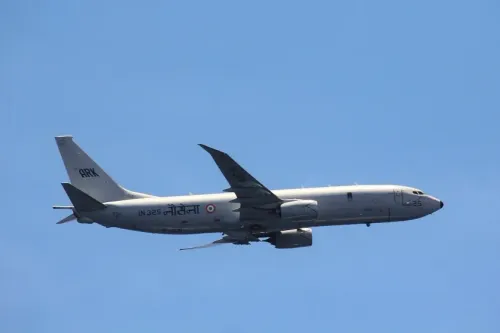
The lease runs for 30 months and is aimed at boosting Maritime Domain Awareness and ISR coverage across the Indian Ocean Region .
The contract was signed at Kartavya Bhawan-2, New Delhi , in the presence of Additional Secretary A.
A separate ₹1,577 crore contract was signed with Tata Advanced Systems Limited and NIBE Private Limited for Loiter Munition Systems for the Indian Army .
The lease is seen as an interim capability bridge while India's larger procurement of 31 MQ-9B drones clears the acquisition pipeline.
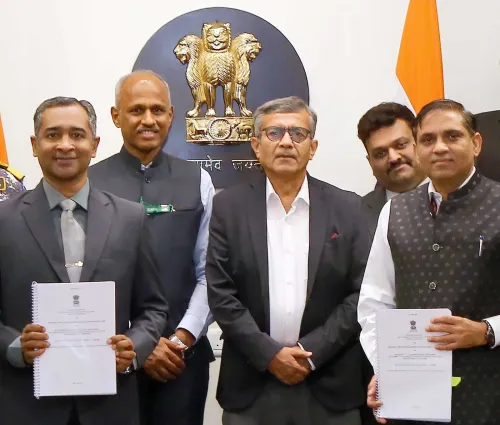
The Ministry of Defence on Monday, 17 August signed a contract with General Atomics Aeronautical Systems, Inc. (GA-ASI) to lease two MQ-9B Sea Guardian High-Altitude Long-Endurance (HALE) Remotely Piloted Aircraft Systems (RPAS) for the Indian Navy over a period of 30 months. The deal, valued at approximately ₹1,943 crore, was formalised at Kartavya Bhawan-2 in New Delhi in the presence of Additional Secretary and Director General (Acquisition), Department of Defence, A. Anbarasu.
What the MQ-9B Sea Guardian Brings to the Navy
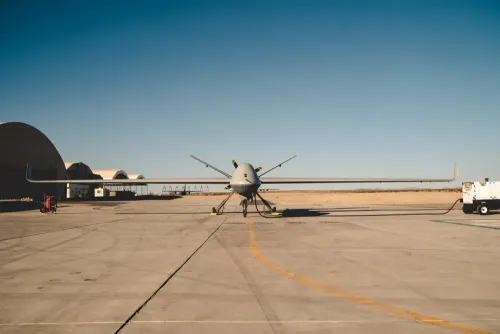
The MQ-9B Sea Guardian is a long-endurance remotely piloted aircraft designed for persistent maritime surveillance. According to the Ministry, the systems are equipped with 'advanced systems, state-of-the-art sensors and sophisticated payloads' that will 'significantly enhance the Indian Navy's Maritime Domain Awareness capabilities.'
Specifically, the drones will provide sustained Intelligence, Surveillance and Reconnaissance (ISR) coverage across large stretches of the maritime domain, enabling the Navy to track and assess developments at sea with far greater continuity than conventional patrol assets allow.
Strategic Focus: The Indian Ocean Region
The Ministry underlined that the deployment will strengthen India's capacity to monitor maritime activity and respond more effectively to 'emerging developments across the Indian Ocean Region.' This comes amid heightened strategic competition in the IOR, where China's naval footprint — including submarine deployments and port presence in neighbouring countries — has drawn sustained attention from Indian defence planners.
Notably, the lease structure — rather than an outright purchase — suggests an interim operational capability while India's larger procurement of 31 MQ-9B drones (approved in principle in 2023) moves through its acquisition pipeline.
Parallel Army Contract for Loiter Munitions
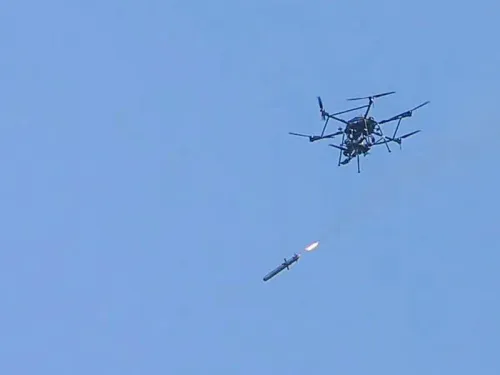
The Sea Guardian deal was not the only significant defence procurement formalised this week. The Ministry also confirmed that it signed a separate contract worth approximately ₹1,577 crore with Tata Advanced Systems Limited and NIBE Private Limited for the procurement of Loiter Munition Systems, along with associated munitions and accessories, for the Indian Army. Loiter munitions — sometimes called 'kamikaze drones' — are precision strike systems that loiter over a target area before engaging, and have seen extensive battlefield use globally in recent years.
What Happens Next
The 30-month lease period gives the Navy an operational window to integrate HALE RPAS into its surveillance doctrine before a longer-term fleet is inducted. Defence analysts expect the data gathered during this lease phase to inform sensor configurations and operational protocols for the full MQ-9B fleet. With both contracts now signed, the Ministry's defence procurement pace in August 2025 reflects an accelerated push to close capability gaps across services.
Point of View
But full procurement has moved slowly through cost negotiations and offset requirements. Leasing two units now is a pragmatic workaround — it gets persistent HALE ISR capability into the Indian Ocean Region without waiting for the larger deal to close. The parallel loiter munition contract with Tata and NIBE, meanwhile, signals that the Ministry is simultaneously pushing domestic and foreign procurement tracks. The real question is whether the 30-month window will be enough to build the operational doctrine and trained manpower the full fleet will eventually demand.
NationPress
2 Oct 2026
Frequently Asked Questions
What is the MQ-9B Sea Guardian drone leased by India?
The MQ-9B Sea Guardian is a High-Altitude Long-Endurance (HALE) Remotely Piloted Aircraft System developed by US firm General Atomics Aeronautical Systems (GA-ASI). It is designed for persistent maritime surveillance, carrying advanced sensors and payloads for Intelligence, Surveillance and Reconnaissance (ISR) missions over large ocean areas.
How much did India pay for the MQ-9B Sea Guardian lease?
The contract is valued at approximately ₹1,943 crore and covers the lease of two MQ-9B Sea Guardian HALE RPAS units for the Indian Navy over a 30-month period.
Why is India leasing rather than buying the MQ-9B drones?
The lease is widely seen as an interim measure to bridge a capability gap while India's larger procurement of 31 MQ-9B drones — approved in principle in 2023 — completes its formal acquisition process. The 30-month lease gives the Navy operational experience with the platform ahead of the full fleet induction.
What is the loiter munition contract signed alongside the drone deal?
The Ministry of Defence also signed a ₹1,577 crore contract with Tata Advanced Systems Limited and NIBE Private Limited for Loiter Munition Systems, including associated munitions and accessories, for the Indian Army. Loiter munitions are precision strike drones that circle a target area before engaging.
How will the MQ-9B Sea Guardian strengthen the Indian Navy?
According to the Ministry of Defence, the drones will provide persistent ISR coverage across vast stretches of the maritime domain, improving the Navy's ability to track and respond to developments in the Indian Ocean Region — an area of growing strategic importance for India.