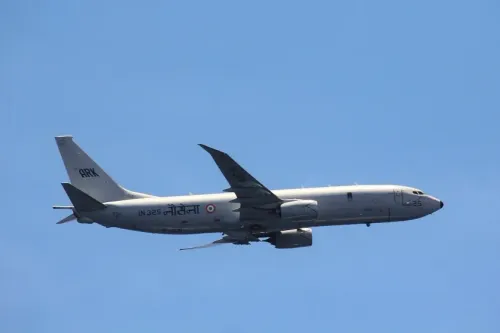
MQ-9B Sea Guardian lease: India signs ₹1,943 crore drone deal with General Atomics
Synopsis
India has leased two MQ-9B Sea Guardian drones from General Atomics for ₹1,943 crore — the Indian Navy's first formal induction of the maritime HALE platform. With the US Embassy publicly welcoming the deal as an Indo-Pacific security milestone, the 30-month lease is widely seen as a bridge to India's larger $3.99 billion, 31-drone acquisition that remains in the pipeline.
Key Takeaways
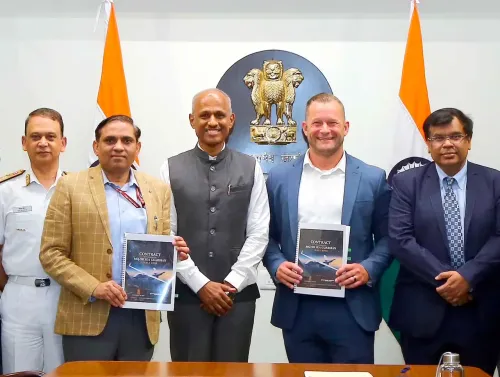
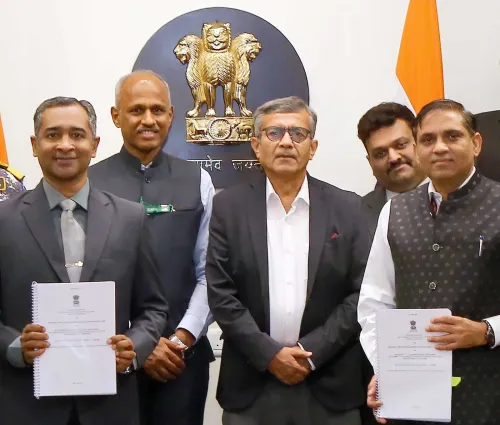
The Ministry of Defence signed a ₹1,943 crore contract with General Atomics Aeronautical Systems (GA-ASI) on 17 August to lease two MQ-9B Sea Guardian HALE drones for the Indian Navy .
The lease runs for 30 months and covers High-Altitude Long-Endurance Remotely Piloted Aircraft Systems (HALE RPAS).
The deal was signed at Kartavya Bhawan-2, New Delhi , in the presence of Additional Secretary A.
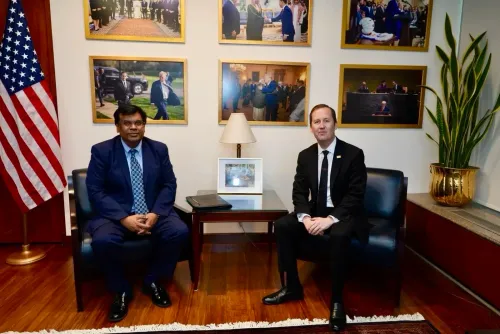
The US Embassy in India welcomed the contract on X, calling it an advancement of 'shared commitment to a free, open, and secure Indo-Pacific.' The systems will provide persistent ISR coverage across the Indian Ocean Region , enhancing the Navy's Maritime Domain Awareness.
The Indian Navy is set to receive two MQ-9B Sea Guardian High-Altitude Long-Endurance (HALE) Remotely Piloted Aircraft Systems after the Ministry of Defence on 17 August signed a ₹1,943 crore lease contract with General Atomics Aeronautical Systems, Inc. (GA-ASI). The 30-month lease marks a significant step in India's push to bolster maritime surveillance across the Indian Ocean Region.
Contract Details
The agreement was formalised at Kartavya Bhawan-2 in New Delhi in the presence of Additional Secretary and Director General (Acquisition), Department of Defence, A. Anbarasu. The contract value stands at approximately ₹1,943 crore for a lease period of 30 months.
What the MQ-9B Sea Guardian Brings to the Navy
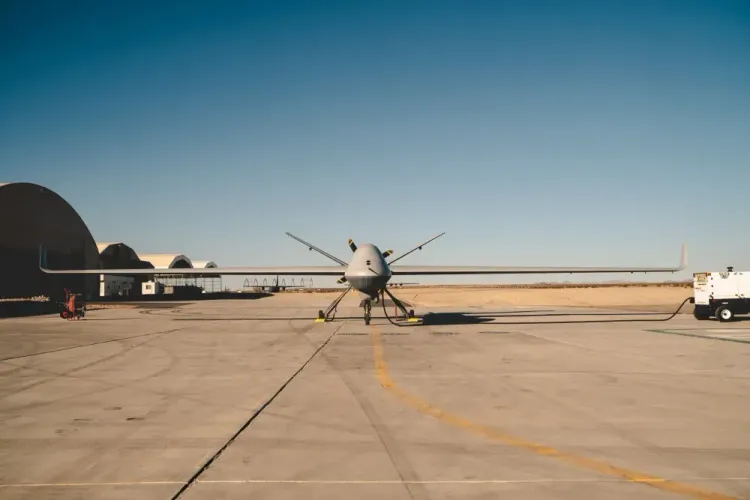
The MQ-9B Sea Guardian is a state-of-the-art HALE remotely piloted aircraft equipped with advanced sensors, sophisticated payloads, and persistent Intelligence, Surveillance and Reconnaissance (ISR) capabilities. According to the Ministry of Defence, the systems will 'significantly enhance the Indian Navy's Maritime Domain Awareness capabilities' by providing sustained coverage over vast stretches of the maritime domain.
The drones will enable the Navy to track and assess developments at sea across large areas — a capability that has grown increasingly critical given rising activity in the Indian Ocean Region. Notably, the MQ-9B platform is a maritime variant of the broader MQ-9 Reaper family, purpose-built for long-endurance ocean surveillance.
US Welcomes the Deal
The US Embassy in India welcomed the contract in a post on X, stating: 'This capability will enhance maritime domain awareness and persistent ISR coverage across the Indian Ocean Region, advancing our shared commitment to a free, open, and secure Indo-Pacific. We look forward to continued progress in the US-India defence partnership.'
The endorsement underscores the deal's strategic dimension — it is not merely a procurement exercise but a signal of deepening defence interoperability between the two countries under the framework of Indo-Pacific security cooperation.
Strategic Context
India's interest in the MQ-9B platform has been in the making for several years, with negotiations spanning multiple rounds. The lease arrangement — rather than an outright purchase — allows the Navy to operationalise the capability quickly while a larger government-to-government acquisition of 31 MQ-9B drones (valued at approximately $3.99 billion) remains on track through a separate process. This is the first time the Indian Navy will formally induct the Sea Guardian variant into active service.
The induction comes at a time when India is closely monitoring maritime developments in the Indian Ocean, including increased submarine activity and commercial shipping security concerns. The forward-looking deployment of HALE drones is expected to improve India's response time and situational awareness significantly.
What Comes Next
With the contract signed, the two systems are expected to be inducted into the Indian Navy within the lease period. Defence analysts will watch whether operational experience with the leased platforms accelerates the timeline on the larger acquisition deal, which would make India one of the most significant non-NATO operators of the MQ-9B globally.
Point of View
943 crore for two aircraft is not cheap, but it gets the Sea Guardian into Indian Navy hands immediately while the larger 31-drone acquisition clears its own bureaucratic runway. What the mainstream coverage underplays is the operational intelligence value: two HALE platforms over the Indian Ocean for two and a half years will generate the doctrine, data, and crew experience that India needs before it commits to a multi-billion-dollar fleet. The US Embassy's unusually prompt and specific public endorsement — framing it as an Indo-Pacific commitment, not just a bilateral sale — also signals Washington's interest in accelerating India's ISR interoperability ahead of any potential regional contingency.
NationPress
2 Oct 2026
Frequently Asked Questions
What is the MQ-9B Sea Guardian drone deal signed by India?
India's Ministry of Defence signed a ₹1,943 crore contract with General Atomics Aeronautical Systems on 17 August to lease two MQ-9B Sea Guardian High-Altitude Long-Endurance (HALE) Remotely Piloted Aircraft Systems to the Indian Navy for 30 months. The drones will enhance maritime surveillance across the Indian Ocean Region.
Why is India leasing rather than buying the MQ-9B drones?
The lease allows the Indian Navy to operationalise the Sea Guardian platform quickly, without waiting for the longer government-to-government process. A separate, larger acquisition of 31 MQ-9B drones valued at approximately $3.99 billion is reportedly in progress through a distinct procurement channel.
What capabilities does the MQ-9B Sea Guardian provide?
The MQ-9B Sea Guardian is a maritime HALE drone equipped with advanced sensors and payloads designed for persistent Intelligence, Surveillance and Reconnaissance (ISR). It can cover vast stretches of ocean continuously, improving the Navy's ability to track maritime activity and respond to emerging threats.
How did the United States respond to the deal?
The US Embassy in India welcomed the contract in a post on X, stating that the capability would 'enhance maritime domain awareness and persistent ISR coverage across the Indian Ocean Region' and advance the shared commitment to a free, open, and secure Indo-Pacific.
Where was the contract signed and who represented India?
The contract was signed at Kartavya Bhawan-2 in New Delhi. India was represented by Additional Secretary and Director General (Acquisition) of the Department of Defence, A. Anbarasu.