Anurag Thakur: Vedic chants welcome PM Modi in Manila
Synopsis
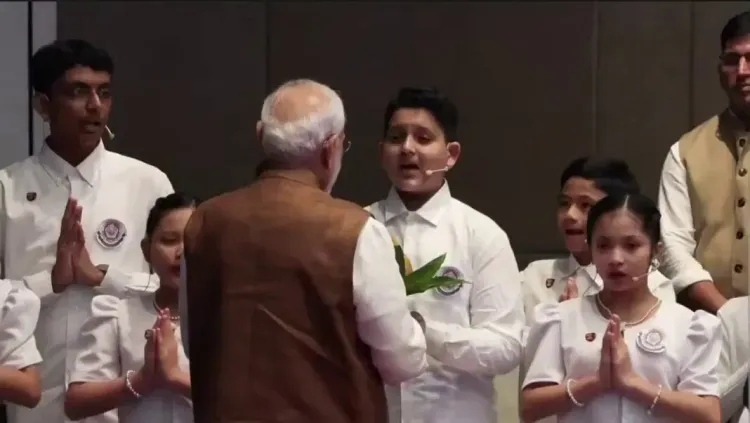
BJP MP Anurag Thakur shared footage of Indian diaspora children reciting Vedic mantras to welcome PM Narendra Modi in Manila on 16 November 2026, reflecting India's soft-power diplomacy under the Act East Policy during the Philippine capital visit.
Key Takeaways
PM Narendra Modi arrived in Manila, Philippines on 16 November 2026 as part of an overseas engagement.
Children from the Indian diaspora community in Manila welcomed the Prime Minister with Vedic mantras .
BJP MP Anurag Thakur opened his post with a verse from the Chandogya Upanishad , framing the welcome in philosophical terms.
India and the Philippines have maintained diplomatic ties since 1949 , with cooperation expanding through ASEAN frameworks.
India's Act East Policy (upgraded from Look East in 2014 ) has consistently incorporated diaspora cultural outreach in ASEAN-circuit visits.
Joint statements or bilateral agreements from the Manila visit represent the substantive diplomatic outcome to watch.
Vedic verses filled the air in the Philippine capital as children of the Indian diaspora recited sacred Sanskrit mantras to welcome Prime Minister Narendra Modi to Manila — a moment that BJP MP Anurag Thakur captured and shared on Monday, 16 November 2026, underscoring the cultural warmth India's overseas communities bring to every prime ministerial arrival.
Thakur's post opened with a verse from the Chandogya Upanishad — 'Dahram vipaapmam varavaishambhootam yat pundareekam puram madhyasanstham' — a meditation on the pure, grief-free consciousness that dwells at the heart of the universe. The choice of verse was deliberate: ancient India's highest philosophical tradition, recited by young diaspora children on foreign soil, as a head-of-government lands. The image is pure soft power.
A diaspora welcome scripted in Sanskrit
India's diaspora across Southeast Asia has become a consistent feature of Prime Minister Modi's foreign engagements, staging receptions that blend cultural pride with diplomatic signalling. Manila's Indian community, small but well-established, brought that tradition to the Philippines, with children taking centre stage in the reception. Such scenes — mantrochchaar (Vedic recitation) in a Southeast Asian capital — are both a homecoming ritual for the diaspora and a visible demonstration of Indian civilisational continuity abroad.
India and the Philippines have maintained diplomatic relations since 1949, and ties have deepened through ASEAN platforms and bilateral cooperation in defence, trade, and maritime security. India's Act East Policy, formalised in 2014, has consistently used diaspora engagement as a soft-power instrument during ASEAN-circuit visits, complementing the harder diplomatic work of joint statements and bilateral agreements.
Act East reaches Manila
The Manila stop fits a recognisable template in Indian foreign policy: a bilateral or multilateral visit to a Southeast Asian capital, anchored by a diaspora community reception that generates domestic enthusiasm and signals India's civilisational reach. What sets this moment apart is the specific choice of the Chandogya Upanishad verse — not a patriotic song, not a folk melody, but a philosophical Sanskrit shloka about the light within. That framing elevates the welcome from a crowd event to a statement about identity.
The substantive diplomatic yield of the Manila leg — any joint statements, defence agreements, or trade frameworks — will be the harder measure of the visit's success. But the image Anurag Thakur chose to amplify first was the children, the Sanskrit, and the city resonating with something very old.
Point of View
Framed by Anurag Thakur through the lens of Vedic philosophy and diaspora pride, is a textbook deployment of India's soft-power diplomacy under the Act East Policy. The choice of a Chandogya Upanishad verse — not a folk tune or a nationalistic chant — signals a deliberate elevation of civilisational identity as a foreign-policy asset. For the BJP, diaspora reception events also serve a domestic audience, reinforcing the narrative of a globally respected India. The harder test, however, remains what bilateral deliverables emerge from the Manila engagement, particularly in maritime security and trade corridors where India-Philippines interests converge.
NationPress
16 Nov 2026
Frequently Asked Questions
Why did PM Modi visit Manila in November 2026?
PM Narendra Modi visited Manila, the capital of the Philippines, as part of an overseas engagement in November 2026. The specific agenda of bilateral meetings or regional summits during the visit will be confirmed through official joint statements.
What is India's Act East Policy?
India's Act East Policy, formalised in 2014 as an upgrade of the earlier Look East Policy, prioritises deepening political, economic, and cultural ties with Southeast Asian and Indo-Pacific nations, including through diaspora outreach during PM-level visits.
What Vedic verse did Anurag Thakur quote in his post about Manila?
Anurag Thakur quoted a verse from the Chandogya Upanishad — 'Dahram vipaapmam varavaishambhootam' — a philosophical Sanskrit shloka about the pure, grief-free consciousness at the centre of being.
How long have India and the Philippines had diplomatic relations?
India and the Philippines have maintained formal diplomatic relations since 1949, with ties expanding over the decades through ASEAN platforms, defence cooperation, and bilateral trade frameworks.
Who is Anurag Thakur?
Anurag Thakur is a BJP Lok Sabha MP from Hamirpur, Himachal Pradesh, and a former Union Minister who held the Information and Broadcasting and Youth Affairs and Sports portfolios.