Counter-drone tech enters India: Paras Defence ties up with US firm Powerus
Synopsis
A US firm has quietly handed an Indian defence company exclusive rights to manufacture its Guardian counter-drone interceptors domestically — just as the Indian Army and Air Force are issuing tenders for exactly such kinetic systems. The deal is industrial, not operational, but it positions Paras Defence at the front of a fast-moving queue.
Key Takeaways
Powerus (US) has granted Paras Defence & Space Technologies exclusive rights to manufacture and commercialise its Guardian interceptor family in India.
The agreement was executed via Powerus subsidiary Tandem Defence LLC and disclosed in SEC filings .
The deal does not mean the Guardian has been selected by the Indian military — procurement evaluation is still required.
The Indian Army issued an RFI in February for up to 45 drone interception systems and 50 drone catcher systems for plains, deserts, and high-altitude terrain.
The Army also issued a GeM tender for an AI-enabled high-speed interceptor UAV; the Indian Air Force has sought indigenous detection and neutralisation solutions.
Guardian technology reportedly originated from autonomous defence systems developed in Ukraine and owned by G1 Exploration .
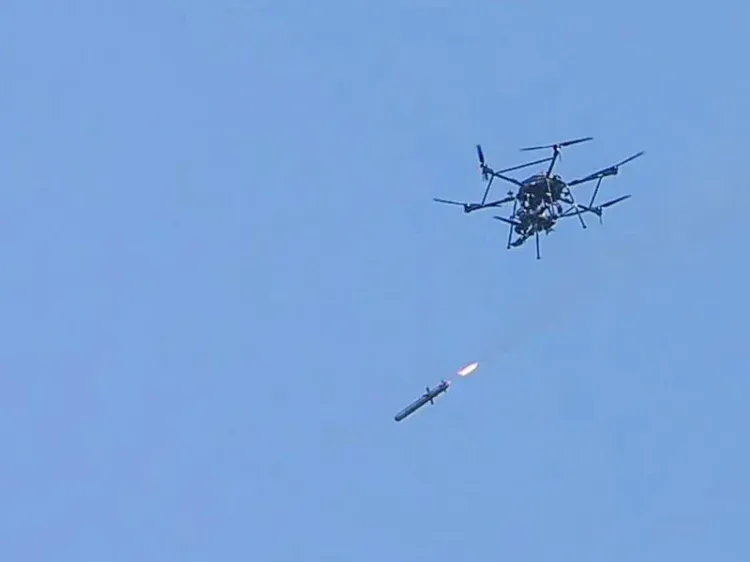
US-origin counter-drone technology is entering India's defence manufacturing ecosystem as the country's armed forces separately develop requirements for kinetic interceptor systems capable of physically neutralising hostile unmanned aerial vehicles (UAVs). The development, reported by The Sunday Guardian, centres on a licensing agreement between American firm Powerus and Indian defence company Paras Defence & Space Technologies.
The Paras-Powerus Agreement
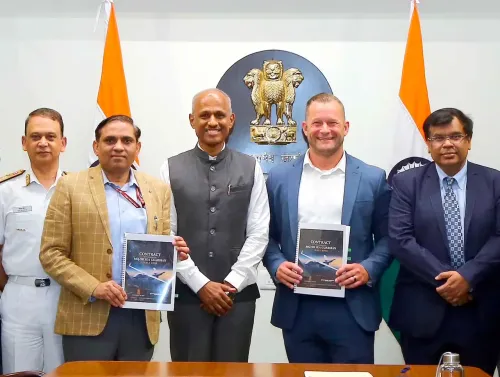
Powerus has granted Paras Defence & Space Technologies exclusive rights to manufacture and commercialise its Guardian interceptor family in India, according to filings with the US Securities and Exchange Commission (SEC). The agreement was executed through Powerus subsidiary Tandem Defence LLC, and entitles Paras to domestic manufacturing and commercialisation rights in exchange for a licence fee and a share of net profits from Indian sales.
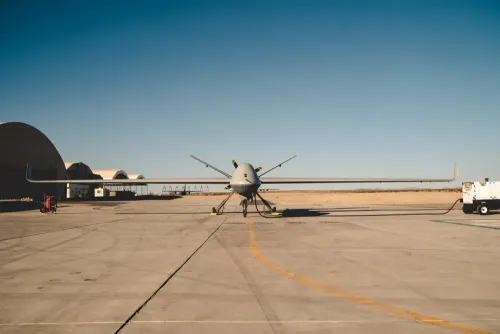
Powerus describes the Guardian-1 and the upgraded Guardian-2 as 'low-cost, high-speed counterdrone interceptor platforms designed to defeat hostile unmanned aerial threats at scale.' The company has said the technology originated through a partnership formed to commercialise autonomous defence technologies developed in Ukraine and owned by G1 Exploration.
What the Deal Does — and Does Not — Mean
Crucially, the agreement does not indicate that the Guardian interceptor has been selected by the Indian military. Any induction into service would remain subject to the government's standard evaluation and procurement processes. The immediate significance, according to the report, is industrial rather than operational — the deal creates a pathway for local manufacturing of a foreign-origin counter-drone system at a time when demand signals from the Army and Air Force are intensifying.
Indian Military's Evolving Counter-Drone Requirements
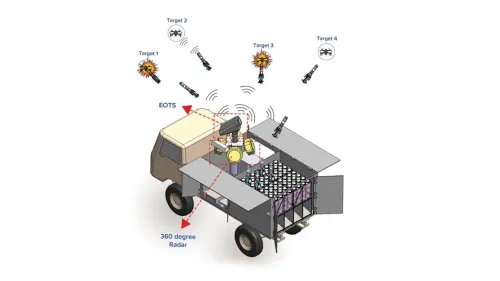
In February, the Indian Army issued a request for information (RFI) for up to 45 drone interception systems and 50 drone catcher systems for deployment across plains, deserts, and high-altitude areas. The systems are required to counter low-radar-cross-section drones through kinetic means, including direct impact or proximity detonation.
Earlier this month, the Army also issued a GeM tender for the development of an AI-enabled high-speed interceptor UAV for counter-drone operations. The Indian Air Force has separately sought indigenous solutions capable of detecting, tracking, and neutralising hostile drones.
Strategic Context
The timing of the Paras-Powerus agreement is notable. India's security establishment has been sharpening its counter-drone posture following incidents involving hostile UAVs along sensitive borders. The push for kinetic interceptors — systems that physically destroy or capture drones rather than jam their signals — reflects an acknowledgment that electronic countermeasures alone may be insufficient against modern drone threats deployed at scale.
This comes amid a broader national effort to indigenise defence manufacturing under the Make in India framework, with foreign technology transfer agreements increasingly used as a bridge toward domestic capability. Whether the Guardian platform ultimately clears India's procurement process remains to be seen, but the industrial groundwork is now in place.
Point of View
But the harder question is whether foreign-origin technology — even when locally manufactured — can satisfy India's indigenisation requirements under current procurement rules. The Army's RFI and the Air Force's indigenous-solutions mandate suggest a preference for home-grown capability, not licensed foreign platforms. If the Guardian interceptor is to move from factory floor to field deployment, it will need to clear a procurement gauntlet that has historically been slow and opaque. The deal is a foot in the door, not a contract.
NationPress
16 Oct 2026
Frequently Asked Questions
What is the Paras Defence and Powerus counter-drone agreement?
US-based Powerus has granted Paras Defence & Space Technologies exclusive rights to manufacture and commercialise its Guardian interceptor counter-drone systems in India. The deal was executed through Powerus subsidiary Tandem Defence LLC and disclosed in SEC filings, with Paras paying a licence fee and sharing net profits from domestic sales.
Has the Indian military selected the Guardian interceptor?
No. The agreement creates a manufacturing and commercialisation pathway but does not mean the Guardian has been chosen by the Indian Army or Air Force. Any induction would require the government's standard evaluation and procurement process.
What counter-drone systems is the Indian Army seeking?
The Indian Army issued a request for information in February for up to 45 drone interception systems and 50 drone catcher systems, deployable across plains, deserts, and high-altitude areas. It has also issued a GeM tender for an AI-enabled high-speed interceptor UAV.
Where does the Guardian interceptor technology come from?
Powerus says the technology originated through a partnership formed to commercialise autonomous defence technologies developed in Ukraine and owned by G1 Exploration. Guardian-1 and Guardian-2 are described as low-cost, high-speed platforms designed to defeat drone threats at scale.
Why does this deal matter for India's defence sector?
The agreement is significant primarily on the industrial side — it creates a local manufacturing base for a foreign counter-drone system at a time when Indian armed forces are actively seeking scalable kinetic solutions. It also reflects the broader Make in India push to use technology transfer agreements as a bridge toward domestic defence capability.