Powerus MoU with Pakistan Army: US firm's Ukrainian drone deal raises India security alarm

Synopsis
A little-known American startup with reported Trump family ties signed an MoU with Pakistan's Army to supply Ukrainian battlefield drone technology — just months after Pakistan's defeat in Operation Sindoor. The deal bypasses official US weapons policy toward Islamabad, raises conflict-of-interest questions, and has set off alarms in New Delhi, where the same company had just inked a drone deal with an Indian firm.
Key Takeaways
Powerus , a US defence startup founded in October last year , signed an MoU with the Pakistani Army on 16 September , represented by Field Marshal Asim Munir .
The company holds rights to Ukrainian drone technology via its partner G1 Exploration , which owns IP for seven fully developed drone models .
Powerus has secured major US government contracts, including a $90 million deal for 3,000 interceptor drones for the US Air Force .
The company had earlier struck a deal with Paras Defense and Space Technologies in Mumbai to sell Guardian-1 technology in India.
The Pakistan MoU aims at an initial drone order and ultimately at establishing joint manufacturing operations in Pakistan .
Critics flag potential conflicts of interest given Powerus's reported ties to the family of President Donald Trump .
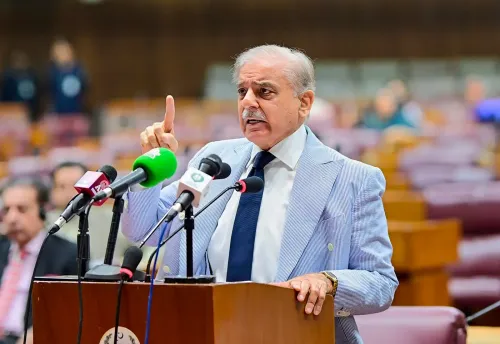
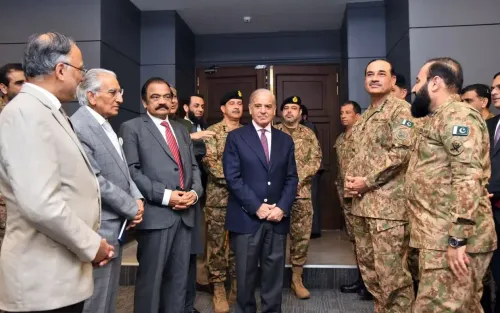
American defence startup Powerus, which reportedly has close ties to the family of US President Donald Trump, has signed a memorandum of understanding (MoU) with the Pakistani Army, offering Islamabad access to Ukrainian drone technology — a development that analysts say carries serious implications for regional security in South Asia. The MoU was signed on 16 September, with the Pakistani Army represented by Field Marshal Asim Munir.
What Powerus Is and How It Rose to Prominence
Founded just over a year ago, Powerus moved quickly to establish itself in the unmanned systems market. Within six months of its founding in October last year, the company acquired three small firms and began manufacturing unmanned aerial and maritime systems. It subsequently signed a contract with G1 Exploration to commercialise autonomous defence systems originally developed in Ukraine.
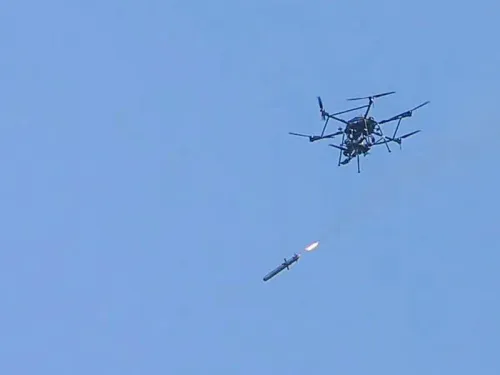
G1 Exploration holds intellectual property rights over seven fully developed drone models from Ukrainian manufacturers, along with several additional systems at varying stages of development. The partnership also produced the Guardian line of drone interceptors.
Notably, Powerus has beaten established defence giants — including Lockheed Martin, General Dynamics, and Boeing — to secure several high-value contracts. These include a US Air Force contract worth $90 million to supply 3,000 interceptor drones, a US Department of Defense deal worth $2.5 million for 1,500 FPV drones, control kits, and spare parts, and a $22.3 million agreement to develop infrastructure protection systems for critical oil and gas facilities in the Middle East.
The India Connection — and the Pakistan Turn
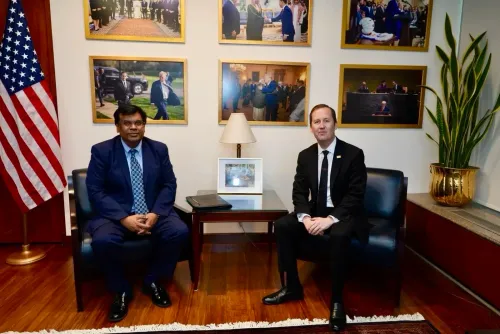
Before the Pakistan MoU drew attention, Powerus had already entered the Indian market. The company struck a deal with Paras Defense and Space Technologies in Mumbai for the production and sale of Guardian-1 drone technology in India. That agreement underscored the firm's ambitions on the Indian subcontinent.
The subsequent MoU with the Pakistani Army has, however, upended that narrative. Powerus co-founder Brett Velicovich confirmed that the agreement covers an initial order of unmanned aerial vehicles, with the company's ultimate aim being to establish a joint technology partnership and set up manufacturing operations in Pakistan. Powerus CEO Andrew Fox described Pakistan's private defence sector as 'still in the early stages of development' but said it is of active interest to American companies.
Why the Pakistan MoU Raises Regional Alarms
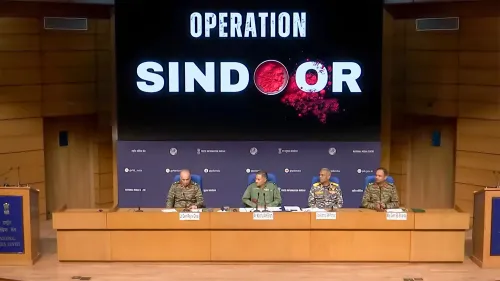
Critics argue that the deal is particularly alarming in the context of Pakistan's defeat in Operation Sindoor, after which Islamabad has reportedly been seeking to rapidly rebuild and expand its drone capabilities — including through the acquisition of Ukrainian tactics and technologies. The prospect of a US company effectively re-exporting Ukrainian battlefield-tested drone systems to Pakistan has triggered concerns about a potential shift in the regional military balance.
This comes amid broader questions about the resumption of US-Pakistan defence cooperation. Washington has officially ceased the supply of new weapons to Islamabad, limiting itself to modernisation packages for previously delivered F-16 fighter jets. The Powerus MoU, critics note, may represent a workaround — channelling advanced drone capability through a private commercial arrangement rather than a government-to-government defence transfer.
Conflict of Interest Concerns
The deal has also attracted scrutiny over potential conflicts of interest, given Powerus's reported ties to the family of President Donald Trump. Analysts and observers have raised questions about whether such proximity to the White House could influence the regulatory and export-approval environment for a company making defence deals in a strategically sensitive region. As of now, neither the US government nor Powerus has formally addressed these conflict-of-interest concerns.
What Happens Next
The full scope of the MoU — including the number and specifications of drones involved — has not been publicly disclosed. Attention will now focus on whether US export control authorities will scrutinise the transfer of Ukrainian-origin technology to Pakistan, and how New Delhi responds diplomatically to a development that directly affects its strategic calculus. The Paras Defense partnership in India also faces an uncertain trajectory given the parallel Pakistan engagement.
Point of View
But there is no equivalent guardrail preventing private US companies from supplying advanced military technology through commercial routes. The fact that the same firm signed a deal with an Indian defence company and then pivoted to a Pakistani Army MoU within months suggests a transactional calculus that sits uneasily with any notion of a coherent US Indo-Pacific strategy. The reported Trump family connection to Powerus makes the regulatory silence even harder to explain. For New Delhi, the immediate question is whether this constitutes a material change in the drone-capability balance — particularly in the post-Operation Sindoor environment where Pakistan has been openly seeking to rebuild its unmanned systems inventory.
NationPress
4 Oct 2026
Frequently Asked Questions
What is the Powerus MoU with Pakistan about?
Powerus, a US defence startup, signed a memorandum of understanding with the Pakistani Army on 16 September to supply unmanned aerial vehicles and, ultimately, to establish joint drone manufacturing operations in Pakistan. The deal draws on Ukrainian drone technology that Powerus accesses through its partner G1 Exploration.
Why does the Powerus-Pakistan deal raise concerns for India?
The deal is seen as giving Pakistan access to advanced Ukrainian battlefield drone technology at a time when Islamabad is reportedly seeking to rebuild its drone capabilities following its defeat in Operation Sindoor. India's defence establishment views any upgrade of Pakistan's unmanned systems as a direct threat to the regional security balance.
Does the deal violate US weapons policy toward Pakistan?
Washington has officially stopped supplying new weapons to Pakistan, limiting transfers to F-16 modernisation packages. The Powerus MoU is a private commercial arrangement, not a government-to-government transfer, which critics argue may circumvent the spirit of that policy without technically breaching it.
What is Powerus's connection to India?
Before the Pakistan MoU, Powerus had signed a deal with Paras Defense and Space Technologies in Mumbai for the production and sale of Guardian-1 drone technology in India, making the subsequent Pakistan agreement particularly contentious from New Delhi's perspective.
What are the conflict-of-interest concerns around Powerus?
Powerus is reportedly linked to the family of US President Donald Trump. Critics argue this proximity could influence regulatory and export-approval decisions for a company conducting defence deals in a strategically sensitive region, though neither the US government nor Powerus has formally addressed these concerns.