How Pakistan's Low-Cost Chinese Drones Are Hindering Military Strength

Synopsis
Pakistan's shift to Chinese drones reveals a critical dependency due to limited Western options. This report uncovers the implications of this reliance, highlighting the technology gaps and performance issues that accompany these cost-effective choices.
Key Takeaways
Pakistan’s pivot to Chinese drones is due to restrictions on Western technology.
Cost-effective alternatives come with performance trade-offs.
Chinese drones are significantly cheaper than their American counterparts.
The reliance on these drones may limit military effectiveness .
Pakistan's drone program is institutionally embedded , complicating future changes.
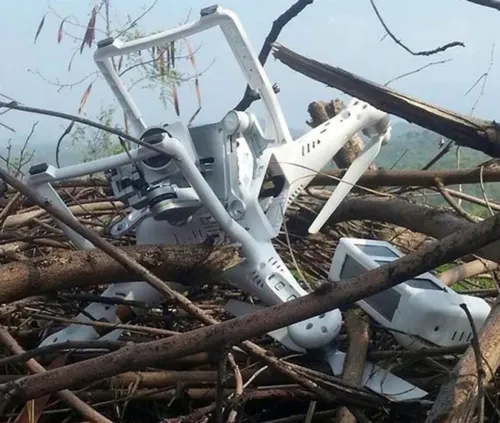
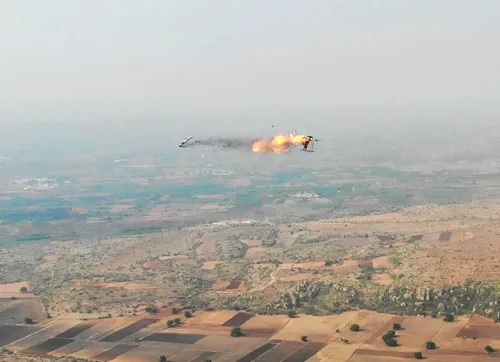
Colombo, March 21 (NationPress) Pakistan's shift towards Chinese military drones stems not just from strategic alignment but also from a lack of viable alternatives, a dynamic that Beijing has strategically leveraged. The ongoing growth of this relationship, despite losses in combat, highlights Islamabad's reliance on Chinese technology, rather than the inherent advantages of the systems themselves, according to a recent report.
“The partnership's reasoning is quite straightforward. While American drones like the MQ-1 Predator and MQ-9 Reaper offer superior technology, their export is heavily restricted, particularly to countries that are effectively aligned with Beijing, such as Pakistan. Thus, Pakistan's decision to turn to China is not based solely on strategic interests, although that plays a role, but rather on limited options. China has intentionally nurtured this situation,” the report published by the Sri Lankan newspaper 'Daily Mirror' elaborated.
“The Wing Loong II has primarily been designed for export, marketed as a cost-effective substitute for the MQ-1 Predator, with its unit cost estimated at approximately $1-2 million, in stark contrast to the MQ-9 Reaper's $30 million. This price difference is significant, particularly for a defense budget that is continuously under financial strain. However, what is less clearly conveyed in marketing materials is the actual implications of this price disparity in terms of performance,” it pointed out.
According to the report, Pakistan's Army Aviation and Navy operate the CH-4B unmanned combat aerial vehicle obtained from China Aerospace Science and Technology Corporation, which bears an external resemblance to the MQ-9 Reaper—a similarity that analysts have long recognized.
Yet, as the report highlights, this comparison largely ends at the “silhouette.”
“The CH-5, which is China's larger successor to the Reaper, features an unspecified turbocharged piston engine that delivers less than half the horsepower of the Garrett TPE331 turboprop engine found on the Reaper. This limitation restricts the CH-5's maximum altitude to 9 km, compared to the 12-15 km altitude capability of the Reaper,” it noted.
The report further indicated, “Pakistan's drone program is deeply integrated within its military structures, making it challenging to dismantle, irrespective of future developments in China-Pakistan relations. Nonetheless, the capability it signifies is more limited than the frequency of announcements surrounding it might imply. The low cost has its reasons, documented maintenance records exist, and combat losses are acknowledged.”
Point of View
Highlighting the need for a balanced approach in military procurement.
NationPress
22 Sept 2026
Frequently Asked Questions
Why is Pakistan reliant on Chinese drones?
Pakistan's reliance on Chinese drones stems from restrictions on access to advanced Western military technology and the strategic cultivation of this relationship by Beijing, providing limited alternatives.
What are the performance differences between Chinese and American drones?
Chinese drones like the CH-5 have lower performance capabilities compared to American drones such as the MQ-9 Reaper, particularly in terms of altitude and engine power.
How does the cost of Chinese drones compare to American ones?
Chinese drones, like the Wing Loong II, are significantly cheaper, with costs around $1-2 million, compared to approximately $30 million for the MQ-9 Reaper.
What implications does this reliance have for Pakistan’s military?
This reliance could limit Pakistan's military effectiveness and innovation, as the capabilities of the drones may not match the advanced technology available from Western sources.
Is there a concern about the long-term viability of Pakistan's drone program?
Yes, the drone program is deeply embedded in Pakistan's military structure, making it difficult to change or unwind, even as challenges and limitations become apparent.