Pakistan's Role as a Promoter of Chinese Military Technology Amid Credibility Challenges
Synopsis
As global doubts rise about the effectiveness of Chinese defense systems, Pakistan emerges as a pivotal player. The recent report reveals operational failures, particularly in the JF-17 Thunder aircraft and Chinese radar systems, raising questions about the reliability of Chinese military exports.
Key Takeaways
Pakistan is becoming a significant promoter of Chinese defense technology.
Operational shortcomings of Chinese military systems are raising global concerns.
Pakistan's JF-17 Thunder aircraft has faced notable performance issues.
Chinese radar systems have reportedly failed to perform as advertised in real-world scenarios.
The reliability of Chinese arms suppliers is under scrutiny.
Vienna, March 2 (NationPress) Pakistan is progressively positioning itself as a vital partner and advocate for Chinese military technologies, even as global scrutiny grows over the effectiveness of China’s defense equipment in operational scenarios.
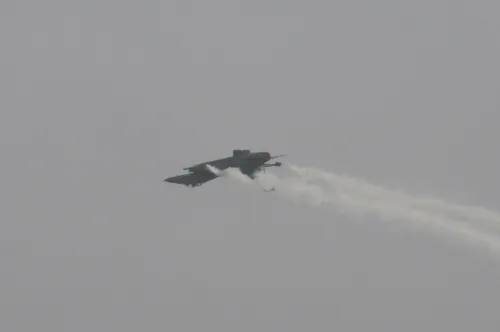
Through joint ventures and co-branding initiatives—particularly with the JF-17 Thunder multirole combat aircraft, a collaboration between the Pakistan Aeronautical Complex and China's Chengdu Aircraft Corporation—Beijing opts for a discreet public presence, while Islamabad takes on the roles of operator, exporter, and political spokesperson for these systems, as highlighted in a recent report.
“Consequently, any technical or operational flaws are predominantly linked to Islamabad rather than Beijing. For instance, in recent export contracts, such as those involving deliveries to military forces in eastern Libya, Pakistan is officially recognized as the contracting authority. The final assembly occurs at the Pakistan Aeronautical Complex (PAC) in Kamra, and this aircraft type is not even part of the regular inventory of the Chinese Air Force,” detailed a report from the Austria-based news outlet ‘Militar Aktuell’.
The JF-17 Thunder, known in China as the FC-1 Xiaolong, was created as an economical substitute for Western jets like the Eurofighter, Gripen, or F-16, allowing nations with budget constraints to access modern aerial combat capabilities.
However, this operation has unveiled a gap between ambition and actual performance.
“Based on publicly accessible information, the Pakistani Air Force has faced numerous non-combat-related total losses during regular operations from 2011 to 2024. While incidents in military aviation are not unusual, the frequency of these occurrences in the early years of service indicates potential structural or systemic issues, including reported cracks in the vertical stabilizer,” the report observed.
It emphasized that the performance issues of Chinese weapons in real-world situations are casting doubt on China's reputation as a trustworthy global arms supplier.
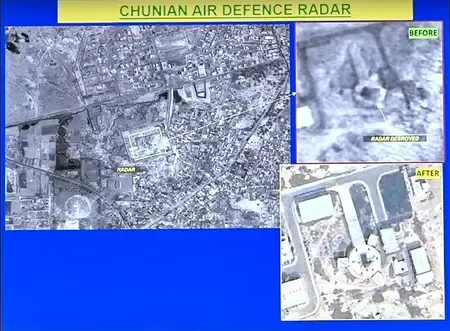
Following the US military operation in Venezuela in early January, significant deficiencies in the deployed Venezuelan air defense systems were revealed—many of which originate from China.
“Venezuela heavily invested in Chinese radar systems, particularly the JY-27 series of long-range and anti-stealth radar systems, which were showcased at international arms exhibitions like Airshow China in Zhuhai and IDEX. These long-wave radars are theoretically designed to effectively detect modern aircraft with reduced radar cross-sections. However, during the operation, they apparently failed to demonstrate any significant effectiveness,” the report indicated.
“No official updates have been made public yet, and available reports are inconsistent. Several factors may be at play: possible operational inactivity or technical malfunctions, shortcomings in integration and training, and effective electronic countermeasures employed by US forces. Regardless, the JY-27 systems, typically priced in the tens of millions of euros, have not proven their promised capabilities,” it added.
Point of View
This report underscores the complexities surrounding Pakistan's partnership with China in military technology. While Pakistan positions itself as a promoter of Chinese systems, the operational issues raise legitimate concerns about the performance and reliability of these arms on the global stage.
NationPress
20 Sept 2026
Frequently Asked Questions
What is the JF-17 Thunder?
The JF-17 Thunder is a multirole combat aircraft developed collaboratively by the Pakistan Aeronautical Complex and China's Chengdu Aircraft Corporation, designed to provide affordable air combat capabilities.
Why are there concerns about Chinese military equipment?
Concerns have arisen due to reported operational failures and deficiencies in performance in real-world scenarios, which challenge China's credibility as a reliable arms supplier.
How does Pakistan justify its role in promoting Chinese arms?
Pakistan serves as the operator and exporter of Chinese military systems, positioning itself as a political advocate while maintaining a low public profile for Beijing.
What issues have been reported with the JF-17 Thunder?
Reports indicate non-combat-related total losses and potential structural issues, such as cracks in the vertical stabilizer, during routine operations.
What happened during the US military operation in Venezuela?
The operation revealed significant flaws in the Venezuelan air defense systems, including those of Chinese origin, raising concerns about their effectiveness.