Pakistan's Ambitious Pursuit to Export Fighter Jets Amidst Economic Challenges
Synopsis
Despite facing severe economic difficulties, Pakistan aims to become a leading exporter of fighter jets. This ambition raises questions about the implications for the country's development and fiscal health amidst ongoing challenges in key sectors.
Key Takeaways
Pakistan's economy is facing significant challenges .
The government aims to become a fighter jet exporter .
High manufacturing costs and foreign dependencies are risks .
Increased defense spending contrasts with cuts in overall budget .
Experts caution against neglecting domestic issues for military ambitions .
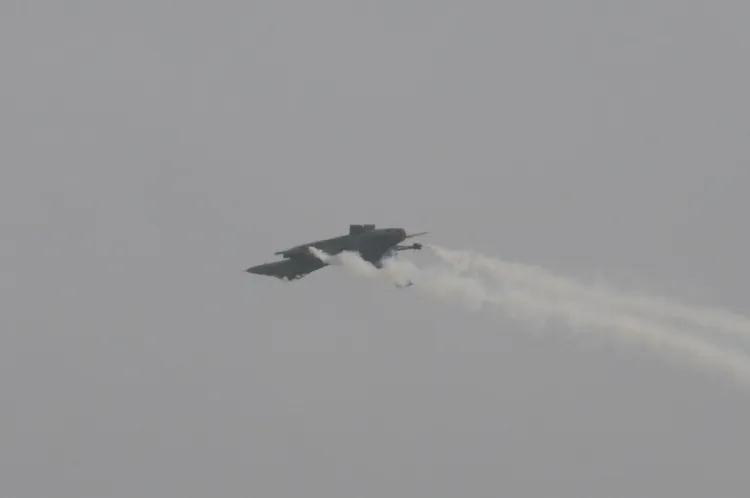
Islamabad, March 29 (NationPress) In the midst of an economy grappling with significant challenges in areas such as energy, logistics, digital infrastructure, education, poverty, and employment, the government of Pakistan aims to position itself as a key exporter of fighter jets, as reported.
"To clarify, an economy struggling to meet basic needs must prioritize the production of essential goods for mass consumption to guarantee the welfare of its citizens; otherwise, scarcity could trigger a cycle of escalating inflation, growing inequality, and deepening economic injustice. This vital economic insight seems to elude Pakistan’s leadership," stated Nasir Khattak, an expert on the China-Pakistan region, in a report from the Afghan Diaspora Network.
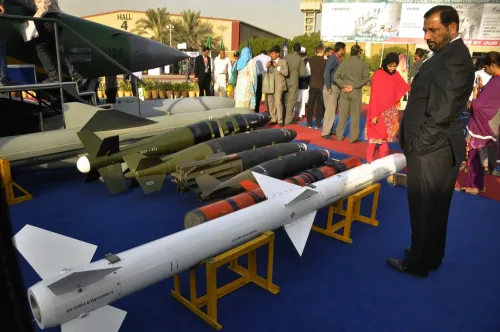
In 2025, Pakistan finalized a military hardware export agreement valued at $10 billion. This deal encompasses the JF-17 fighter jet, a product of the China-Pakistan joint venture, along with the Mushshak trainer aircraft. Pakistan has been positioning itself as an alternative arms supplier for markets in Africa, Europe, and the Gulf, but it faces numerous domestic challenges.
"Initially, the sale of fighter jets is positioned as a solution to its debt issues and a means to secure future IMF assistance. However, the manufacturing cost of the JF-17 jet, developed in partnership with China, is substantial. This cost is complicated by foreign exchange issues, as many components must be sourced from China, Russia, and the UK. Additionally, Pakistan is engaging in transactions with partners like Libya, which is under UNSC and Western sanctions, restricting defense procurements. Therefore, the logistics surrounding these deals pose significant concerns," the report noted.
Secondly, Pakistan seeks to mitigate its macroeconomic instability through increased military involvement. Historically, this approach has proven ineffective, and the likelihood of success appears slim this time around. Under military influence, the Pakistani government has consistently allocated a growing share of its budget to the defense sector, as highlighted by a 20 percent increase in defense spending for the 2025 budget, coupled with a 7 percent reduction in overall expenditure.
Pakistan's ambition to become a global supplier of fighter jets raises numerous developmental issues. The anticipated achievement of self-sufficiency through jet exports will also entail a significant outflow of financial resources to foreign partners. The ongoing discourse surrounding Pakistan's defense diplomacy offers little benefit to the average citizen. Experts have repeatedly cautioned the government about the dire state of development, escalating poverty levels, and the urgent need for institutional reform; however, the current government’s focus seems unaligned with these pressing structural challenges.
"The prevailing economic climate is marked by a fragile recovery, soaring inflation, substantial debt burdens, and heightened vulnerability to external shocks, including potential oil price surges. Despite its claims of being a market economy, the fundamental elements of Pakistan's economy are influenced by non-market forces. Subsidies are often negotiated, with tax exemptions favoring those with elite political connections, creating a system driven by patronage and elite capture," the Afghan Diaspora Network report asserted.
"Thus, the irony: while the economy is beset by numerous unresolved issues in energy, logistics, digital infrastructure, education, poverty, and employment, the government strives to establish itself as a leading exporter of fighter jets. It bears repeating that the touted JF-17 is not entirely independent, as many components are imported and foreign suppliers require payment in foreign currency, which diminishes net earnings. Consequently, an economy barely managing to survive, given its high exposure to external shocks, is betting on its problematic defense sector to rectify its macroeconomic challenges," the report concluded.
--IAS
akl/vd
Point of View
Highlighting the contradictions in prioritizing military exports while facing pressing domestic issues. It raises critical questions about the government's focus and the potential impact on citizens' welfare.
NationPress
3 Oct 2026
Frequently Asked Questions
What is Pakistan's recent initiative regarding fighter jets?
Pakistan is aiming to establish itself as a major exporter of fighter jets, including the JF-17 and Mushshak trainer aircraft, despite facing significant economic challenges.
What are the economic challenges Pakistan is currently facing?
Pakistan's economy is struggling with issues in energy, logistics, digital infrastructure, education, poverty, and employment.
How does the government plan to address its economic issues?
The government is focusing on military exports as a potential solution to its debt problems and economic instability.
What are the risks associated with Pakistan's defense export strategy?
The strategy involves high manufacturing costs, dependency on foreign components, and dealing with partners under sanctions, which complicates logistics and financial viability.
How could this initiative affect ordinary citizens?
Experts warn that prioritizing defense exports may detract from addressing critical domestic issues such as poverty and institutional reform.