Is Pakistan's Economic Future at Risk with Jets and Gas?
Synopsis
As Pakistan grapples with its dual pursuits of military and energy ambitions, the lack of a strong economy looms large. Can it navigate the uncertain waters of credibility, security, and strategic threats?
Key Takeaways
Pakistan is striving to balance defense and energy ambitions amidst economic fragility.
The JF-17 fighter jet faces competition from advanced technologies.
Offshore exploration presents both opportunities and substantial risks.
Domestic terrorism significantly hampers economic growth.
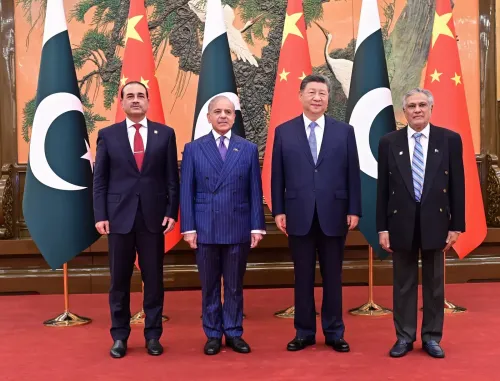
China's support is critical yet increases Pakistan's dependency.
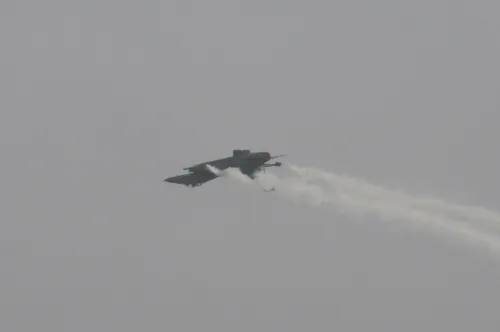
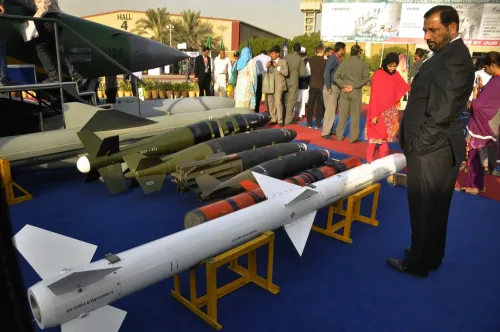
New Delhi: Pakistan is attempting to promote two uncertain futures simultaneously — and neither is assured. While Islamabad showcases the JF-17 as a "cost-effective multirole" fighter for financially constrained air forces, it is also promoting its coastline as the next energy frontier, granting offshore oil and gas blocks following years of exploration setbacks. This scenario unveils a state eager to monetise both defense and geology, yet lacking the most crucial asset — a robust economy.
Both initiatives carry the same strategic peril: credibility.
In the arms market, the JF-17 faces competition not only from Western fighters but also from a rapidly evolving technology landscape focused on high-end networked warfare, sophisticated sensors, electronic warfare sustainability, and extensive kill chains.
Offshore, Pakistan’s deepwater aspirations must navigate a sparse drilling history, challenging geology, slow return cycles, and the heightened security risks of operating in the terror-affected Makran–Balochistan region.
Simply put: Pakistan is attempting to sell optimism to the world while the world increases the cost of risk. This creates a corrosive, unstable trap where economic vulnerability, internal unrest, and diminishing external options reinforce one another.
Pakistan’s crisis is structural — the gradual decline of state capability and national power.
By the end of 2025, Pakistan's real GDP is projected to be approximately $410 billion. The World Bank notes that Pakistan's economy grew by 3 percent in the fiscal year concluding in June 2025 and anticipates growth to hover around 3 percent in FY26. At first glance, Pakistan’s macroeconomic outlook appears more stable than the acute crisis faced in 2022–23. Inflation has eased, and the initial balance-of-payments panic has subsided.
However, this "stabilisation" is more of a pause than a recovery. The mechanism is evident: fiscal tightening and import suppression — a stabilisation achieved through compression. Pakistan tightens to stabilise, stabilises to secure financing, and acquires financing to avert crisis — all without fundamentally altering its growth model. It remains an economy capable of survival but incapable of acceleration, one that cannot become competitive.
The future is vulnerable to shocks. Energy price hikes, global tightening, disruptions in remittances, or political turmoil can swiftly revive balance-of-payments challenges. The deeper issue is not short-term liquidity; it is Pakistan’s long-term failure to generate foreign exchange. The World Bank highlights that exports fell from an average of 16 percent of GDP in the 1990s to around 10.4 percent in 2024. This signifies de-industrialisation — a fundamental downgrade of the economic foundation.
For Pakistan — with heavy debt obligations, significant energy imports, and considerable security expenditures — its export share of 10 percent is strategically constraining. It ensures the cyclical boom-bust scenario: a brief phase of consumption-driven recovery, followed by a balance-of-payments tightness, subsequent emergency measures, and recurrent engagements with the IMF.
Pakistan consistently finds itself managing scarcity rather than fostering capacity. The World Bank’s reference to “untapped export potential” may seem optimistic, but it subtly indicts the current situation.
Pakistan’s primary limitation is not demand; it is competitiveness: logistics, energy reliability, contract enforcement, policy consistency, and governance capacity. In essence, without state capability, exports stagnate. Pakistan’s external buffers have improved but remain slender in relation to needs. The State Bank of Pakistan’s reserves rose to approximately US$15.902 billion in the week ending December 19, 2025. However, reserves do not equate to resilience. A significant portion of this improvement is attributed to borrowing and deposits from “friendly nations.” This reflects liquidity, not solvency — it does not enhance capacity and indicates that Pakistan’s reserve position increasingly relies on external support rather than export strength.
Governance shortcomings — policy reversals, weak enforcement, bureaucratic hurdles, and corruption — ensure that private capital remains hesitant even when macroeconomic indicators improve temporarily. The predictable outcome: long-term investments do not materialise, export diversification fails to occur, and the cycle continues.
Multilateral financing remains Pakistan’s macroeconomic anchor. On December 8, 2025, the IMF board approved Pakistan’s programme review, keeping the US$7 billion programme on track and releasing about US$1.2 billion — approximately US$1 billion under the EFF and US$200 million under the RSF.
This averts a chaotic crisis. However, it also tightens conditions where Pakistan’s political economy is most vulnerable: taxation, state-owned enterprises, energy sector governance, and fiscal discipline. The IMF’s role thus has a dual character: it prevents collapse but constrains sovereignty.
The larger risk is strategic: Pakistan risks operating its economy on "programme time" rather than "policy time". It becomes a state perpetually negotiating its survival. Even the current account improvement must be approached cautiously. In Pakistan, surpluses frequently reflect import compression rather than export vitality — achieved not through competitiveness but through constraint. A surplus attained by limiting imports is not a sign of strength but a cautionary signal.
Public debt hovering around the 70-80 percent of GDP range limits policy options in a nation with inadequate tax collection and high fixed expenses. However, the more pressing issue is the composition of this debt: short-to-medium term liabilities rolled over repeatedly through bilateral deposits, commercial borrowing, and IMF-led stabilisation cycles. This shifts policy into a cycle of refinancing.
China has become Pakistan’s largest bilateral creditor, especially via energy and infrastructure projects linked to CPEC. While these investments have addressed infrastructure deficits, they have also heightened repayment burdens — particularly where loans are commercial or near-commercial.
Gulf partners provide deposits and deferred oil payments: essential liquidity relief but minimal structural transformation.
Pakistan can extend its debt. But unless exports rise structurally, each refinancing cycle merely buys time at the cost of autonomy. This is why Pakistan’s stance increasingly appears reactive.
It is not merely geopolitics; it is balance-of-payments management masquerading as strategy. Technological stagnation poses a quiet national security threat. Weak integration into global value chains and low innovation intensity diminish Pakistan’s capacity to develop advanced manufacturing, resilient supply chains, and the industrial depth that underpins modern military capability. Without productivity growth, Pakistan’s military apparatus will encounter a creeping constraint: sustaining modernisation becomes progressively challenging as internal security consumes resources and external dependencies deepen.
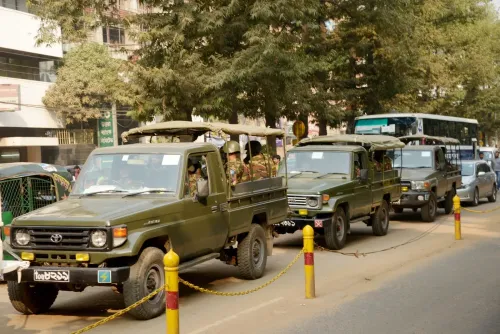
Domestic terrorism significantly hampers the economy, particularly linked to TTP in Khyber Pakhtunkhwa and insurgent violence in Balochistan. According to the Pakistan Institute for Peace Studies, 699 terrorist incidents were recorded in 2025, a 34 percent increase, while terrorism-related deaths rose by 21 percent year-on-year. Another dataset from the Pakistan Institute for Conflict and Security Studies labelled 2025 as Pakistan’s deadliest year in over a decade, with 3,413 fatalities in violent events, including 667 security personnel and 580 civilians.
Security serves as both a governance challenge and a macroeconomic factor. Terrorism elevates operational costs. It diminishes geographic investability by undermining precisely the regions Pakistan needs for the next growth cycle: Balochistan and Khyber Pakhtunkhwa. It erodes the credibility premium required for foreign direct investment. Moreover, it interacts with Pakistan’s history of militant ecosystems, ensuring the risk of backlash remains structurally embedded.
Pakistan is perceived as a high-risk state. Even Chinese projects under CPEC have encountered threats, including assaults on Chinese nationals, leading to delays, redesigns, and escalating protection costs. Security evolves from being merely a state concern to a project variable — and thus an investment deterrent.
Pakistan has revitalised offshore exploration after a prolonged hiatus, granting 23 offshore oil and gas blocks from a total of 40 offered in the Offshore Bid Round 2025 — the first such allocation in nearly two decades. The blocks cover approximately 53,510 square kilometres across the Indus and Makran basins. Initial commitments amount to around US$80 million for the first three years. Projections indicate total investment could reach between US$750 million and US$1 billion if drilling progresses. However, the risks are substantial.
Pakistan’s offshore geology remains uncertain. Since 1947, only 18 offshore wells have reportedly been drilled. Even ExxonMobil’s Kekra-1 well in 2019 was unsuccessful. Deepwater exploration is a slow and capital-intensive process. Fiscal expectations can be inflated long before results materialise. Offshore petroleum is not a rapid forex solution. It is a decade-long gamble.
The third risk is security. The Makran–Balochistan terror arc heightens costs and increases the likelihood that projects become contested assets. Finally, even if gas is discovered, monetisation is not guaranteed. Domestic gas pricing distortions and a strained network diminish investor confidence in long-term projects. At this point, Pakistan is marketing probabilities, not products.
Pakistan’s mineral narrative, especially regarding Reko Diq, is pitched as a potential exit strategy: exporting earnings, fiscal relief, and strategic leverage. However, minerals necessitate governance, security, logistics, processing capabilities, and credibility. If Pakistan fails to secure personnel, infrastructure, and connectivity, minerals will remain stories rather than catalysts for transformation.
Pakistan finds itself trapped. It cannot emerge as a confident strategic player without breaking the export-debt security cycle. Stabilisation without reform is mere postponement. Pakistan has repeatedly bought time — often at the expense of its sovereignty. Now it is striving to monetise jets and geological resources to expand its policy options.
For India, this represents a strategic asymmetry unfolding gradually. Pakistan’s core limitation is not a lack of aircraft or delayed drilling rigs; it is the absence of a vigorous economic engine — and without that engine, Islamabad’s national power cannot amplify. A neighbour ensnared in a refinancing treadmill cannot sustain long-term competition, cannot finance modernisation without straining its own society, and cannot influence regional outcomes except through sporadic disruptions.
China comprehends this perfectly.
Beijing does not require Pakistan to thrive; it needs Pakistan to remain dependent — a corridor, a client, and a perpetually available pressure point on India’s western flank. Each rollover, every deposit, and each "friendly" refinancing tightens the leash. Pakistan’s tragedy lies in its persistent misinterpretation of tactical cash as strategic capability; India’s advantage is that it need not win every confrontation — it must simply outlast an economy that is losing credibility, dollar by dollar.
(Vivek Y Kelkar is a researcher and analyst focused on the intersection of geo-economics, geopolitics, and business strategy. The views expressed are personal)
Point of View
It is imperative to recognize Pakistan's ongoing struggles as it attempts to balance its military ambitions with economic realities. The nation's ability to navigate these challenges will ultimately determine its future stability and regional influence.
NationPress
1 Oct 2026
Frequently Asked Questions
What are the main economic challenges facing Pakistan?
Pakistan's economic challenges include a high debt-to-GDP ratio, declining exports, inflation, and internal security issues that deter foreign investment.
How does domestic terrorism affect Pakistan's economy?
Domestic terrorism raises operational costs, reduces investability in crucial regions, and undermines foreign direct investment, significantly impacting economic growth.
What is the significance of the JF-17 fighter jet for Pakistan?
The JF-17 is marketed as a cost-effective multirole fighter, aimed at attracting cash-strapped air forces while enhancing Pakistan's defense capabilities.
What are Pakistan's offshore exploration efforts?
Pakistan is reviving offshore exploration, having awarded 23 oil and gas blocks in 2025, aiming for substantial investment despite significant geological and security risks.
What role does China play in Pakistan's economy?
China is Pakistan's largest bilateral creditor, providing crucial financial support through energy and infrastructure projects, but also increasing repayment burdens.