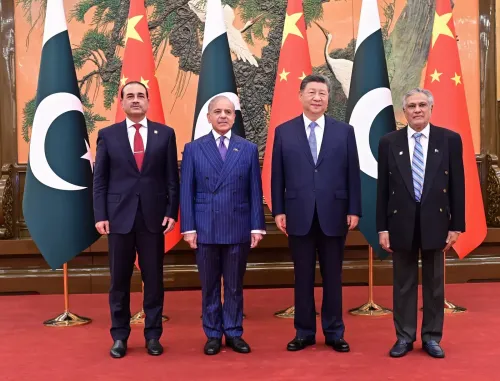
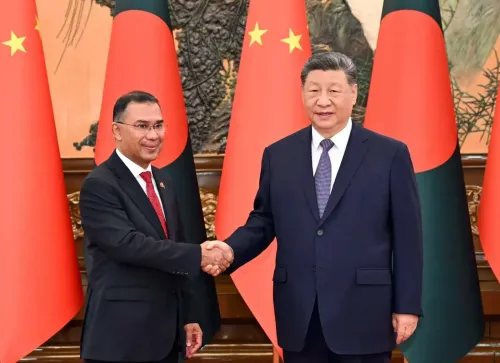
Bangladesh's $720 million JF-17 deal: Pakistan-China ties raise strategic alarm
Synopsis
A Pakistani Air Force transport quietly delivered a JF-17 combat simulator to Dhaka in May 2026 — the first Pakistani military hardware to enter Bangladesh since 1971. A new assessment warns that a USD 720 million fighter deal would not just modernise Bangladesh's air force; it would bind Dhaka to a Sino-Pakistani supply chain at a moment of economic fragility, testing the country's foundational foreign policy doctrine.
Key Takeaways
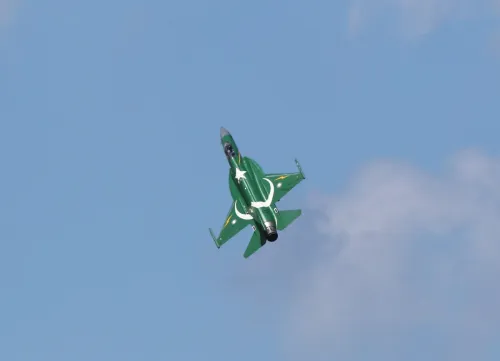
Bangladesh is considering buying 16 to 48 JF-17 Thunder Block III fighters from Pakistan in a deal worth USD 400–720 million .
A Pakistan Air Force C-130J delivered a full-scale JF-17 Block III combat simulator to Dhaka in May 2026 — the first Pakistani military hardware in Bangladesh since 1971 .
The Australian Institute of International Affairs warns the deal is structurally trilateral, with China's Chengdu Aircraft Corporation as a co-manufacturer and 'quiet principal'.
Bangladesh's ageing F-7BG and MiG-29 fleets and the Forces Goal 2030 plan underpin the operational case for new fighters.
Analysts argue the procurement lacks adequate parliamentary scrutiny , independent economic analysis, and public debate.
Critics warn the deal risks locking Bangladesh into a strategic orbit that would be 'difficult, expensive, and diplomatically consequential' to exit.
Bangladesh is weighing a procurement of 16 to 48 JF-17 Thunder Block III multirole combat aircraft from Pakistan, in a deal estimated at between USD 400 million and USD 720 million, a move that analysts warn could lock Dhaka into a Sino-Pakistani strategic orbit at a moment of acute economic fragility. The warning comes from a detailed assessment by the Australian Institute of International Affairs, published in May 2026.
The report's alarm was triggered by a specific event: in May 2026, a Pakistan Air Force C-130J aircraft landed quietly in Dhaka carrying a full-scale JF-17 Block III combat simulator — described as the first piece of Pakistani military aviation hardware to enter Bangladesh since 1971. The delivery coincided with the first formal Air Staff Talks between the two air forces, and is being framed officially as a training tool ahead of a potential procurement decision.
The Operational Case — and Its Limits
Defence commentators have largely acknowledged the operational rationale. The Bangladesh Air Force's existing fleet — including F-7BGs and MiG-29s — is ageing and approaching end of life. The country's Forces Goal 2030 modernisation plan explicitly demands credible air power, creating genuine pressure to act.
However, the Australian Institute report argues that operational logic alone is insufficient justification. It contends that the decision overlooks the political alignments implied by such a procurement, the long-term fiscal burdens it would entail, and the strategic consequences of anchoring Bangladesh's defence future to a Sino-Pakistani supply chain.
Why the JF-17 Is a Trilateral Transaction
The report draws a sharp distinction between the JF-17's surface appearance as a bilateral arms deal and its deeper structural character. 'The JF-17 is a Sino-Pakistani product: conceived to reduce Pakistan's dependence on Western suppliers and jointly manufactured by Pakistan Aeronautical Complex and China's Chengdu Aircraft Corporation. Its sale to Bangladesh is therefore not a bilateral transaction between Dhaka and Islamabad; in structural terms, it is a trilateral one, with Beijing as the quiet principal,' the report stated.
This framing matters because it positions any procurement not merely as a defence upgrade, but as a de facto alignment signal — one with implications that extend well beyond the Bangladesh-Pakistan relationship and into the broader India-China-US strategic competition in South Asia.
Fiscal and Geopolitical Risks
Bangladesh is currently navigating significant economic vulnerabilities, making a commitment of up to USD 720 million particularly consequential. The report stresses that a fighter aircraft purchase of this scale carries long-term fiscal burdens in the form of maintenance contracts, spare parts dependency, and pilot training — all of which would be tied to a Sino-Pakistani supply chain.
Notably, Bangladesh's foreign policy has historically been anchored in the principle of 'friendship towards all, malice towards none.' Critics argue that a defence procurement of this nature, and at this scale, severely tests that doctrine and risks narrowing Dhaka's diplomatic flexibility at precisely the moment it can least afford to do so.
Calls for Parliamentary Scrutiny and Public Debate
The report explicitly calls out what it describes as a deficit in the national conversation around the decision. A commitment of this magnitude — with long-term implications for Bangladesh's strategic posture, fiscal space, and geopolitical relationships — requires, according to the assessment, rigorous parliamentary scrutiny, independent economic analysis, and open public debate. These processes have reportedly not been adequately engaged ahead of the potential procurement.
'A fighter jet is never merely a weapons platform. It is a political instrument, an economic commitment, and, over the long arc of defence dependency projects, a statement of alignment that outlasts governments,' the report warned, adding that Bangladesh 'may be buying into a strategic orbit from which exit will be difficult, expensive, and diplomatically consequential.'
With no final procurement decision yet announced, the coming months will test whether Dhaka proceeds, pauses for broader deliberation, or explores alternative suppliers — a choice that will reverberate across South Asia's shifting strategic landscape.
Point of View
A modernisation deadline — is real but not unique; other countries in similar positions have sourced aircraft without triggering this level of structural concern. What makes this different is the supply chain dependency and the timing: a fiscally stressed Bangladesh tying itself to a Sino-Pakistani platform at the precise moment regional fault lines are sharpening. The absence of parliamentary debate is the most telling detail — decisions that 'outlast governments,' as the report puts it, should not be made without them.
NationPress
20 Sept 2026
Frequently Asked Questions
What is the JF-17 Thunder Block III deal Bangladesh is considering?
Bangladesh is reportedly evaluating the purchase of 16 to 48 JF-17 Thunder Block III multirole combat aircraft from Pakistan, in a deal estimated at USD 400 to 720 million. The process began with the delivery of a full-scale JF-17 combat simulator to Dhaka in May 2026, during the first formal Air Staff Talks between the two air forces.
Why is the JF-17 deal considered strategically significant beyond a routine arms purchase?
The JF-17 is jointly manufactured by Pakistan Aeronautical Complex and China's Chengdu Aircraft Corporation, making any sale structurally a trilateral transaction with Beijing as a co-principal. Analysts warn this would bind Bangladesh's defence supply chain — spare parts, maintenance, pilot training — to a Sino-Pakistani ecosystem, signalling geopolitical alignment that could outlast the current government.
What is the significance of the C-130J delivery to Dhaka in May 2026?
It was the first Pakistani military hardware to enter Bangladesh since 1971, marking a historic shift in defence ties between the two countries. The simulator was delivered during inaugural Air Staff Talks and is officially framed as a training tool ahead of a potential procurement decision.
How does this deal affect Bangladesh's traditional foreign policy doctrine?
Bangladesh has long adhered to a principle of 'friendship towards all, malice towards none.' Critics argue that a USD 720 million commitment to a Sino-Pakistani platform, amid economic fragility, severely tests that doctrine and risks narrowing Dhaka's diplomatic flexibility with India, the US, and Western partners.
What are the concerns about the decision-making process around this procurement?
The Australian Institute of International Affairs report highlights a deficit in national deliberation, arguing that a decision of this magnitude requires rigorous parliamentary scrutiny, independent economic analysis, and open public debate — processes that have reportedly not been adequately engaged before the potential procurement moves forward.