Is Bangladesh on the Brink of a Sino-Pakistan Military Alliance?
Synopsis
Is Bangladesh unwittingly aligning itself with a Sino-Pakistan military framework? Recent developments suggest a significant shift in Dhaka's geopolitical stance, raising concerns over national interests and sovereignty. The implications for the Indo-Pacific region could be profound, as the balance of power subtly alters.
Key Takeaways
Bangladesh is at risk of becoming part of a Sino-Pakistan military framework.
Recent discussions focus on advanced military hardware like the J-10C fighter jet.
Muhammad Yunus is steering the country towards closer ties with China.
This shift threatens Bangladesh's long-term sovereignty and strategic independence.
It could significantly alter the balance of power in the Indo-Pacific region.
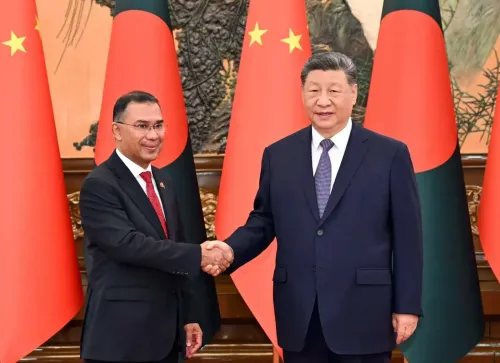
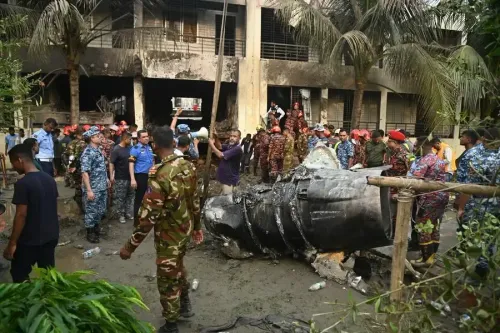
Dhaka, Jan 23 (NationPress) Bangladesh is potentially facing the risk of becoming integrated into a Sino-Pakistan security framework—one that caters to Beijing's regional objectives while compromising Dhaka's national interests. Following Muhammad Yunus' appointment as the interim government's chief advisor in 2024, Bangladesh has revitalized and expanded discussions regarding the acquisition of sophisticated Chinese military equipment, including fourth-generation fighter jets like the J-10C, as reported on Friday.
A report from the prominent Bangladeshi weekly 'Blitz' indicates that these discussions are occurring not only directly with Beijing but also via Sino-Pakistani joint-venture frameworks, complicating Bangladesh's strategic stance.
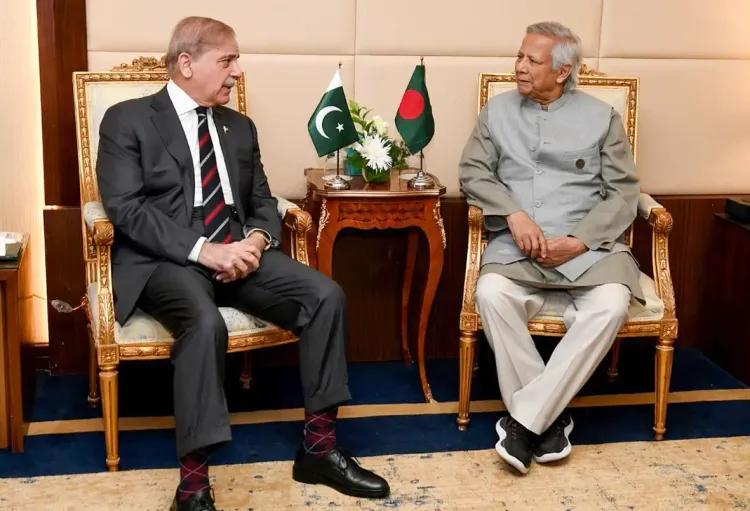
“When US Ambassador to Bangladesh Brent Christensen publicly highlighted the long-term dangers of Chinese military and strategic entanglement, his comments were more than mere diplomatic caution; they were a warning signal. Once seen by Washington and New Delhi as a nation skillfully balancing global interests, Bangladesh now seems to be gravitating toward a deeper partnership with Beijing, with Pakistan quietly acting as a facilitating ally in this shift,” the report elaborated.
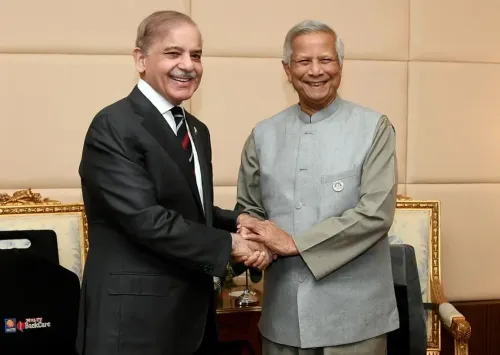
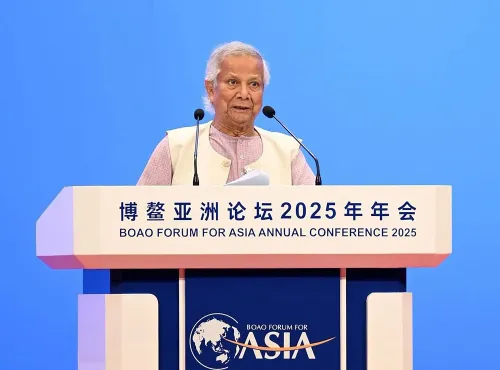
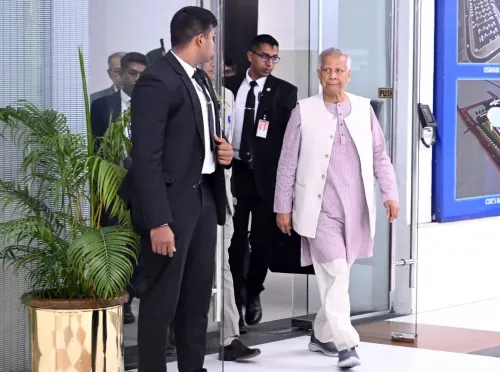
“At the heart of this accelerating reorientation is Muhammad Yunus. Under his leadership, Dhaka appears increasingly prepared to adjust Bangladesh's geopolitical stance, even if this adjustment risks long-term sovereignty, strategic independence, and regional stability. The change is slow, yet the direction is clear,” it noted.
The report mentioned that Bangladesh's Armed Forces Division, overseen by Principal Staff Officer Lieutenant General S M Kamrul Hasan, has been actively participating in high-level defense negotiations with their Chinese counterparts.
“Numerous delegations have traveled to China in recent months to discuss modernization options for the Bangladesh Air Force, particularly focusing on replacing aging aircraft fleets nearing the end of their operational lifespan. Concurrently, Dhaka has ramped up discussions with Pakistan regarding the JF-17 Thunder fighter jet, a platform co-developed by China and Pakistan and aggressively promoted by Islamabad as a cost-effective multirole solution,” it added.
The report emphasized that Bangladesh risks becoming ensnared in a military ecosystem dominated by Beijing and Islamabad, with little opportunity for diversification or withdrawal.
“The defense aspect is merely one facet of a larger trend. Beyond arms and aircraft, Yunus's government has significantly opened the gates for Chinese infrastructure penetration in sensitive areas of the country,” it highlighted.
For the Indo-Pacific region, the report stated, “this could represent another subtle yet significant alteration in the balance of power, emerging not through overt conflict but via calculated alignments and gradual dependence.”
Point of View
I believe that while Bangladesh seeks to modernize its military, it must carefully evaluate the long-term implications of deepening ties with China and Pakistan. The nation's strategic autonomy and regional stability should always remain paramount in our foreign policy considerations.
NationPress
26 Sept 2026
Frequently Asked Questions
What is the Sino-Pakistan military ecosystem?
The Sino-Pakistan military ecosystem refers to the strategic and military collaboration between China and Pakistan, which includes joint development of military technology and arms sales that may influence neighboring countries' security dynamics.
What are the implications of Bangladesh's military ties with China?
Bangladesh's military ties with China could lead to increased dependence on Beijing, potentially compromising its sovereignty and altering its traditional balancing role in regional geopolitics.
Who is Muhammad Yunus?
Muhammad Yunus is the current chief advisor of the interim government of Bangladesh, who has been instrumental in reshaping the country's defense and foreign policy towards closer ties with China.
What military equipment is Bangladesh looking to acquire?
Bangladesh is currently in discussions to procure advanced military hardware from China, including fourth-generation fighter jets like the J-10C and the JF-17 Thunder.
How does this affect the Indo-Pacific balance of power?
Bangladesh's alignment with China and Pakistan could lead to a subtle shift in the Indo-Pacific balance of power, potentially increasing China's influence in the region while diminishing the strategic autonomy of smaller nations.