Pakistan drone swarm tactic strains India's border defences; 854 intrusions recorded
Synopsis
Pakistan-based smugglers have refined a calculated swarm tactic — send a probe drone, then a smaller-payload drone, then the real one — to exhaust India's interception systems. With 854 intrusions in Punjab and Rajasthan alone, 777 kg of heroin seized, and military-grade RDX found in payloads, this has crossed from a smuggling problem into a direct national security threat that technology upgrades, so far, have not fully answered.
Key Takeaways
854 drone intrusions were recorded in the Punjab and Rajasthan sectors between 2025 and 2026 ; 474 drones were shot down or recovered.
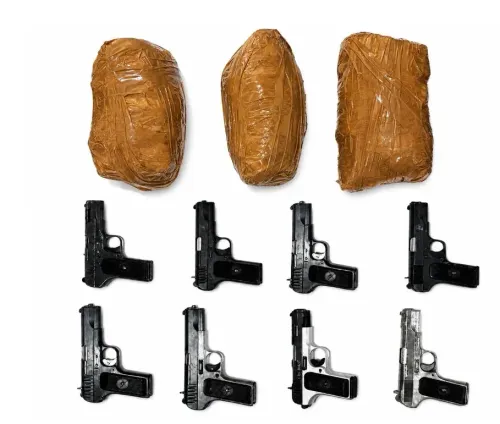
Seized payloads included 777 kg of heroin , over 200 firearms , 10 kg of military-grade RDX , and 12 hand grenades .
Smugglers deploy a deliberate three-drone swarm sequence — probe, smaller payload, then large payload — to overwhelm interception systems.
Jammu and Kashmir reported nine drone intrusions in the same period, with payloads focused on small arms, cash, and narcotics to sustain local terror groups.
Counter-drone technology has improved by an estimated 50 notches over two years, but officials say further periodic upgrades are necessary as threats evolve.
Officials assess that narcotics payloads are designed to fund terror operations , while arms drops aim to revive militant networks in J&K .
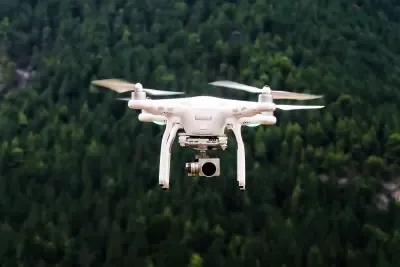
Pakistan-based smugglers have adopted a deliberate drone-swarm strategy to overwhelm Indian border security systems, deploying multiple unmanned aerial vehicles in rapid succession to ensure at least one large-payload drone slips through interception. The tactic, confirmed by senior security officials, has emerged as one of the most acute border security challenges facing India in 2025–26, with arms, ammunition, narcotics, and military-grade explosives among the recovered payloads.
The Swarm Tactic Explained
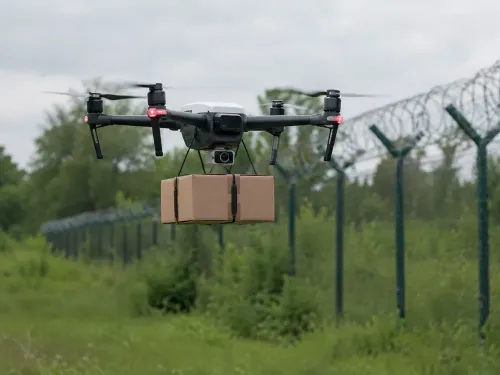
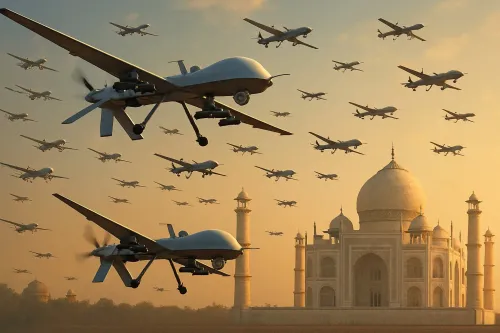
According to security officials, the method follows a calculated three-step sequence. A first drone is dispatched as a probe — its interception giving smugglers real-time intelligence on response times and detection zones. A second drone follows within minutes, carrying a smaller quantity of narcotics to further test the system. Immediately after that drone is neutralised, a third — carrying the largest payload — is launched, exploiting the window when interception resources are stretched. 'This is a clear tactic that has been adopted by Pakistan-based smugglers to stress the Indian security system,' one official said.
Border residents in several villages along the India-Pakistan frontier have independently corroborated the pattern, reporting to security agencies that a fresh drone typically appears shortly after one is shot down, and that the frequency of such sightings is rising steadily.
Scale of the Threat: Punjab and Rajasthan Bear the Brunt
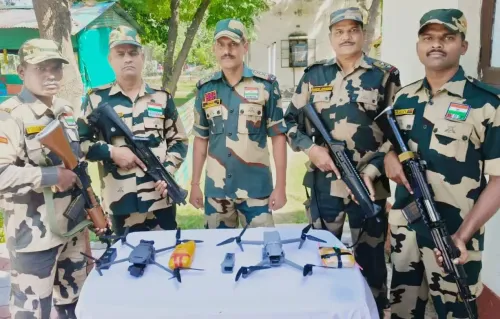
The numbers from the Punjab and Rajasthan sectors are stark. Between 2025 and 2026, a total of 854 drone intrusions were recorded across both sectors. Of these, 474 drones were either shot down or physically recovered. Seized payloads included 777 kg of heroin, more than 200 firearms — among them automatic rifles and modular weapons — 10 kg of military-grade RDX explosives, and 12 hand grenades.
The recoveries point to a dual-purpose operation: narcotics to fund local handlers and sustain terror networks, and weapons to rebuild operational capacity for terror groups on Indian soil. Officials noted that the vast, open stretch of the International Border is being deliberately exploited, as continuous surveillance across its entire length remains operationally difficult.
Jammu and Kashmir: A Lower but Rising Threat
In contrast to Punjab, Jammu and Kashmir recorded nine drone intrusions during the same 2025–26 period. An Intelligence Bureau official noted that the relative frequency is lower, but cautioned that smugglers are incrementally scaling up drone deployments into J&K. Payloads intercepted in the region have so far focused on small arms such as pistols, cash, and smaller quantities of high-grade narcotics — resources assessed as being intended to fund local handlers and sustain existing terror infrastructure rather than launch large-scale attacks.
'There was an urgent need to drop arms and ammunition to help revive terror groups,' the official said, adding that the narcotics component is specifically calibrated to generate local funding streams for those groups.
Technology Gains Are Not Enough
Security officials acknowledged that counter-drone technology deployed at the border has improved by an estimated 50 notches compared with two years ago — a significant leap that has raised interception rates. However, officials concede this progress has not kept pace with the exponential increase in drone sorties. 'The security agencies are working on upgrades continuously to tackle the ever-evolving menace of drones,' one official said, adding that further periodic upgrades will be required as the threat evolves.
National security planners are reportedly evaluating additional layered defence measures, though specifics were not disclosed. The challenge, officials say, is less about the capability of any individual interception system and more about volume — the sheer number of simultaneous or near-simultaneous drone launches is designed to exhaust finite response capacity.
What Comes Next
With intrusion frequency rising and swarm tactics becoming more sophisticated, security agencies face pressure to move beyond reactive interception toward predictive, AI-assisted drone detection and neutralisation. The recoveries of RDX and automatic weapons signal that the threat has crossed from a primarily narcotics-smuggling problem into one with direct national security implications. How quickly India can close the technology gap — and whether inter-agency coordination can match the pace of escalation — will determine the effectiveness of border defences in the months ahead.
Point of View
Despite a claimed 50-notch technology improvement, the intrusion count is still rising. The real accountability question is not whether individual agencies have better gear, but whether the national counter-drone architecture has a coordinated doctrine — and right now, the evidence from the border suggests it does not.
NationPress
10 Oct 2026
Frequently Asked Questions
What is the drone swarm tactic being used by Pakistan-based smugglers?
Smugglers deploy three drones in rapid succession: a probe drone to test response times, a second carrying a smaller narcotics payload, and a third — launched immediately after the second is intercepted — carrying the largest payload. The goal is to overwhelm finite interception resources so the third drone evades detection.
How many drone intrusions have been recorded at the India-Pakistan border?
A total of 854 drone intrusions were recorded in the Punjab and Rajasthan sectors between 2025 and 2026, with 474 drones shot down or recovered. Jammu and Kashmir recorded nine intrusions during the same period, a lower figure that officials warn is rising.
What contraband has been seized from these drone drops?
Recovered payloads included 777 kg of heroin, over 200 firearms (including automatic rifles and modular weapons), 10 kg of military-grade RDX explosives, and 12 hand grenades. Officials say narcotics are used to fund local terror handlers, while arms are meant to revive militant networks.
Why is the situation in Jammu and Kashmir considered especially concerning?
Although J&K has recorded fewer intrusions than Punjab so far, officials note that smugglers are steadily increasing drone deployments into the region. The payloads — small arms, cash, and high-grade narcotics — are assessed as being designed to fund local handlers and sustain terror groups, with officials flagging an 'urgent need' among smugglers to revive dormant militant networks.
What steps are Indian security agencies taking to address the drone threat?
Counter-drone technology at the border has improved by an estimated 50 notches over two years, raising interception rates. However, officials acknowledge the upgrades have not kept pace with the surge in intrusion volumes, and national security planners are reportedly evaluating additional layered defences and AI-assisted detection systems.