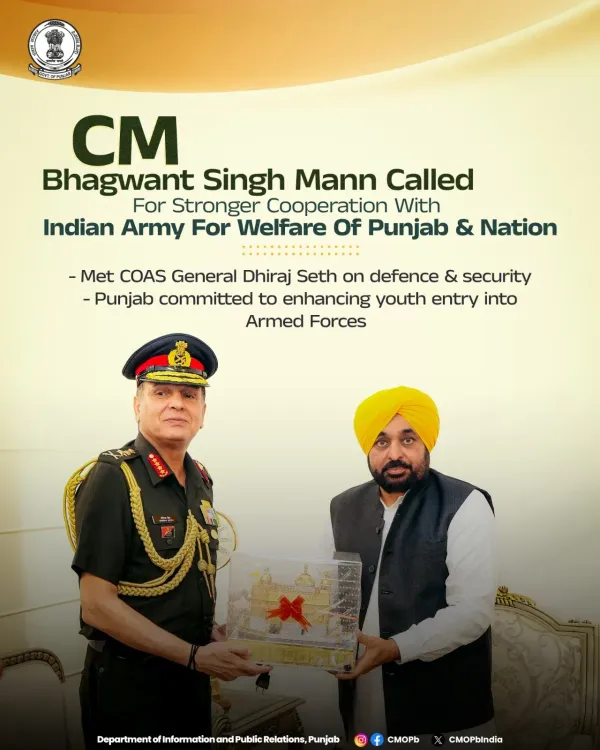
CM Bhagwant Mann meets Army chief, pushes for Punjab border security boost
Synopsis
Punjab Chief Minister Bhagwant Mann met the Chief of Army Staff in Chandigarh to push for stronger state-military cooperation on border security, anti-drone measures against cross-border smuggling, enhanced Punjabi recruitment in the Armed Forces, and improved welfare for serving soldiers and veterans.
Key Takeaways
CM Bhagwant Mann met the Chief of Army Staff in Chandigarh to discuss Punjab's security and defence priorities.
The meeting specifically addressed anti-drone measures to counter cross-border smuggling along Punjab's 553-km border with Pakistan .
Mann called for strengthening the second line of defence along the border, beyond BSF coverage.
The Chief Minister pushed for increased recruitment of Punjabis in the Indian Armed Forces, continuing a long-standing state tradition.
Welfare of serving soldiers and ex-servicemen was also raised as a priority agenda item.
The meeting signals the AAP government's intent to position Punjab as an active partner in national security, not merely an administrative unit.
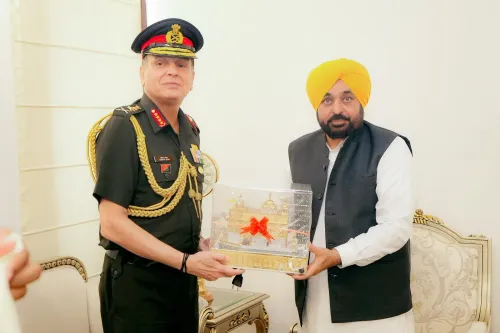
Where the border is porous and drones carry contraband, the conversation between a state government and the Army carries real weight. Punjab Chief Minister Bhagwant Mann met Chief of Army Staff General Dhiraj Kumar Sethkumar in Chandigarh to press for deeper cooperation on border security, anti-drone measures, armed forces recruitment, and the welfare of soldiers and veterans — a meeting that signals the AAP government's intent to take an active role in the state's defence posture.
The drone problem on Punjab's western flank
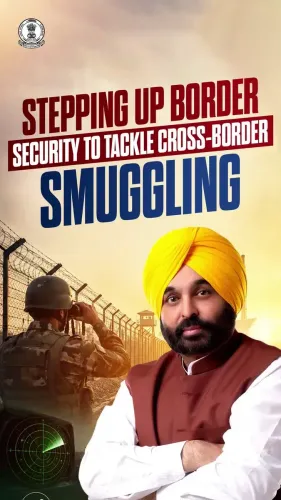
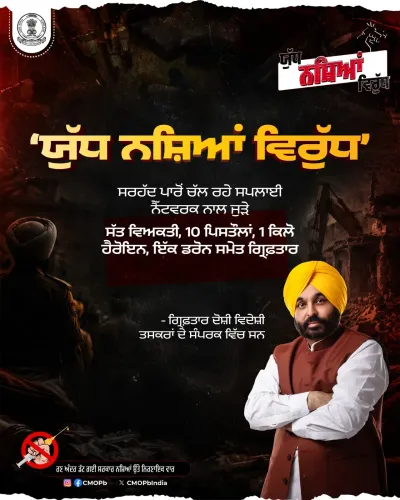
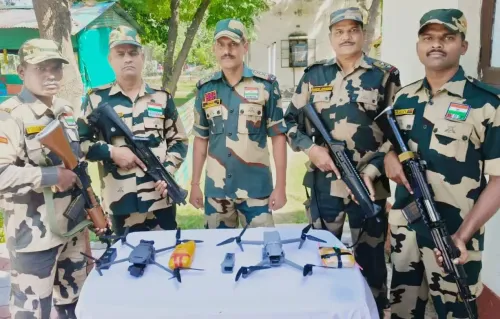
At the centre of the security discussion was the urgent need to strengthen anti-drone measures to check cross-border smuggling — a challenge that has grown sharply along Punjab's 553-kilometre border with Pakistan. Drones have become the preferred tool for trafficking narcotics and weapons across the frontier, and successive central and state administrations have struggled to match the pace of the threat. Mann's push for upgraded surveillance and interception systems reflects the scale of the problem on the ground.
The Chief Minister also called for reinforcing the second line of defence along the border — the layer of state police and civil administration that operates behind the Border Security Force — a recognition that national security along this frontier is not the Army's burden alone.
Punjab's soldier-state identity and the recruitment push
Beyond the immediate security agenda, Mann raised the question of Punjabi recruitment in the Armed Forces — a cause that resonates deeply in a state where military service has been a generational tradition. Punjab has historically contributed a disproportionately large share of personnel to the Indian Army, and state governments have long partnered with the military on recruitment rallies and welfare programmes for ex-servicemen and their families. Mann's renewed emphasis on this front signals continuity with that tradition, even as the AAP government seeks to stamp its own identity on it.
The welfare of serving soldiers and veterans was also on the table — a constituency that carries both moral and electoral weight in Punjab's border districts.
What the meeting signals for state-military relations
State-level engagement with the Army chief is not routine; it signals that Chandigarh is treating border security as a political priority, not just an administrative formality. The breadth of the agenda — from drone interdiction to recruitment to veteran welfare — suggests the Punjab government is positioning itself as an active partner in national security, not a passive observer. Whether that partnership produces concrete follow-through on anti-drone infrastructure or fresh recruitment initiatives will be the real measure of Tuesday's meeting.
For border communities living in the shadow of the smuggling crisis, the stakes of that follow-through could not be more immediate.
Point of View
A state where border anxiety and military identity are deeply intertwined. By raising anti-drone infrastructure alongside recruitment and veteran welfare in a single sitting with the Army chief, Mann is broadening his government's security mandate beyond policing. It also reflects a broader pattern: as drone-enabled smuggling intensifies along the western frontier, state governments are being drawn into what was once an exclusively central-federal security conversation. The test will be whether this engagement produces institutional follow-through or remains a high-visibility signal.
NationPress
25 Sept 2026
Frequently Asked Questions
Why did Punjab CM Bhagwant Mann meet the Chief of Army Staff?
CM Bhagwant Mann met the Chief of Army Staff to discuss strengthening cooperation between the Punjab government and the Indian Army on border security, anti-drone measures to curb cross-border smuggling, Punjabi recruitment in the Armed Forces, and welfare for serving soldiers and veterans.
What is the second line of defence along Punjab's border?
The second line of defence refers to the layer of state police and civil administration that operates behind the Border Security Force along Punjab's international border with Pakistan, providing an additional security buffer.
How serious is the drone smuggling problem on the Punjab-Pakistan border?
Drones have become a primary method for trafficking narcotics and weapons across Punjab's 553-kilometre border with Pakistan, prompting both central and state governments to seek upgraded surveillance and interception capabilities.
What is Punjab's historical relationship with the Indian Army?
Punjab has traditionally contributed a disproportionately large share of personnel to the Indian Army, and state governments have long partnered with the military on recruitment rallies and welfare programmes for ex-servicemen and their families.
What follow-up actions are expected after Mann's meeting with the Army chief?
Key areas to watch include the rollout of additional anti-drone systems along the Punjab sector and any fresh recruitment drives or veteran welfare announcements from the state government following the Chandigarh meeting.