Drug cartels shift to Rajasthan as Punjab crackdown tightens, 28 Pakistan handlers identified
Synopsis
India's drug war is opening a second front. As security agencies pile pressure on Punjab — which accounts for 98% of India's drone-based drug cases — cartels with Pakistan-linked handlers are quietly building an alternative corridor through Rajasthan, using agricultural fields as drop zones and Punjab-recruited youth as runners. With 28 handlers already identified, authorities are racing to contain the spread before Rajasthan becomes the next Punjab.
Key Takeaways
Rajasthan Police have identified 28 handlers based in Pakistan allegedly directing narcotics smuggling networks in Rajasthan.
Punjab accounts for 298 of India's 305 drone-based drug trafficking cases — 98 per cent of the national total.
Drone-linked smuggling incidents in Punjab surged from 3 in 2021 to 305 by 2025 .
Cartels have been pivoting to Rajasthan since 2024 , using less-monitored agricultural fields as narcotics drop zones.
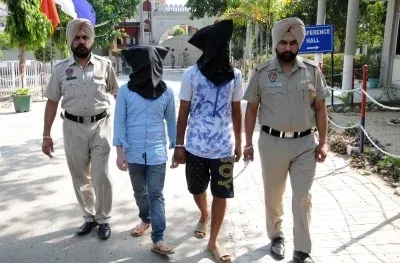
Suspects arrested in Sri Ganganagar and Bikaner were found to be residents of Punjab, confirming cross-state network links.
Authorities are considering government acquisition of fields whose owners are found complicit in narcotics drop operations.
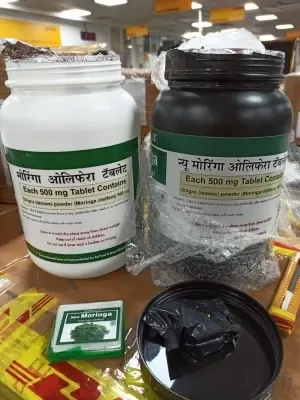
Narcotics smuggling networks, long entrenched in Punjab, are actively expanding into Rajasthan as Indian security agencies intensify pressure on cross-border drug trafficking, according to officials. Rajasthan Police have identified 28 handlers operating from Pakistan who are allegedly overseeing narcotics smuggling networks within the state, signalling a deliberate strategic pivot by cartels facing a squeeze on their primary corridor.
Punjab Remains Ground Zero for Drone-Based Smuggling
For Indian security agencies, Punjab continues to represent the most acute front in the battle against narcotics trafficking. The state accounts for 298 of India's 305 drone-based drug trafficking cases — a staggering 98 per cent of the national total. By contrast, Rajasthan accounts for just 5 per cent of drone-linked drug cases, reflecting the gap in scale between the two corridors.
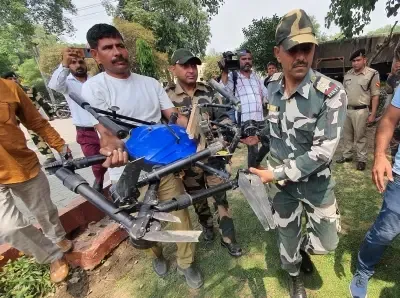
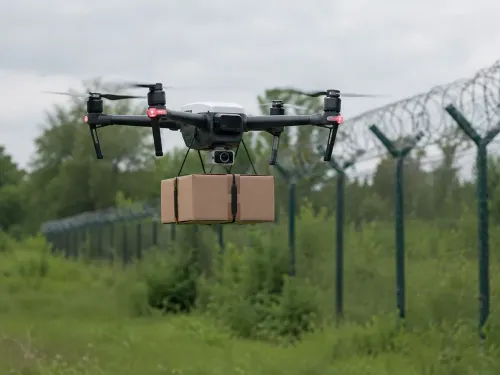
The trajectory in Punjab has been alarming. Official data shows only three drone-smuggling incidents were recorded in 2021; by 2025, that figure had surged to 305, underscoring how rapidly traffickers have weaponised drone technology to ferry narcotics, arms, and ammunition across the border. Security agencies have responded by deploying anti-drone jammers and forensic tracking systems, but officials acknowledge that sustained pressure in Punjab is precisely what is pushing cartels to seek alternative routes.
Rajasthan Emerging as the Secondary Hub
An Intelligence Bureau official told reporters that drug cartels have been training their focus on Rajasthan since 2024, working to establish an alternative operational base should their Punjab networks face significant disruption. “Drug cartels have been focusing heavily on Rajasthan since 2024 and are looking to establish an alternative base to Punjab for pushing narcotics into India,” the official said.
Unlike Punjab, where drones are the primary delivery mechanism, Rajasthan traffickers reportedly drop consignments in agricultural fields that are relatively less monitored, after which payloads are transported onward by road. The less technically intensive method allows cartels to operate with a smaller, tightly controlled local workforce — officials note that cartels deliberately recruit fewer operatives in Rajasthan than in Punjab to maintain operational security.
Cross-State Networks and the Punjab–Rajasthan Link
Intelligence assessments suggest the networks operating in both states are not parallel structures but part of the same smuggling syndicate functioning under a common command. Several suspects arrested in Sri Ganganagar and Bikaner were found to be residents of Punjab, corroborating the operational overlap.
“These individuals have been deployed in both states to collect narcotics from designated dead-drop locations,” an official said, adding that cartels have recruited a large number of youths from Punjab to carry out operations across both corridors. A second official confirmed that the youth recruited to collect and transport drug consignments in both states operate under a common command structure.
Notably, this mirrors a pattern seen historically when enforcement tightens on one smuggling corridor — networks pivot geographically while preserving the same organisational hierarchy.
What Authorities Are Doing
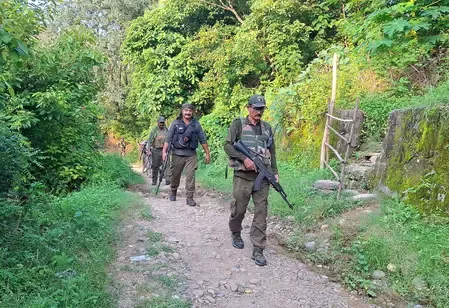
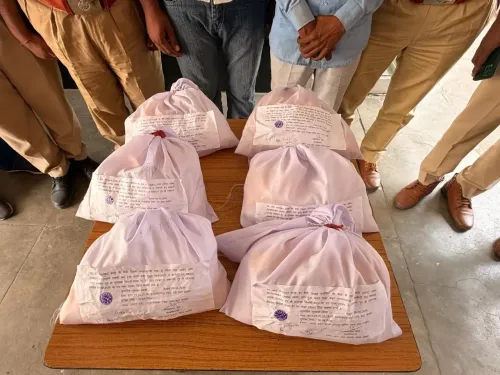
Rajasthan Police and central agencies have launched a drive to map specific fields being used as narcotics drop zones and are sharing intelligence with counterparts monitoring the Punjab border. Authorities are also considering strict action against landowners whose fields are used as drop-off points — including potential acquisition of such properties by the government if complicity is established, according to officials.
The Centre has reinforced surveillance mechanisms and anti-drone deployments along the Punjab border, but officials warned that cartels are already anticipating intensified action and are actively preparing Rajasthan as a contingency base to keep supply lines intact even if Punjab operations are curtailed.
What Comes Next
Officials remain cautiously optimistic that agencies will ultimately gain the upper hand. “This cannot go on for long, and eventually the agencies will get the better of the drug cartels,” one official said, describing the Rajasthan shift as a defensive manoeuvre by networks preparing for a worst-case scenario in Punjab. How quickly the state machinery can disrupt the nascent Rajasthan corridor — before it reaches Punjab-like scale — will be the defining test in the months ahead.
Point of View
But it requires a level of judicial speed and administrative follow-through that has historically been uneven. The deeper concern is that counter-narcotics strategy in India remains reactive — responding to where cartels are rather than disrupting the Pakistan-based command layer that directs both corridors simultaneously.
NationPress
20 Nov 2026
Frequently Asked Questions
Why are drug cartels shifting operations to Rajasthan from Punjab?
Cartels are expanding into Rajasthan because intensified security pressure in Punjab — including anti-drone jammers, forensic tracking, and stepped-up surveillance — is making operations there riskier. Officials say narcotics networks have been building a secondary base in Rajasthan since 2024 to ensure supply lines remain intact even if Punjab operations are disrupted.
How many Pakistan-based handlers have been identified in Rajasthan?
Rajasthan Police have identified 28 handlers operating from Pakistan who are allegedly overseeing narcotics smuggling networks within the state, according to officials. These handlers are believed to be part of the same syndicate running operations in Punjab.
How significant is Punjab's drone-based drug trafficking problem?
Punjab accounts for 298 of India's 305 drone-based drug trafficking cases — 98 per cent of the national total. Drone-linked smuggling incidents in the state surged from just 3 in 2021 to 305 by 2025, reflecting the rapid adoption of drone technology by cross-border narcotics networks.
How do drug smugglers operate in Rajasthan differently from Punjab?
In Rajasthan, traffickers drop narcotics consignments in agricultural fields that are relatively less monitored, after which payloads are moved by road — unlike Punjab where drones are the primary delivery method. Cartels also deliberately keep their Rajasthan workforce smaller to maintain tighter operational control, according to officials.
What action are authorities taking against the Rajasthan drug network?
Rajasthan Police and central agencies have launched drives to map fields being used as narcotics drop zones. Authorities are also considering strict measures against complicit landowners, including potential government acquisition of fields found to be used as drop-off points for narcotics, arms, and ammunition.