CM Yogi: UP Tablet Drive Reaches 3 Crore People via 60 Lakh Youth

Synopsis
Chief Minister Yogi Adityanath says UP's first-phase tablet distribution to 60 lakh students has extended digital access — covering e-governance, payments, and health services — to approximately 3 crore people, framing the device as a household-level digital bridge.
Key Takeaways
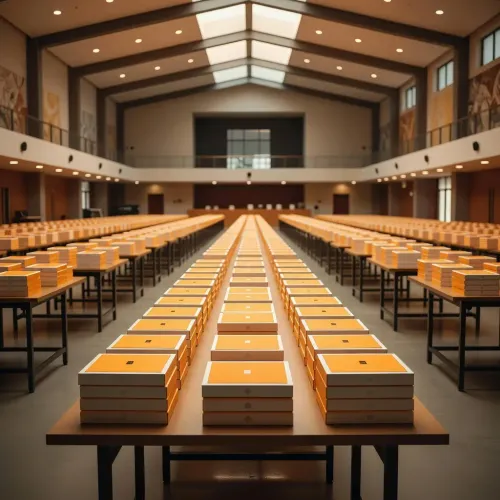
60 lakh tablets were distributed to students in the first phase of Uttar Pradesh's tablet programme.
CM Yogi Adityanath claims the scheme has reached approximately 3 crore people , accounting for household-level use.
Families are accessing e-governance portals, digital payment platforms, and health services through student-held devices.
The programme positions students as digital intermediaries for their households, bypassing the need for separate adult-literacy drives.
Phase-two rollout details and independent impact assessments have not yet been officially announced.
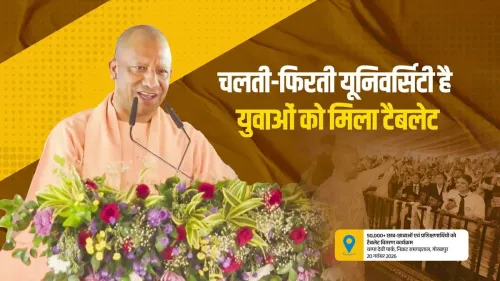
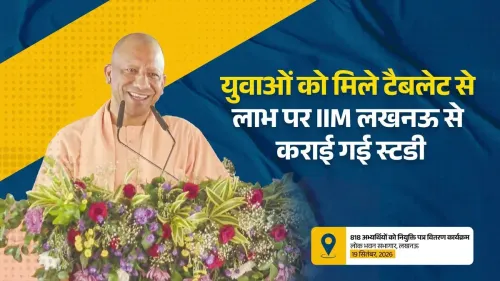
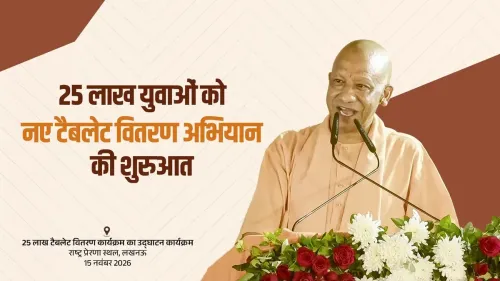
A tablet handed to a student is not just a device — it is, according to Chief Minister Yogi Adityanath, a live wire connecting entire families to e-governance, digital payments, and health services. The Chief Minister's Office of Uttar Pradesh shared the CM's remarks on Friday, 20 November 2026, underlining the multiplier effect of the state's tablet distribution programme.
60 Lakh Tablets, 3 Crore Beneficiaries
Speaking on the first phase of the rollout, CM Yogi Adityanath stated that tablets distributed to 60 lakh students have collectively extended their benefits to roughly 3 crore people — a ripple ratio of one device reaching an estimated five individuals per household. The logic is straightforward: a young person brings the device home, and the family learns alongside them.
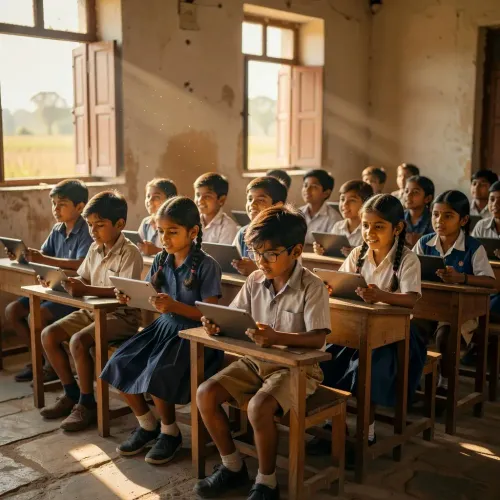
In his words, 'टैबलेट विद्यार्थियों के लिए केवल एक संसाधन नहीं, बल्कि स्वयं सीखने और आगे बढ़ने का एक सशक्त माध्यम भी है' — 'A tablet is not merely a resource for students; it is also a powerful medium for self-learning and progress.' That framing deliberately positions the device as infrastructure, not a gift.
E-Governance and Health Services Through Student Hands
Uttar Pradesh has consistently pushed digital tools as a bridge between state services and its vast rural population. The CM's statement highlights three specific use cases now flowing through tablet-equipped households: e-governance access, digital payment adoption, and health service utilisation. Each of these has historically faced last-mile delivery problems in a state of over 240 million people.
By routing access through students — who tend to be faster digital adopters — the state is effectively building a grassroots digital literacy corps. The student becomes the household's first point of contact with government portals and payment apps. It is a scalable model, and one that sidesteps the need for dedicated adult-literacy infrastructure.
Phase Two in Focus
With the first-phase metrics now on record, attention shifts to the scope and timeline of subsequent rollout phases. The state has not yet announced official beneficiary assessments or independent audits of service uptake, but the numbers cited by the CM signal that the programme is being framed as a template worth expanding. How quickly the next cohort of students receives devices — and whether the household-impact ratio holds — will be the real test of the model's durability.
Uttar Pradesh's bet is clear: equip the student, and you digitise the family. If the numbers bear out, it may well become a blueprint other large states look to replicate.
Point of View
The state makes the per-unit cost of the programme look dramatically more efficient on paper. This aligns with the broader BJP governance pitch of tech-enabled welfare, echoing central schemes like PM-WANI and DigiLocker, and positions Uttar Pradesh as a proof-of-concept state ahead of future electoral cycles. The credibility of the 3-crore figure, however, will depend on independent verification that household members are genuinely active users — not just incidentally counted.
NationPress
20 Nov 2026
Frequently Asked Questions
How many tablets has the Uttar Pradesh government distributed to students?
According to Chief Minister Yogi Adityanath, 60 lakh tablets were distributed to students in the first phase of the UP tablet distribution programme.
How many people have benefited from the UP tablet scheme?
CM Yogi has stated that through the 60 lakh student recipients, approximately 3 crore people — including their family members — have benefited from the scheme.
What are UP students using government tablets for?
Students and their families are using the tablets for self-learning, e-governance access, digital payments, and health services , as stated by the UP Chief Minister's Office.
What is the name of the UP government tablet scheme for students?
The Chief Minister's Office has referred to it as a tablet distribution initiative under the UP government's digital education push; a specific scheme name was not mentioned in the latest statement.
Will Uttar Pradesh distribute more tablets in future phases?
CM Yogi's remarks reference a 'first phase,' implying further rollout phases are planned, but official timelines and beneficiary targets for subsequent phases have not yet been announced.