CM Yogi: IIM Lucknow Study Shows UP Tablet Scheme Reached 3 Crore
Synopsis
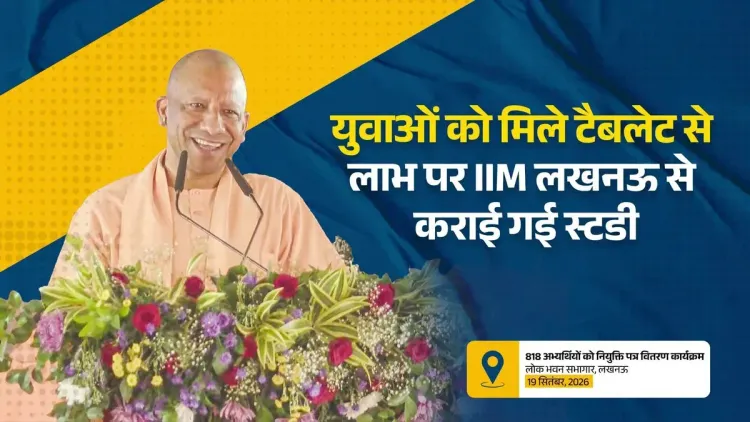
An IIM Lucknow study, cited by CM Yogi Adityanath's office, found that distributing tablets and smartphones to 60 lakh UP youth in Phase 1 generated positive impact for nearly 3 crore people — a fivefold multiplier driven by shared device access.
Key Takeaways
60 lakh youth in Uttar Pradesh received tablets and smartphones in the first phase of the state government's device distribution scheme.
An IIM Lucknow impact study found the scheme's positive effects reached nearly 3 crore people — a multiplier of approximately five per device.
The scheme was originally announced in 2021 as part of UP's digital education and skilling push.
IIM Lucknow's independent assessment lends academic credibility to the state government's welfare delivery claims.
The post references a 'first phase', implying further rounds of distribution are planned.
The full IIM Lucknow report has not yet been publicly released; methodology for measuring 'positive impact' remains to be detailed.
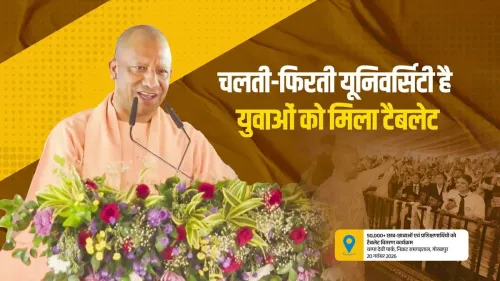
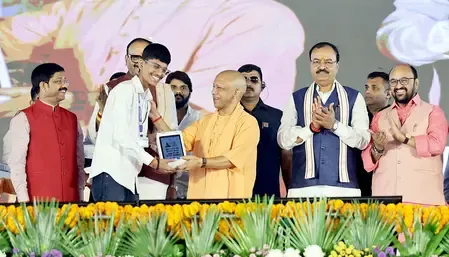
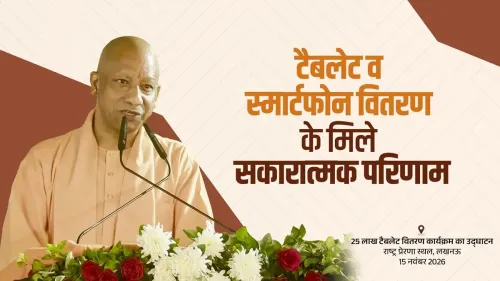
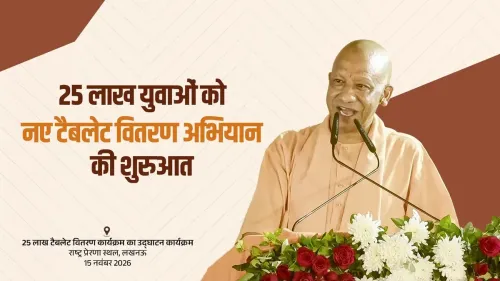
A government device-distribution programme for youth has rippled far beyond its direct beneficiaries — and now a premier institution has put a number to it. The Chief Minister's Office of Uttar Pradesh on Friday, 20 November 2026, cited a study by the Indian Institute of Management (IIM), Lucknow showing that smartphones and tablets handed to 60 lakh (6 million) young people in the scheme's first phase generated positive impact for nearly 3 crore (30 million) people in total.
The post, attributed to Chief Minister Yogi Adityanath, quoted him as saying: 'In a study conducted by IIM Lucknow, it emerged that the approximately 60 lakh youth who received tablets and smartphones in the first phase created a positive impact reaching nearly 3 crore people through them.' That is a multiplier of five — every device, the data suggests, touched an average of five lives beyond the student who held it.
The scheme that put a device in 60 lakh hands
The Uttar Pradesh government announced its tablet and smartphone distribution scheme in 2021 as a cornerstone of its digital-education push, targeting students and youth across India's most populous state. The ambition was straightforward: close the digital divide by putting connected devices directly into the hands of young people who would otherwise be left behind by an increasingly online world of education, skilling, and opportunity.
The logic behind the multiplier effect is equally straightforward. In households across Uttar Pradesh — many of them first-generation internet users — a single device rarely stays in one pair of hands. Siblings study on it, parents use it for government scheme applications, neighbours access health information. The IIM Lucknow assessment appears to have captured exactly this shared-access dynamic.
Why an IIM Lucknow stamp matters
Welfare scheme impact assessments in India are often conducted by government agencies, raising questions of independence. An evaluation by IIM Lucknow, one of the country's premier management institutions, carries a different weight — it signals a willingness to submit the programme to external academic scrutiny. The study's findings, as cited by the CMO, frame the scheme not merely as a welfare transfer but as a network effect: devices as nodes in a larger web of access.
The broader context is significant. State-level device distribution programmes — from Tamil Nadu's laptops to various other state tablet schemes — have been a staple of Indian education policy since the early 2010s. What sets the UP programme apart, if the IIM Lucknow numbers hold up, is the scale and the documented downstream impact. Uttar Pradesh, with a population exceeding 240 million, has the size to move national averages on digital inclusion.
What comes after Phase 1
The CMO's post does not announce a second phase, but the framing — 'first phase' — implies that subsequent rounds of distribution are either planned or under consideration. The IIM Lucknow study's full report has not yet been publicly released, and the specific methodology behind the 3-crore figure will be closely watched when it is. How 'positive impact' is defined and measured will determine whether the multiplier holds up to scrutiny.
For now, the government has a headline number and an independent name behind it. In the politics of welfare delivery, that combination is rarely accidental.
Point of View
Not just a handout. This fits neatly into the broader BJP governance narrative of measurable, tech-enabled welfare delivery ahead of electoral cycles. The outstanding question — how 'positive impact' is operationally defined in the study — will determine whether this number becomes a durable policy benchmark or a contested statistic.
NationPress
20 Nov 2026
Frequently Asked Questions
What is the UP tablet and smartphone distribution scheme?
The Uttar Pradesh government launched a scheme in 2021 to distribute free tablets and smartphones to students and youth across the state as part of a digital education and skilling initiative.
What did the IIM Lucknow study find about the UP device scheme?
According to the Chief Minister's Office, the IIM Lucknow study found that the 60 lakh devices distributed in Phase 1 created a positive impact reaching nearly 3 crore people, suggesting each device benefited an average of five individuals.
How many people got tablets in Phase 1 of the UP scheme?
In the first phase, 60 lakh (6 million) youth in Uttar Pradesh were distributed tablets and smartphones under the state government's scheme.
Who conducted the impact study on the UP tablet distribution programme?
The Indian Institute of Management (IIM), Lucknow conducted the independent impact assessment of the Uttar Pradesh government's device distribution scheme.
Will there be a Phase 2 of the UP tablet and smartphone scheme?
The CMO post refers specifically to 'Phase 1,' implying further phases are being planned, though no formal announcement of a second phase has been made yet.