CM Yogi Declares UP No Longer BIMARU, Credits Young Workforce
Synopsis
Chief Minister Yogi Adityanath declared on 20 November 2026 that Uttar Pradesh has shed its BIMARU identity to become India's economic breakthrough, attributing the shift to the state's large and engaged young workforce.
Key Takeaways
CM Yogi Adityanath declared on 20 November 2026 that Uttar Pradesh is no longer a BIMARU state.
He credited the state's young workforce as the primary driver of Uttar Pradesh's economic transformation.
The BIMARU acronym was coined by demographer Ashish Bose in the 1980s , grouping Bihar, MP, Rajasthan, and UP as laggard states.
UP holds one of India's largest working-age populations, central to the state's investment and skilling push under the Yogi administration.
The next state-level GDP figures and investor summits will be key tests of the 'breakthrough' claim's statistical backing.
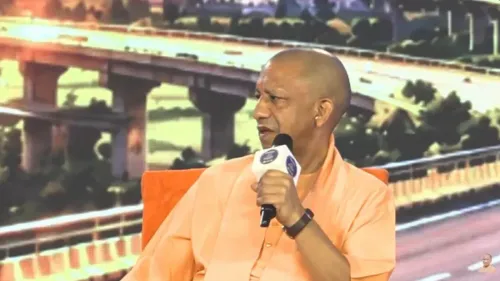
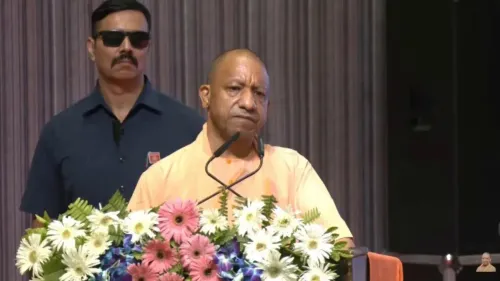
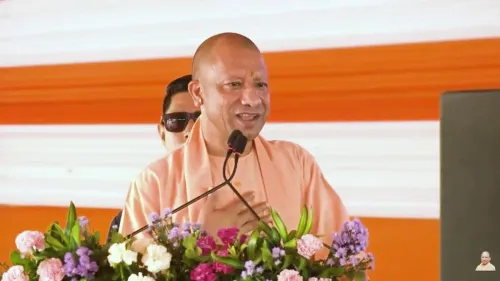
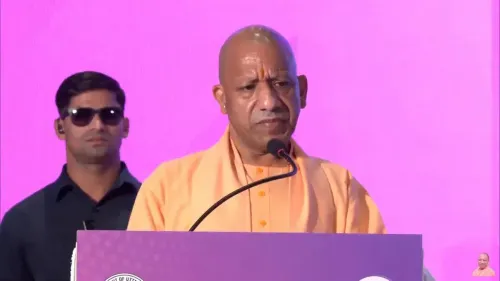
Uttar Pradesh has shed its decades-old 'BIMARU' tag and emerged as a breakthrough engine of India's economy — that is the bold claim Chief Minister Yogi Adityanath made on Friday, 20 November 2026, crediting the state's young workforce as the single biggest driver of its transformation.
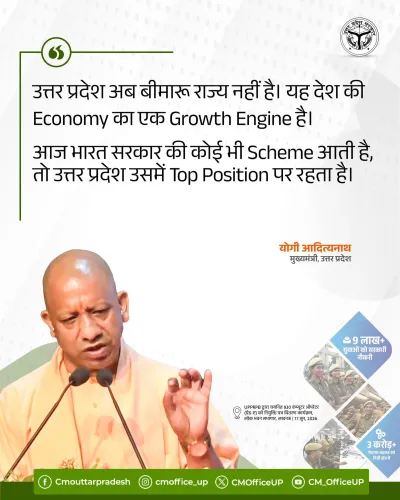
The Chief Minister's Office of Uttar Pradesh posted the statement on X, quoting CM Yogi Adityanath directly: 'अब उत्तर प्रदेश बीमारू राज्य नहीं, बल्कि भारत की Economy का Breakthrough बन चुका है' — 'Uttar Pradesh is no longer a BIMARU state; it has become the Breakthrough of India's Economy.' The post singled out the state's young workforce as the force that made it possible: 'When the youth stood with us, the results are before us.'
What 'BIMARU' Meant — and Why Dropping the Label Matters
The word stings precisely because of its history. Demographer Ashish Bose coined the BIMARU acronym in the 1980s to group Bihar, Madhya Pradesh, Rajasthan, and Uttar Pradesh as India's most economically laggard states — the label doubled as the Hindi word for 'sick.' For four decades it stuck, shaping investor sentiment, policy debates, and the collective self-image of the state's 240-plus million residents.
Rejecting that label is therefore more than political rhetoric — it is a direct challenge to a narrative that has defined development conversations about north India since before economic liberalisation. Whether the data yet fully backs the claim is a separate question; the political intent to close the chapter is unmistakable.
The Youth Dividend at the Centre of UP's Growth Story
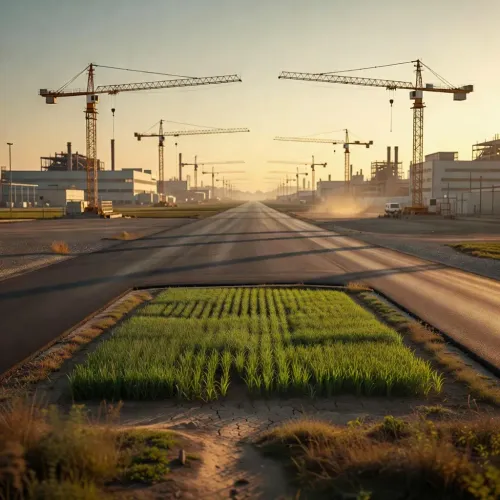
CM Yogi's framing places the demographic dividend front and centre. Uttar Pradesh holds one of India's largest pools of working-age population, and successive state governments have attempted — with varying success — to convert that numerical advantage into economic output. The Yogi administration has anchored its pitch to investors around labour availability, skilling programmes, and infrastructure buildout.
The emphasis on youth also mirrors a broader pattern across Indian states: from Tamil Nadu to Telangana, governments have leaned on the 'young India' narrative to attract labour-intensive manufacturing and services. UP's version of that pitch has intensified through investment summits and industrial corridor projects, positioning the state as a destination rather than a source of migrant labour.
What the Next Data Points Will Decide
The claim's credibility will be tested against the next round of state-level GDP figures and any investor commitments that convert to actual jobs on the ground. Uttar Pradesh has reported improving growth metrics in recent years, but independent verification of 'breakthrough' status relative to other major Indian states remains a live question. Upcoming investor summits organised by the state government will offer a concrete measure of how much external capital has bought into the new narrative.
One thing is certain: when India's most populous state reframes its own economic identity, the rest of the country has to pay attention. The BIMARU era may not be officially over by every statistical measure — but politically, UP has drawn a line in the sand.
Point of View
Letting the UP government claim credit for a macro trend while also signalling to industry that labour supply concerns are solved. The claim, however, is hostage to verifiable data: if state GDP rankings and job-creation numbers do not corroborate the 'breakthrough' label, opponents will use the same podium moment against the administration. The real test is whether the narrative outlasts the next budget season.
NationPress
20 Nov 2026
Frequently Asked Questions
What does BIMARU mean and which states does it include?
BIMARU is an acronym coined by demographer Ashish Bose in the 1980s to describe Bihar, Madhya Pradesh, Rajasthan, and Uttar Pradesh as economically laggard Indian states. The word also means 'sick' in Hindi, underscoring the negative connotation.
What did CM Yogi Adityanath say about UP's economy on 20 November 2026?
CM Yogi Adityanath stated that Uttar Pradesh is no longer a BIMARU state and has become a breakthrough economy for India, giving primary credit to the state's young workforce.
Why is Uttar Pradesh's youth workforce significant for its economy?
Uttar Pradesh has one of India's largest working-age populations, which the Yogi government has positioned as a key advantage to attract labour-intensive industries and investment, aiming to convert demographic scale into economic output.
Has Uttar Pradesh officially been removed from the BIMARU category?
CM Yogi has declared the BIMARU label obsolete for UP based on recent growth trends, but independent statistical verification of full breakthrough status is pending further state GDP data.
What will determine if UP's economic transformation claim holds up?
The next release of state-level GDP figures and the conversion of investment summit pledges into actual jobs on the ground will be the clearest indicators of whether UP has genuinely exited the BIMARU economic bracket.