Rajasthan HC grants bail in POCSO case, bans accused from social media for 3 years
Synopsis
A Rajasthan High Court judge has granted bail in a POCSO morphed-photo case with an unusually specific condition: a three-year ban on Facebook, Instagram, Threads, and Snapchat, with the trial court empowered to cancel bail the moment the accused is found online under any name. It is a rare instance of a court deploying platform-specific digital restrictions as a rehabilitative and protective bail tool.
Key Takeaways
The Rajasthan High Court granted bail on 9 July 2026 to a man accused of morphing a minor's photograph and uploading it on social media.
The order imposes a three-year ban on Facebook , Instagram , Threads , and Snapchat , in any name — real or fictitious.
The case was registered under Section 77 BNS , Sections 11 and 12 of POCSO , and Section 67A of the IT Act .
The accused must furnish a personal bond of ₹50,000 with two sureties and may not contact the victim or her family.
The accused had been in custody since 2 April 2026 ; witness statements of the victim and complainant had already been recorded before the trial court.
Violation of any bail condition, including the social media ban, can result in the bail being recalled by the trial court itself.
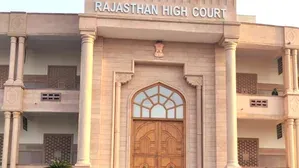
The Rajasthan High Court on Thursday, 9 July 2026, granted bail to a man accused of morphing a minor girl's photograph and uploading it on social media, attaching stringent conditions that include a three-year ban on platforms such as Facebook, Instagram, Threads, and Snapchat. The order was passed by a single-judge bench of Justice Ashok Kumar Jain at the Jodhpur bench of the High Court in a case originating from Bheem police station, Rajsamand district.
Background of the Case
The First Information Report (FIR) was registered on 12 February 2026, on the basis of a complaint filed by the mother of the minor victim. According to the prosecution, the alleged incident took place between 18 September and 16 October 2025. Following investigation, police arrested the accused and filed a charge sheet under Section 77 of the Bharatiya Nyaya Sanhita (BNS), Sections 11 and 12 of the Protection of Children from Sexual Offences (POCSO) Act, and Section 67A of the Information Technology Act.
Key Conditions Imposed by the Court
Granting bail, the court directed the accused to furnish a personal bond of ₹50,000 along with two sureties of the same amount to the satisfaction of the trial court. Crucially, the accused must submit an affidavit or undertaking before the trial court confirming he will not use any social media platform — in his own name or any fictitious identity — for a period of three years. The court warned that any violation would render the bail liable to be recalled by the trial court itself.
The accused was also directed not to contact the victim or any of her family members, directly or indirectly, until the disposal of the criminal case. Standard bail conditions — no tampering with evidence, no witness intimidation, no repeat offence — were also imposed.
What the Court Said
Justice Jain observed that the core allegation against the accused was that he had prepared a morphed photograph to defame the victim. 'The applicant-accused has misused the social media, therefore, it is appropriate to restrict use of social media at least for three years so that he may learn a lesson not to misuse any online platform,' Justice Jain said in the order.
The court further noted that since the statements of the victim (recorded as Prosecution Witness-1) and the complainant (PW-2) had already been recorded before the trial court, 'there is no chance of any influence.' The accused had been in custody since 2 April 2026 and the trial was expected to take additional time to conclude, the court noted in justifying the grant of bail.
Defence Arguments
Counsel for the accused submitted that his client had been falsely implicated, that the investigation was complete, and that continued custodial detention was unnecessary. The defence also described the accused as a young person who had a friendship with the victim and sought an opportunity for him 'to correct himself'. The defence undertook that the accused would refrain from social media use if the court found it appropriate.
The prosecution and the complainant's counsel opposed the bail plea but did not contest the fact that witness statements had already been recorded.
Significance of the Order
The ruling is notable for its use of platform-specific social media restrictions as a bail condition — an approach that courts have increasingly explored in cases involving digital offences against minors. This comes amid growing judicial concern over the misuse of online platforms to target children, particularly through morphed imagery. The accused's compliance with the social media ban will be monitored through the undertaking submitted to the trial court, which retains the power to cancel bail on any breach.
Point of View
Instagram, Threads, Snapchat — rather than issue a generic 'no social media' directive reflects an evolving judicial understanding of how digital harm is actually inflicted. But enforcement remains the blind spot: the court relies on an undertaking and the trial court's vigilance, with no mechanism to technically verify compliance. As POCSO cases involving digital offences multiply, this order raises a question mainstream coverage has not asked — should bail conditions in cyber-POCSO cases be monitored by a designated digital officer rather than left to self-reporting?
NationPress
8 Oct 2026
Frequently Asked Questions
Why did the Rajasthan High Court impose a social media ban as a bail condition?
The court found that the accused had misused social media to prepare and upload a morphed photograph of a minor to defame her. Justice Ashok Kumar Jain stated that restricting social media access for three years was intended to ensure the accused 'learns a lesson not to misuse any online platform.'
Which laws was the accused charged under in this POCSO case?
The accused was charged under Section 77 of the Bharatiya Nyaya Sanhita (BNS), Sections 11 and 12 of the POCSO Act, and Section 67A of the Information Technology Act. The FIR was registered at Bheem police station in Rajsamand district on 12 February 2026.
What happens if the accused violates the social media ban?
The court order specifies that if the accused is found using any social media platform — in his own name or a fictitious one — the trial court itself has the power to recall the bail order. Violation of any other bail condition can also lead to cancellation of bail.
How long had the accused been in custody before bail was granted?
The accused had been in custody since 2 April 2026. The Rajasthan High Court cited the considerable period already spent in custody and the likelihood of the trial taking further time as reasons for granting bail.
What other conditions did the court impose apart from the social media ban?
The court directed the accused not to contact the victim or her family members directly or indirectly until the trial concludes, not to tamper with evidence or influence witnesses, not to engage in any criminal activity, and to remain present before the trial court on all scheduled hearing dates. A personal bond of ₹50,000 with two sureties was also required.