Rajasthan HC grants POCSO bail with 1-year social media ban on accused

Synopsis
The Rajasthan High Court has granted bail to a POCSO accused while imposing an unusually sweeping digital restriction — a full one-year ban on Instagram, Facebook, Snapchat, and other platforms. The order signals a growing judicial willingness to use digital safeguards as protective tools for minor victims, even as questions remain about enforceability.
Key Takeaways
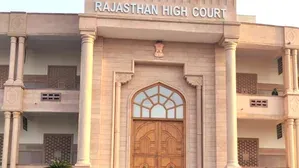
The Rajasthan High Court's Jodhpur Bench granted bail to a man accused of sexually harassing and stalking a minor in Bikaner .
The accused is barred from using all social media platforms — including Instagram , Facebook , Snapchat , Threads , and ShareChat — for one year .
Bail will be recalled if the accused is found using any platform, even under a fictitious name or email ID.
The case was registered under Sections 78(2) and 79 of the BNS and Sections 11 and 12 of the POCSO Act ; the accused was arrested on 24 February .
A personal bond of ₹50,000 with two sureties of the same amount was ordered.
Justice Ashok Kumar Jain cited the need to ensure the 'safety and well-being of the victim' in imposing the stringent conditions.
The Rajasthan High Court has granted bail to a man accused of sexually harassing and stalking a minor girl in Bikaner, attaching one of the most stringent digital conditions seen in recent POCSO bail orders — a complete one-year ban on all social media platforms including Instagram, Facebook, Snapchat, Threads, and ShareChat.
The order was passed by a single-judge Bench of Justice Ashok Kumar Jain of the Jodhpur Bench, allowing the bail plea in a case registered at Mukta Prasad Nagar police station in Bikaner under Sections 78(2) and 79 of the Bharatiya Nyaya Sanhita (BNS) and Sections 11 and 12 of the Protection of Children from Sexual Offences (POCSO) Act.
What the Court Ordered
The court directed that the accused 'is restrained from using all kinds of social media platforms like Instagram, Facebook, Snap Chat, Thread, Share Chat etc. for a period of one year.' The order went further, warning that if the accused was found using any such platform — 'either in his name or in any fictitious name using his mobile/E-mail ID or a fictitious E-mail ID' — the bail would be recalled immediately.
Additionally, the accused was barred from contacting the victim or any of her family members directly or indirectly through any communication medium, including Instagram, Facebook Messenger, Snapchat, or WhatsApp. He was also directed to furnish a personal bond of ₹50,000 along with two sureties of the same amount to the satisfaction of the trial court.
Background of the Case
According to the prosecution, the FIR was lodged on 22 February by the father of the minor victim, alleging sexual harassment, stalking, and cyber-related offences committed between 1 February and 20 February. The accused was arrested on 24 February, and a chargesheet has since been filed under the relevant provisions of the BNS and the POCSO Act.
Counsel for the accused argued during the hearing that the allegations were false and that no material evidence beyond oral allegations had been produced by the complainant. It was also submitted that the investigation was complete, the accused was no longer required for custodial interrogation, and there was no risk of him absconding. The defence further noted that the accused had already remained in custody for a considerable period and that the trial was likely to take significant time to conclude.
Prosecution's Stand
Opposing the bail plea, the complainant's counsel and the Public Prosecutor argued that the accused had been harassing the victim with sexual intent, making it difficult for her to lead a normal life and causing psychological harm. They urged the court to consider the vulnerability of the minor victim while deciding the plea.
Court's Reasoning and Additional Conditions
After hearing both sides, the court observed that 'having considered the nature of allegation it is appropriate to put certain conditions upon the petitioner, so as to ensure safety and well-being of the victim.' Beyond the social media ban, the court imposed standard conditions requiring the accused not to tamper with evidence, influence witnesses, indulge in any criminal activity, or repeat any offence punishable under law. He must also appear before the trial court on all dates fixed for hearing, with any violation rendering the bail liable to cancellation.
This order is notable for its explicit digital safeguards — a growing judicial trend in cases where online platforms are alleged to have been used as instruments of harassment against minors. How effectively such conditions can be monitored in practice remains an open question as the trial proceeds.
Point of View
And a determined accused can circumvent platform bans through new accounts or devices with relative ease. What the order does achieve is creating a clear legal trigger for bail cancellation, shifting the burden of proof onto the accused if he is found online. As cyber-facilitated crimes against minors rise, more benches may follow this template — making it worth watching whether the Supreme Court or the legislature eventually standardises such conditions rather than leaving them to individual judicial discretion.
NationPress
26 Sept 2026
Frequently Asked Questions
What did the Rajasthan High Court order in this POCSO bail case?
The Rajasthan High Court granted bail to a man accused of sexually harassing and stalking a minor in Bikaner, while imposing a one-year ban on the use of all social media platforms including Instagram, Facebook, Snapchat, Threads, and ShareChat. The court also barred him from contacting the victim or her family through any communication medium.
What happens if the accused violates the social media ban?
The court explicitly warned that if the accused is found using any social media platform — in his own name or any fictitious name, through his own or a fake email ID — the bail order will be recalled. Violation of any other bail condition also renders the bail liable to cancellation.
What are the charges against the accused in this case?
The accused faces charges under Sections 78(2) and 79 of the Bharatiya Nyaya Sanhita (BNS) and Sections 11 and 12 of the POCSO Act, relating to sexual harassment, stalking, and cyber-related offences against a minor. The FIR was filed on 22 February by the victim's father, covering alleged offences between 1 February and 20 February.
Why did the court grant bail despite the serious nature of the charges?
Justice Ashok Kumar Jain noted that the accused had already remained in custody for a considerable period and that the trial was likely to take further time to conclude. The defence also argued the investigation was complete and there was no risk of absconding, leading the court to grant bail with stringent protective conditions rather than continue detention.
Is a social media ban as a bail condition common in Indian courts?
Such conditions are not yet standard but represent a growing judicial trend in cases involving cyber harassment of minors. Indian courts have increasingly looked to digital safeguards to protect victims during the pendency of trial, though uniform guidelines on monitoring and enforcement do not yet exist.