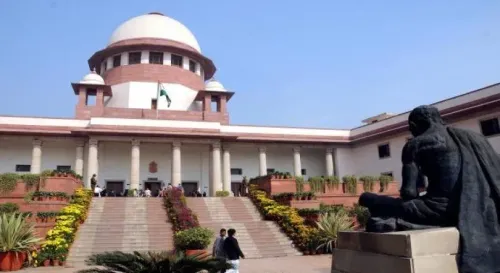
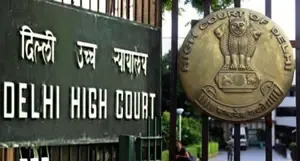
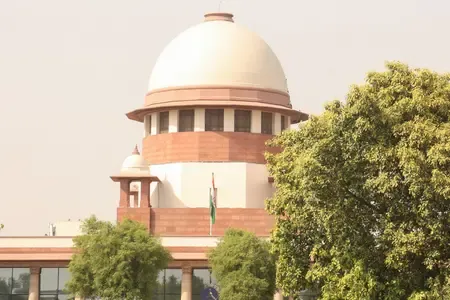
Delhi HC refuses to quash POCSO case on compromise, calls offence 'heinous'
Synopsis
The Delhi High Court has firmly shut the door on using a family-brokered compromise to escape POCSO prosecution. Justice Sachin Datta's ruling makes clear that aggravated child sexual assault is a societal crime — not a private dispute — and that quashing such cases on the basis of settlement would defeat the very purpose of the law.
Key Takeaways
The Delhi High Court on 22 September 2026 dismissed a petition by Anand Singh Rawat seeking to quash a 2022 POCSO and rape case on grounds of compromise.
The FIR was registered at Fatehpur Beri Police Station under IPC Sections 376, 506 and Section 6 of the POCSO Act .
Justice Sachin Datta held that quashing proceedings would 'defeat the object of the statute and the ends of justice.' The bench relied on the Supreme Court 's judgment in Gian Singh v.
State of Punjab , which bars quashing of heinous offences even after settlement.
The court clarified its order carries no opinion on the merits; the trial will continue before the trial court.
The Delhi High Court has declined to quash a rape and Protection of Children from Sexual Offences (POCSO) case against a 49-year-old man, rejecting a plea that cited a compromise with the child victim and her family. The court ruled on 22 September 2026 that such offences are heinous and carry serious societal consequences that cannot be resolved through private settlement.
Background of the Case
A single-judge bench of Justice Sachin Datta dismissed a petition filed by Anand Singh Rawat, who had sought the quashing of a 2022 FIR registered at Fatehpur Beri Police Station under Sections 376 (rape) and 506 (criminal intimidation) of the Indian Penal Code (IPC), as well as Section 6 of the POCSO Act, which pertains to aggravated penetrative sexual assault.
Rawat had argued that a compromise had been reached with the victim through the intervention of her family and that the proceedings should therefore be dropped. The trial, however, was already at the stage of prosecution evidence at the time of the petition.
What the Court Held
Justice Datta observed that the allegations involved aggravated penetrative sexual assault upon a child by a person described as being in a position of trust or authority — one of the gravest categories of offence under the POCSO framework.
'These are heinous offences which have a serious impact on society,' Justice Datta stated in the order.
The bench further held that quashing the proceedings at this stage on the basis of the compromise 'would defeat not only the object of the statute but also the ends of justice.'
Supreme Court Precedent Invoked
The Delhi High Court relied heavily on the Supreme Court's landmark judgment in Gian Singh v. State of Punjab, which recognised the High Court's inherent power to quash criminal proceedings in appropriate cases but drew a clear line at serious and heinous offences.
The Supreme Court had held in that ruling: 'Heinous and serious offences of mental depravity or offences like murder, rape, dacoity, etc. cannot be fittingly quashed even though the victim or victim's family and the offender have settled the dispute.'
Citing this precedent, Justice Datta concluded that 'the child victim or their family cannot compromise an offence under the POCSO Act,' reinforcing that such crimes are not private matters between parties but wrongs against society at large.
Scope of the Ruling
Notably, the High Court clarified that its order should not be construed as any expression of opinion on the merits of the case itself, which will be decided by the trial court on the basis of evidence. The ruling is confined to the question of whether the proceedings could be quashed at this stage on the ground of compromise — and the answer, the court held, is an unequivocal no.
The judgment reinforces a consistent judicial position that POCSO offences, by their very nature, cannot be insulated from prosecution through out-of-court arrangements, regardless of the consent of the victim's family. With the trial set to continue, the case will now proceed to its evidentiary conclusion before the trial court.
Point of View
Yet petitions like Rawat's continue to reach the High Court, suggesting either poor legal advice or a deliberate strategy to exploit procedural routes. What the judgment does not address is the welfare of the child victim in the intervening period — a gap that child rights advocates have long flagged in POCSO proceedings.
NationPress
24 Sept 2026
Frequently Asked Questions
Why did the Delhi High Court refuse to quash the POCSO case?
The Delhi High Court refused to quash the case because the alleged offence — aggravated penetrative sexual assault of a child — is classified as heinous and has a serious impact on society. The court held that such crimes cannot be resolved through a private compromise between the accused and the victim's family.
What is Section 6 of the POCSO Act?
Section 6 of the Protection of Children from Sexual Offences (POCSO) Act deals with aggravated penetrative sexual assault and carries one of the severest punishments under the law, including a minimum sentence of 20 years and up to life imprisonment. It applies when the assault is committed by a person in a position of trust or authority over the child.
What is the Gian Singh v. State of Punjab judgment and why is it relevant here?
Gian Singh v. State of Punjab is a Supreme Court ruling that recognised the High Court's inherent power to quash criminal proceedings in appropriate cases, but explicitly excluded heinous and serious offences such as rape, murder, and dacoity from this power. The Delhi High Court relied on this precedent to hold that a POCSO case cannot be quashed on the basis of compromise.
Can a child victim's family legally compromise a POCSO offence?
No. The Delhi High Court has explicitly held that a child victim or their family cannot compromise an offence under the POCSO Act. The court reasoned that such offences are not private in nature and that permitting a compromise-based quashing would undermine the statute's protective purpose.
What happens next in the case?
The trial against Anand Singh Rawat will continue before the trial court, which will decide the matter on the basis of evidence. The High Court clarified that its ruling carries no opinion on the merits of the case and is confined solely to the question of whether the proceedings could be quashed at this stage.