Pralhad Joshi Pushes Karnataka on PDS Tech Reforms
Synopsis
Union Minister Pralhad Joshi met Karnataka Food Minister Arshad Rizwan on 24 September 2026 to address pending PDS reforms, focusing on GPS-based vehicle tracking, full SMART-PDS module rollout, and rightful PMGKAY beneficiary targeting in Karnataka.
Key Takeaways
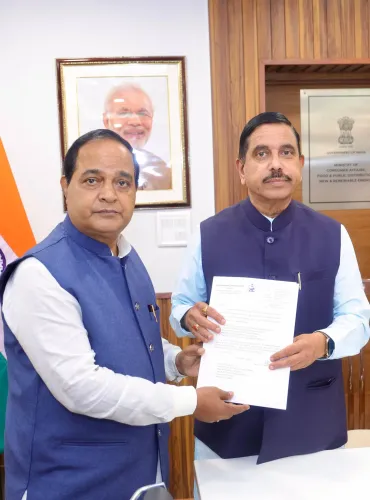
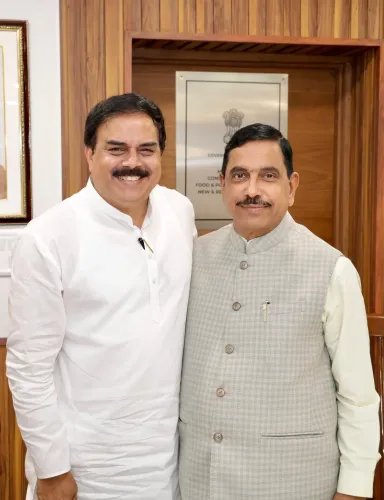
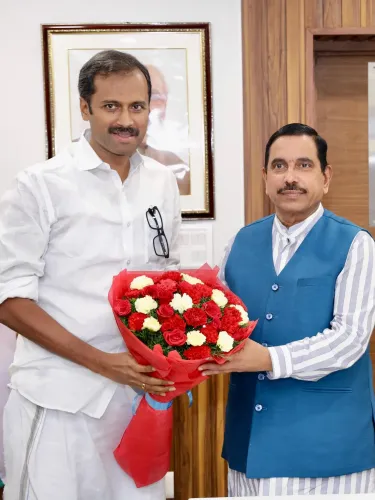
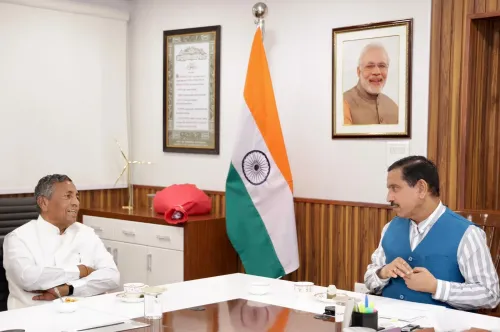
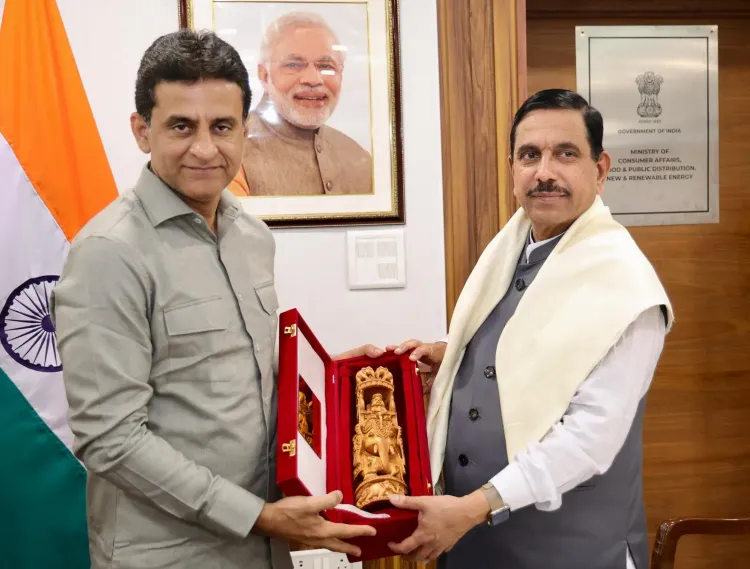
Union Minister Pralhad Joshi held a courtesy call with Karnataka's Food Minister Arshad Rizwan at his Delhi office on 24 September 2026 .
Joshi pushed for deployment of the Vehicle Location Tracking System (VLTS) to curb diversion of PDS foodgrains in Karnataka.
Full implementation of all three modules of SMART-PDS — covering beneficiary identification, supply-chain automation, and transparency — was highlighted as pending.
The Centre pressed for 'rightful targeting' under PMGKAY to ensure all eligible beneficiaries are enrolled and receiving free foodgrains.
Joshi reaffirmed the central government's support to Karnataka on food security and PDS strengthening.
The meeting represents a cross-party coordination effort, with a BJP Union minister and a Congress state minister aligning on implementation of centrally-sponsored welfare schemes.
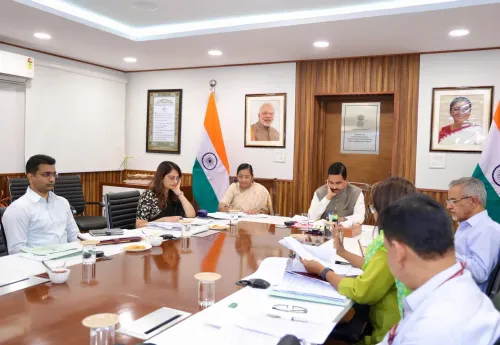
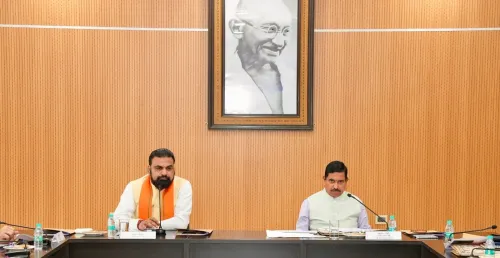
When a state minister walks into the Union Food Ministry in Delhi, it signals something is stuck — and needs a push. Union Consumer Affairs Minister Pralhad Joshi met Karnataka's Food, Civil Supplies and Consumer Affairs Minister Arshad Rizwan at his Delhi office on Thursday, 24 September 2026, pressing the state on a cluster of pending reforms that together determine whether subsidised food actually reaches the people it is meant to reach.
Joshi flagged three specific deliverables in a post on X, writing: 'Highlighted the need for Vehicle Location Tracking System (VLTS) for PDS foodgrain distribution, rightful targeting to include all eligible beneficiaries under #PMGKAY and implementation of all three modules of SMART-PDS.' The Kannada portion of his post added: 'ರಾಜ್ಯದ ಆಹಾರ ಭದ್ರತೆ, ಪಡಿತರ ವ್ಥೆಯ ಬಲವರ್ಧನೆ' — reinforcing the state's food security and strengthening the ration system. Joshi also reaffirmed the central government's support to Karnataka on these counts.
What VLTS, SMART-PDS and PMGKAY targeting actually mean on the ground
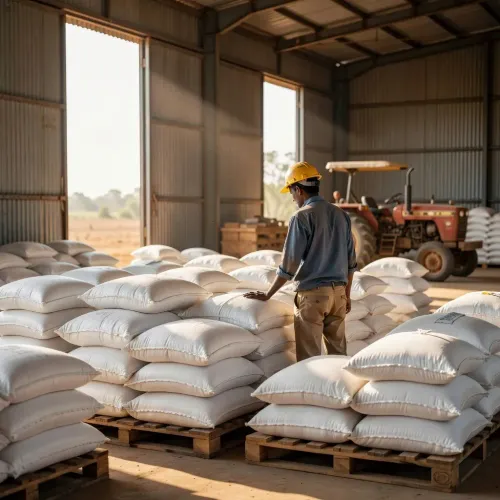
The Vehicle Location Tracking System (VLTS) is a GPS-based mechanism designed to monitor the movement of trucks carrying PDS foodgrains in real time, curbing diversion and ghost deliveries between warehouses and fair-price shops. Without it, a consignment leaving a state depot can disappear into the grey market long before a beneficiary ever sees it. This is the leakage point the Centre has been pushing states to seal for years.
SMART-PDS — the Centre's end-to-end digitisation project for the Public Distribution System — is built around three modules covering beneficiary identification, supply-chain automation, and transparency reporting. Full deployment of all three is a prerequisite for the kind of accountability that makes audits meaningful. Karnataka's progress on completing all three modules was a focal point of Thursday's discussion.
On PMGKAY, or the Pradhan Mantri Garib Kalyan Anna Yojana — the flagship scheme that provides free foodgrains to eligible households under the National Food Security Act, 2013 — the concern is targeting: ensuring that every household legally entitled to free grain is actually enrolled and receiving it, and that the rolls are clean of ineligible entries. Launched in March 2020 during the COVID-19 pandemic and extended in phases, PMGKAY has become a permanent entitlement for millions of Indians.
A BJP Union minister, a Congress state minister, one shared agenda
The meeting carries a notable political texture. Joshi is a senior BJP leader from Karnataka; Arshad Rizwan serves in the Congress-led Karnataka government. That both sides showed up and engaged on implementation gaps — rather than trading public blame — reflects the practical compulsions of a scheme where the Centre allocates grain and the state delivers it. Neither side can afford a broken chain; the beneficiary at the end of it votes in both elections.
The Centre has been pushing GPS tracking, Aadhaar seeding, and digital modules nationally, with progress varying sharply by state. Karnataka has engaged in earlier rounds on Aadhaar-linked beneficiary verification; the unfinished SMART-PDS modules and VLTS rollout represent the outstanding items on a list that has been accumulating across multiple review cycles.
The next test is execution — not the meeting, not the post, but whether trucks in Karnataka start broadcasting their location and whether the last eligible beneficiary gets enrolled before the next extension of PMGKAY is announced.
Point of View
But delivery depends entirely on state machinery and political will. By publicly listing specific pending items — VLTS, SMART-PDS modules, PMGKAY targeting — Joshi is creating a documented record of Union expectations, useful both as genuine reform pressure and as political cover should Karnataka's implementation falter. The cross-party optics are deliberate: a BJP minister seen cooperating with a Congress state on grassroots food delivery blunts the narrative that welfare schemes are held hostage to political rivalry. The real measure, however, will be the speed of Karnataka's on-ground rollout in the months ahead.
NationPress
24 Sept 2026
Frequently Asked Questions
What is the Vehicle Location Tracking System (VLTS) in PDS?
The Vehicle Location Tracking System (VLTS) is a GPS-based tool that monitors trucks carrying PDS foodgrains in real time, helping prevent diversion of subsidised grain between warehouses and fair-price shops.
What are the three modules of SMART-PDS?
SMART-PDS covers three modules for the Public Distribution System: beneficiary identification and management, supply-chain automation, and transparency and reporting — together digitising the full PDS pipeline.
Who is eligible for free foodgrains under PMGKAY?
PMGKAY provides free foodgrains to households covered under the National Food Security Act, 2013. The scheme was launched in March 2020 and has been extended in phases to ensure continued coverage of eligible beneficiaries.
Why did Karnataka's Food Minister meet the Union Minister in Delhi?
Karnataka Food Minister Arshad Rizwan visited Union Minister Pralhad Joshi's Delhi office on 24 September 2026 for a courtesy call to discuss pending issues in the effective implementation of PDS in Karnataka, including VLTS, SMART-PDS, and PMGKAY targeting.
What is the National Food Security Act and how does it relate to PDS?
The National Food Security Act, 2013 provides the legal framework for India's targeted Public Distribution System, defining beneficiary eligibility and state obligations for subsidised foodgrain delivery to low-income households.