Pralhad Joshi: Karnataka Kharif 2026 Fertilizer Supply Secured
Synopsis
Union Minister Pralhad Joshi has released detailed fertilizer stock data for Karnataka, showing supplies far exceed Kharif 2026 pro-rata requirements for urea, DAP, and NPKS, while directing the state government to ensure efficient last-mile distribution to farmers.
Key Takeaways
Against a pro-rata urea requirement of 3.13 LMT till 10 June, Karnataka was ensured 5.59 LMT ; closing stock stands at 3.12 LMT with 17,190 MT in transit.
DAP availability of 2.57 LMT was secured against a requirement of 1.89 LMT ; current stock is 1.09 LMT .
NPKS availability reached 9.28 LMT against a pro-rata need of 4.36 LMT , with over 5.6 LMT still available including transit.
Between January and March 2026 , Karnataka received an additional 0.33 LMT Urea , 1.29 LMT DAP , and 1.58 LMT NPKS above projected requirements for advance stocking.
The Centre cited the Iran-Israel conflict and reduced exports from major suppliers as challenges navigated through domestic production boosts and secured imports.
Joshi placed responsibility for inter-district distribution, anti-hoarding, and anti-diversion enforcement squarely on the Karnataka state government .
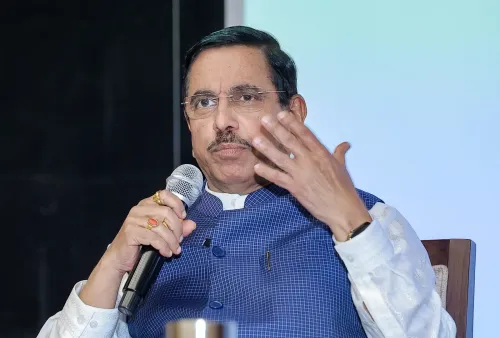
Union Consumer Affairs Minister Pralhad Joshi on Saturday, 13 June 2026 released detailed fertilizer availability figures for Karnataka, asserting that the Centre has ensured stocks well above pro-rata requirements for the Kharif 2026 sowing season despite global supply chain disruptions.
Context
Joshi's post comes at a critical pre-monsoon window when farmers across Karnataka begin procuring inputs for the Kharif crop. The minister shared granular district-level stock data, noting that against a pro-rata urea requirement of 3.13 lakh metric tonnes (LMT) till 10 June, availability of 5.59 LMT was ensured. After sales of 2.47 LMT, closing stock stands at 3.12 LMT with a further 17,190 MT in transit.
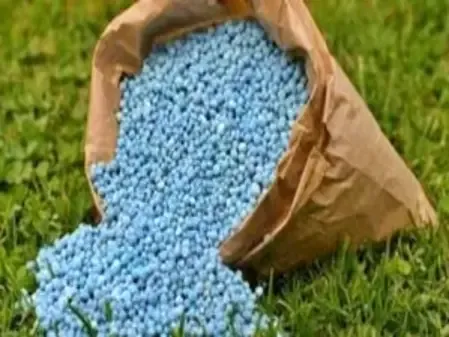
For DAP (Di-ammonium Phosphate), availability of 2.57 LMT was secured against a requirement of 1.89 LMT, with current stocks at 1.09 LMT. NPKS availability reached 9.28 LMT against a pro-rata need of 4.36 LMT, leaving over 5.6 LMT available including transit stocks.
Policy Backdrop
The minister cited geopolitical headwinds — specifically the Iran-Israel conflict and reduced exports from major global fertilizer suppliers — as challenges the Centre navigated through domestic production boosts and secured import arrangements. He added that between January and March 2026 alone, Karnataka received an additional 0.33 LMT Urea, 1.29 LMT DAP, and 1.58 LMT NPKS over projected requirements to facilitate advance stocking ahead of the season.
This approach mirrors the Centre's response during earlier supply shocks, including disruptions linked to the Russia-Ukraine conflict, when proactive import contracting and domestic capacity utilisation were deployed to stabilise fertilizer pipelines. India's fertilizer subsidy architecture — anchored in the Nutrient Based Subsidy (NBS) scheme expanded since 2010 and the Direct Benefit Transfer (DBT) system rolled out from 2016 — is designed to reduce leakages and ensure subsidised stocks reach intended beneficiaries.
Stakeholders and Impact
Karnataka farmers preparing for the Kharif season are the immediate stakeholders. Joshi's statement draws a clear constitutional line: the Centre's responsibility ends at procurement, allocation, and ensuring adequate supply at the state level, while last-mile distribution, inter-district logistics, and enforcement against hoarding and black-marketing fall within the Karnataka state government's domain.
The minister was pointed in directing accountability: 'The responsibility now lies with the State Government to ensure efficient inter-district distribution, prevent hoarding, black marketing and diversion of subsidised fertilizers, and make stocks available where farmers need them.' The framing is notable given that Karnataka is governed by the Congress, making the statement as much a political communication as an administrative one.
What's Next
Attention will now shift to Karnataka's district-wise fertilizer allocation orders and whether state authorities move to enforce anti-diversion and anti-hoarding measures ahead of peak sowing. Central review meetings on the all-India fertilizer position are typically convened as monsoon progress reports are received, and any state-level shortfall complaints will be tested against the stock figures Joshi has now placed on public record.
With the Centre having pre-positioned supply data prominently, the political and administrative onus on the Karnataka government to demonstrate efficient last-mile delivery to farmers has sharpened considerably ahead of the Kharif 2026 season.
Point of View
The Centre shifts the burden of proof — if farmers face shortages, the data now makes it a state governance failure rather than a supply failure. This pattern of pre-emptive stock transparency has become a standard tool in Centre-state political messaging on agricultural welfare. The statement also reflects the Centre's broader effort to demonstrate resilience in input supply chains amid recurring geopolitical shocks, reinforcing its farmer-welfare credentials ahead of state electoral cycles.
NationPress
13 Sept 2026
Frequently Asked Questions
Is there a fertilizer shortage in Karnataka for Kharif 2026?
According to Union Minister Pralhad Joshi, there is no shortage at the state level — Karnataka has been ensured 5.59 LMT of urea against a pro-rata requirement of 3.13 LMT , with DAP and NPKS also available well above requirements. The minister has attributed any local unavailability to distribution gaps at the state level.
What is the current urea stock in Karnataka for Kharif 2026?
As of 10 June 2026 , Karnataka's closing urea stock stands at 3.12 LMT after sales of 2.47 LMT , with an additional 17,190 MT in transit, according to figures shared by Minister Pralhad Joshi.
Why is there a global fertilizer supply disruption in 2026?
Minister Joshi cited geopolitical tensions — particularly the Iran-Israel conflict and reduced exports from major fertilizer-supplying nations — as the primary drivers of global supply chain disruptions. India responded by boosting domestic urea production and securing imports to maintain uninterrupted supply.
Who is responsible for fertilizer distribution to farmers in Karnataka?
The constitutional division of responsibility places procurement and allocation with the Central government , while inter-district distribution, enforcement against hoarding, black-marketing, and diversion of subsidised fertilizers falls under the Karnataka state government's mandate, as clarified by Minister Joshi.
What is the Nutrient Based Subsidy scheme for fertilizers in India?
The Nutrient Based Subsidy (NBS) scheme , expanded in phases since 2010 , provides fixed subsidies per kg of nutrient for non-urea fertilizers like DAP and NPKS to promote balanced fertilizer use. It works alongside the Direct Benefit Transfer (DBT) system, rolled out from 2016 , to reduce leakages in fertilizer distribution.